A single CPU instruction, stretched from a blink to a full minute
A single CPU instruction, stretched from a blink to a full minute.
Think of a single instruction as the smallest step your processor takes. On a new leaderboard, that one step ranges from a blink to a full minute.
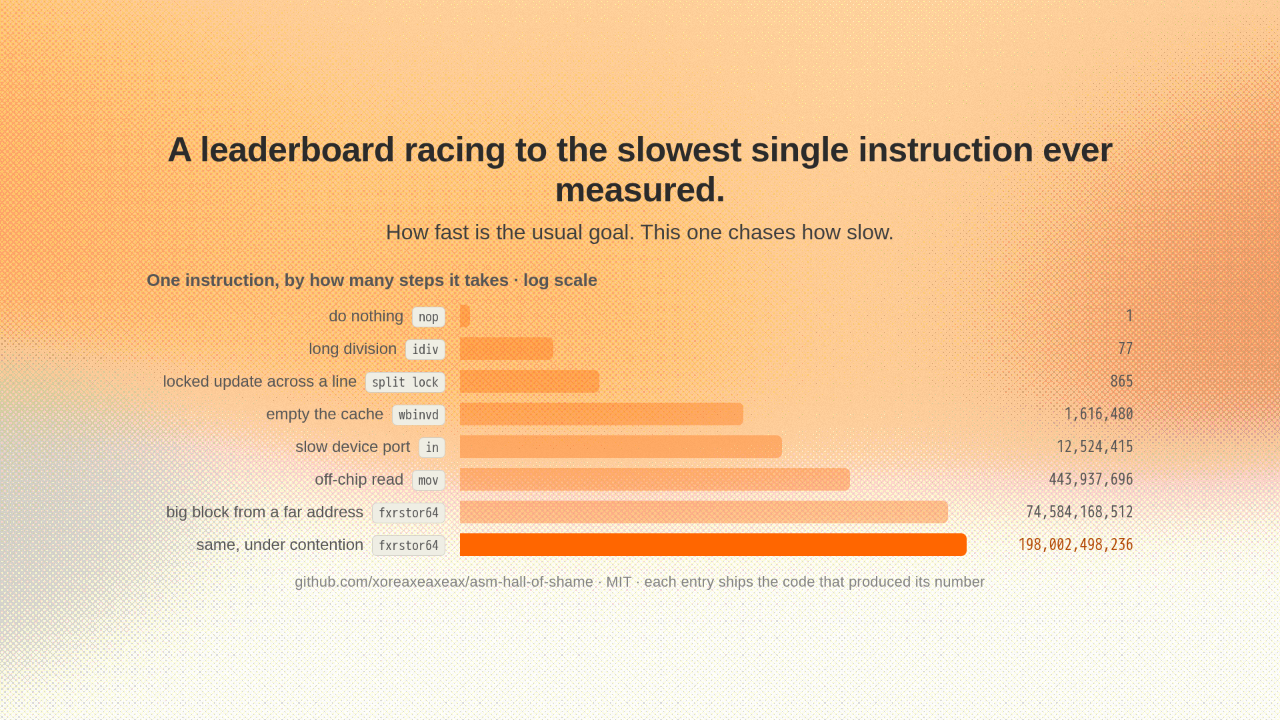
A leaderboard racing to the slowest single instruction ever measured
A leaderboard racing to the slowest single instruction ever measured.
Most performance work asks how fast code can run. This project asks the opposite: how slow can you force a single instruction to go? It ranks the slowest found so far. Every entry ships the code that produced its number.
A single instruction has no fixed cost
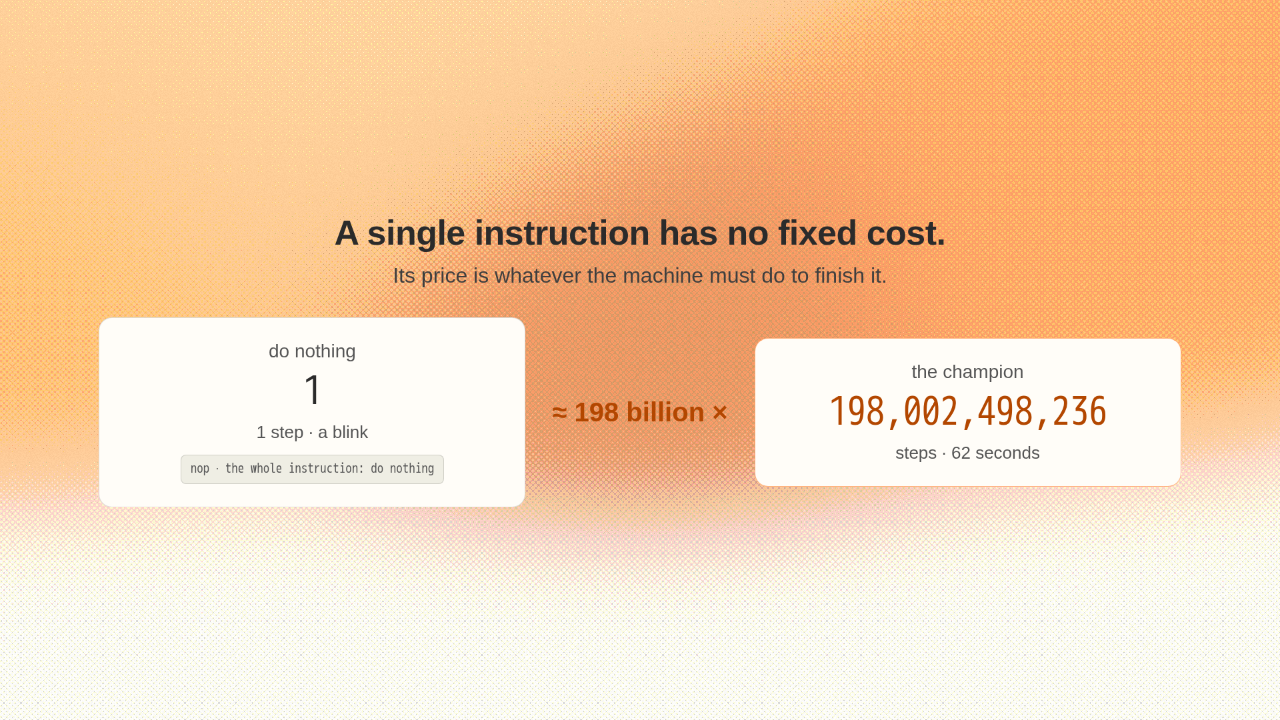
A single instruction has no fixed cost.
An instruction's time is whatever the processor must do behind the scenes to finish it. The heavy ones pull the whole machine into the job.
Three ways one instruction gets slow
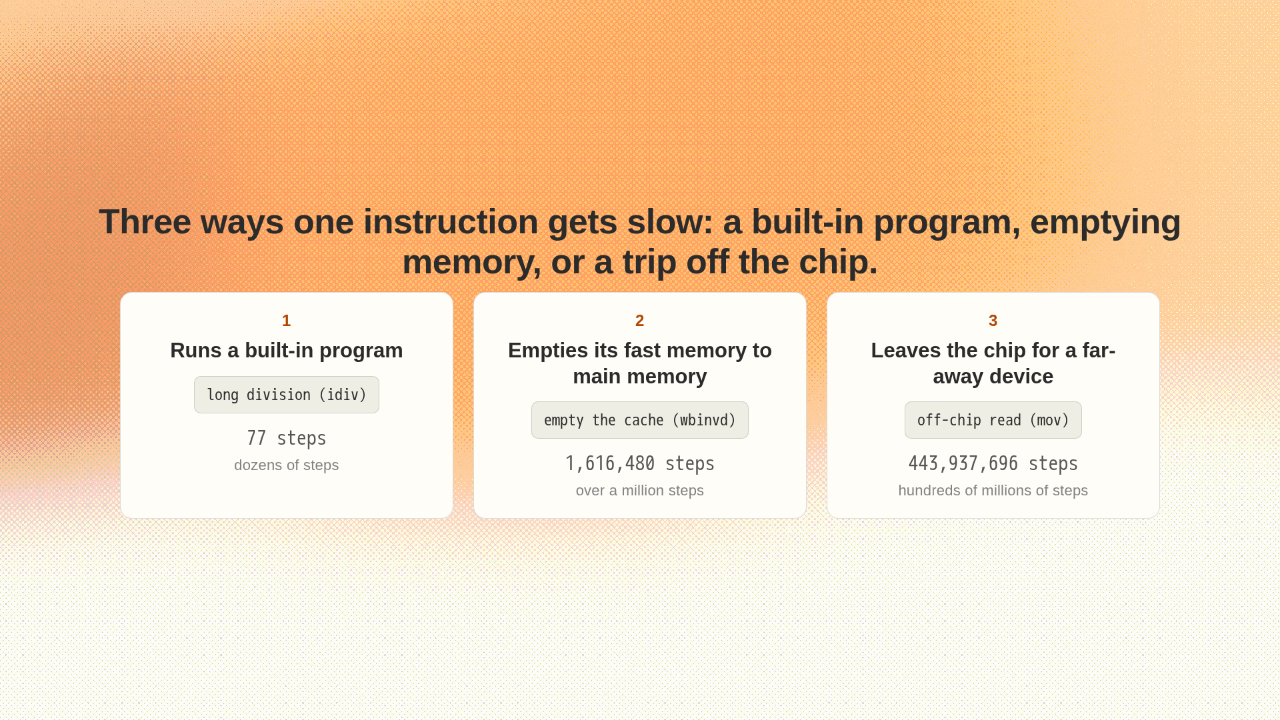
Three ways one instruction gets slow: a built-in program, emptying memory, or a trip off the chip.
One instruction slows down for three reasons, each deeper in the machine. First, for a hard case the chip cannot handle the quick way, it runs a tiny built-in program of its own. Long division costs dozens of steps. Second, some instructions make the chip empty its fast memory back out to slow main memory. That is over a million steps. Third, a few leave the chip entirely, reaching out to a slow, far-away device and waiting for it to answer. That is hundreds of millions of steps.
One instruction, plus a fleet of cores clogging the same path: 62 seconds
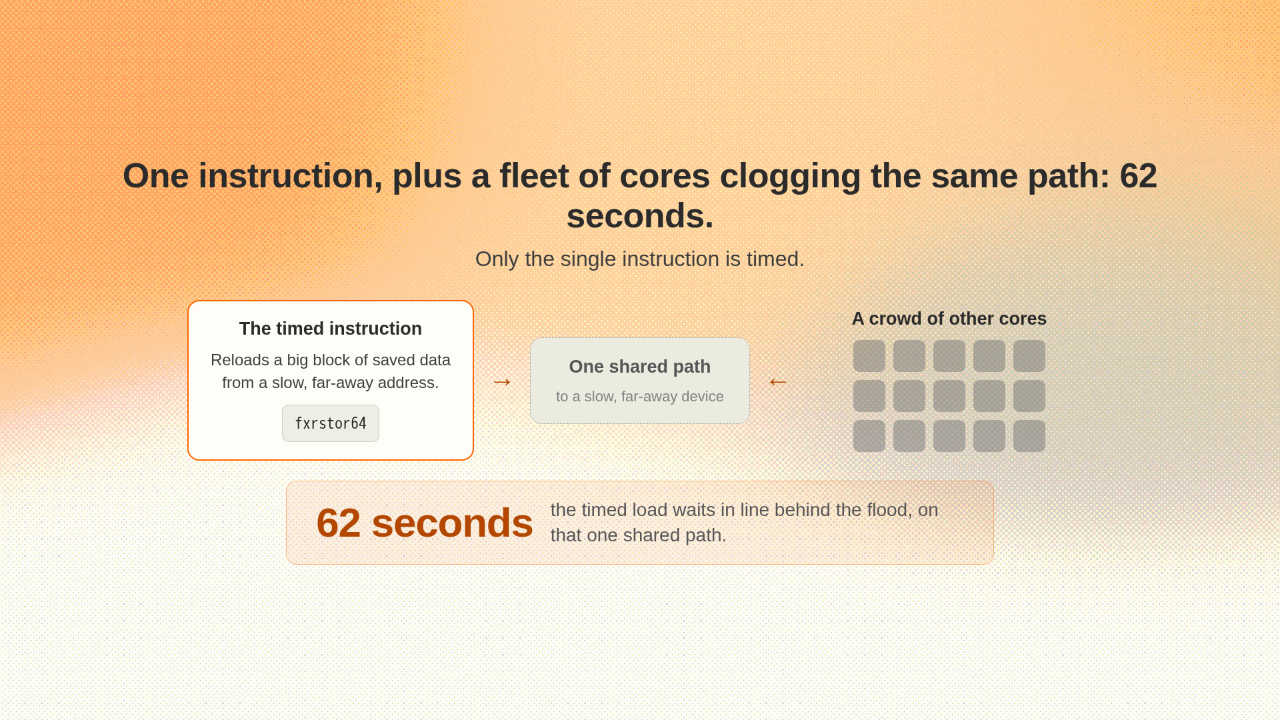
One instruction, plus a fleet of cores clogging the same path: 62 seconds.
The champion reloads a big block of saved data from a slow, far-away address. A crowd of other cores floods that same path, so the timed instruction waits in line behind them all. That is how you force one instruction to sixty-two seconds. Only that one is timed, running under a deliberate traffic jam.
Not a broken chip, and not a hack
Not a broken chip, and not a hack. This is the machine doing its job.
You might read a minute-long instruction as a broken chip. It is not. Every one runs on a stock, unmodified processor, working exactly as designed, just pushed to its worst case.
One instruction is a request to a whole machine
One instruction is a request to a whole machine.
The lesson reaches past this leaderboard. The single step you picture as one instruction is really a request to a whole machine. Its cost is how far that request has to travel.