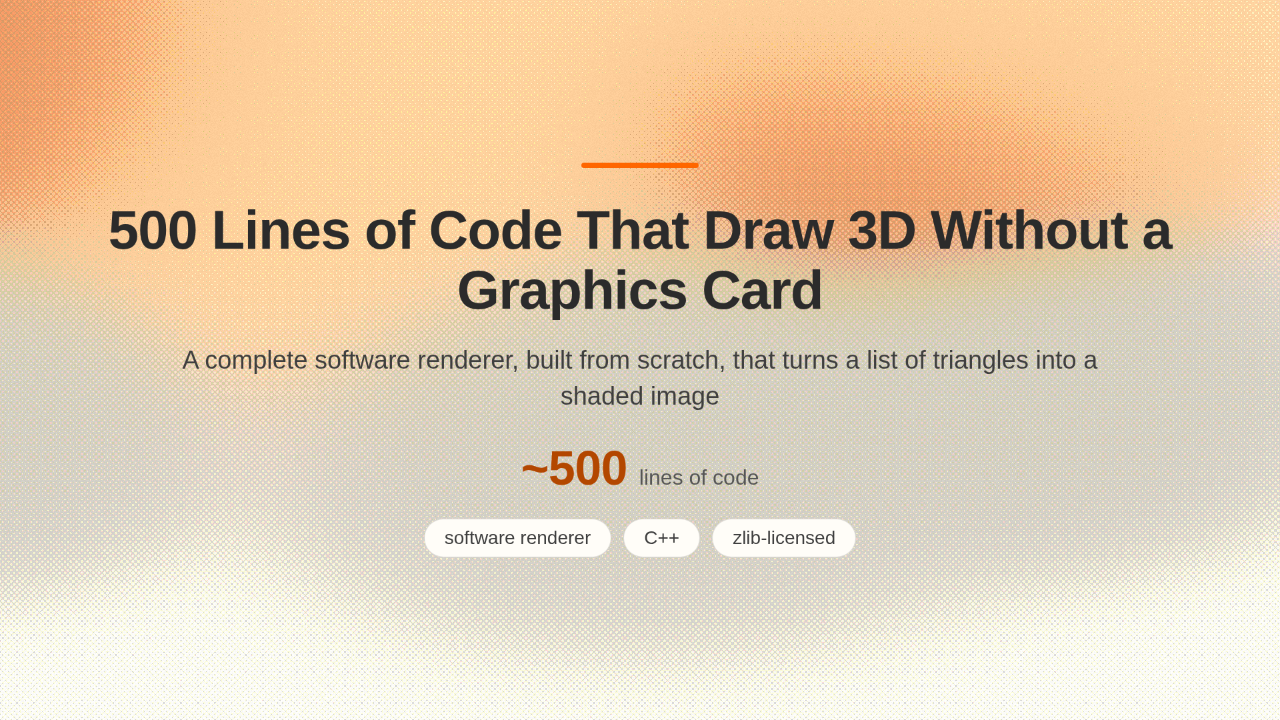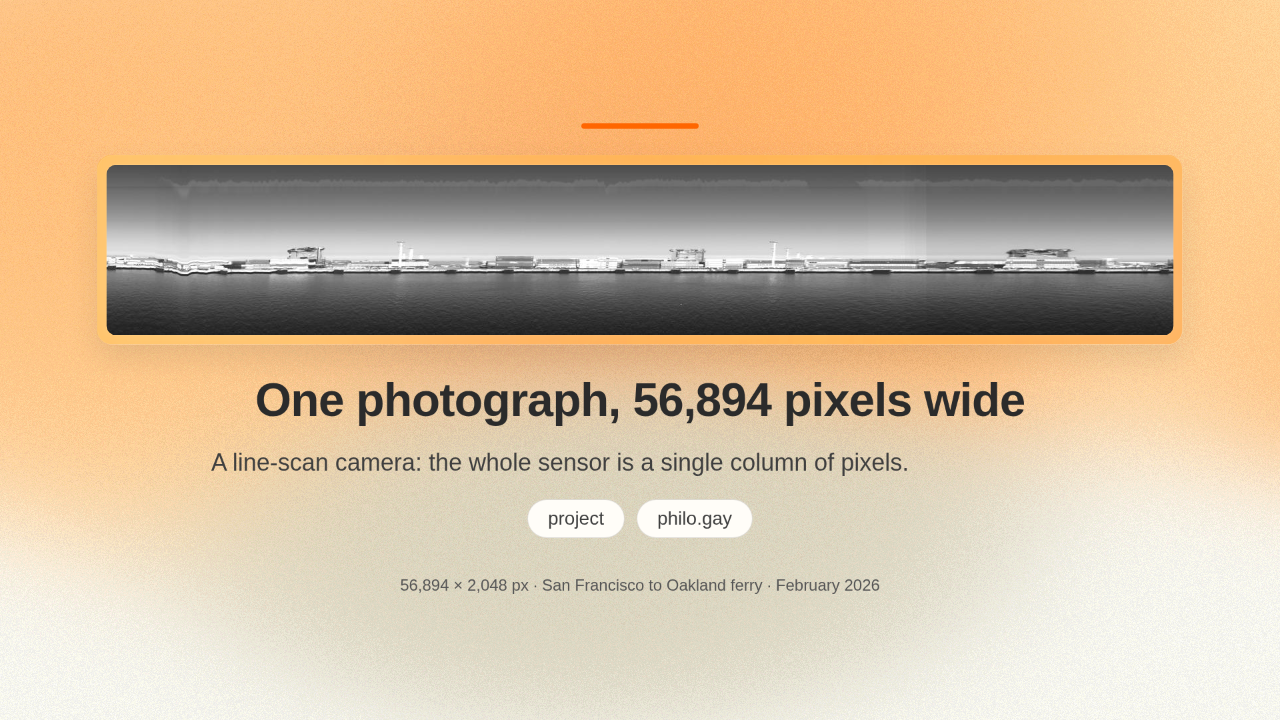
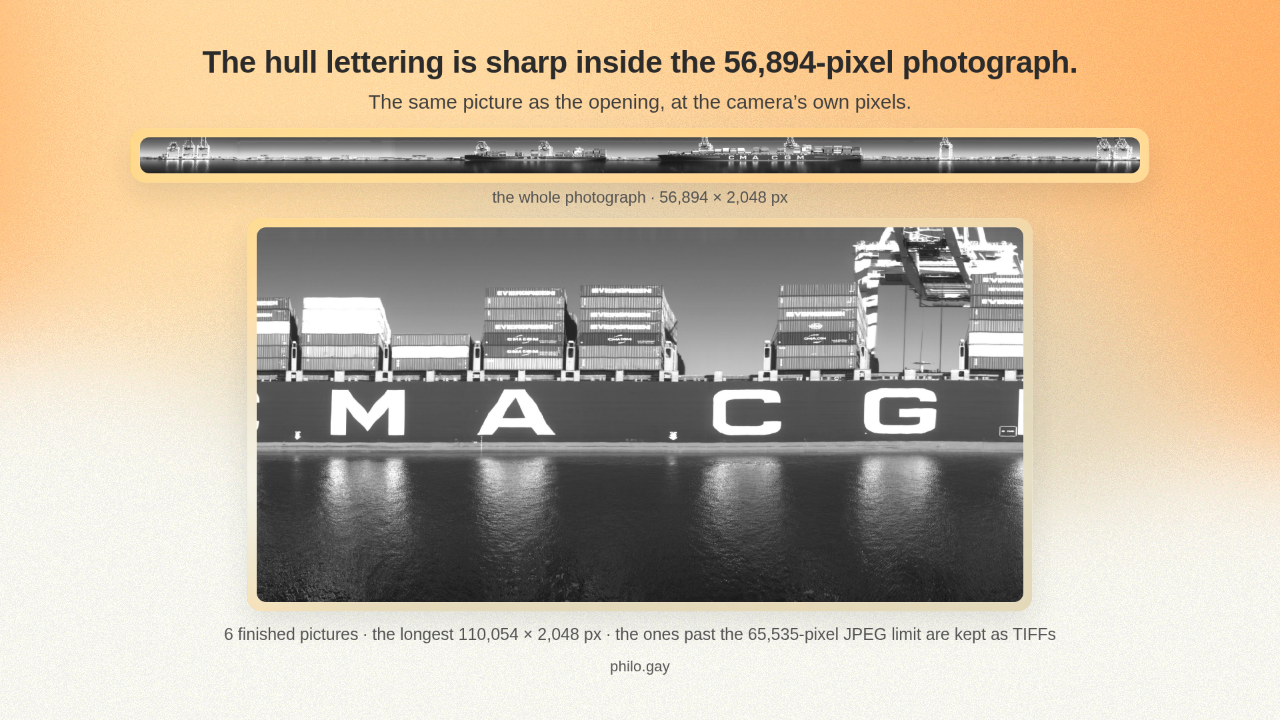
One photograph, 56,894 pixels wide
The camera that took this photograph sees a single vertical line at a time. Philo, a photographer, pointed that camera out of the window of a ferry and let the boat draw the rest.
The scanner holds still and the railway does the moving
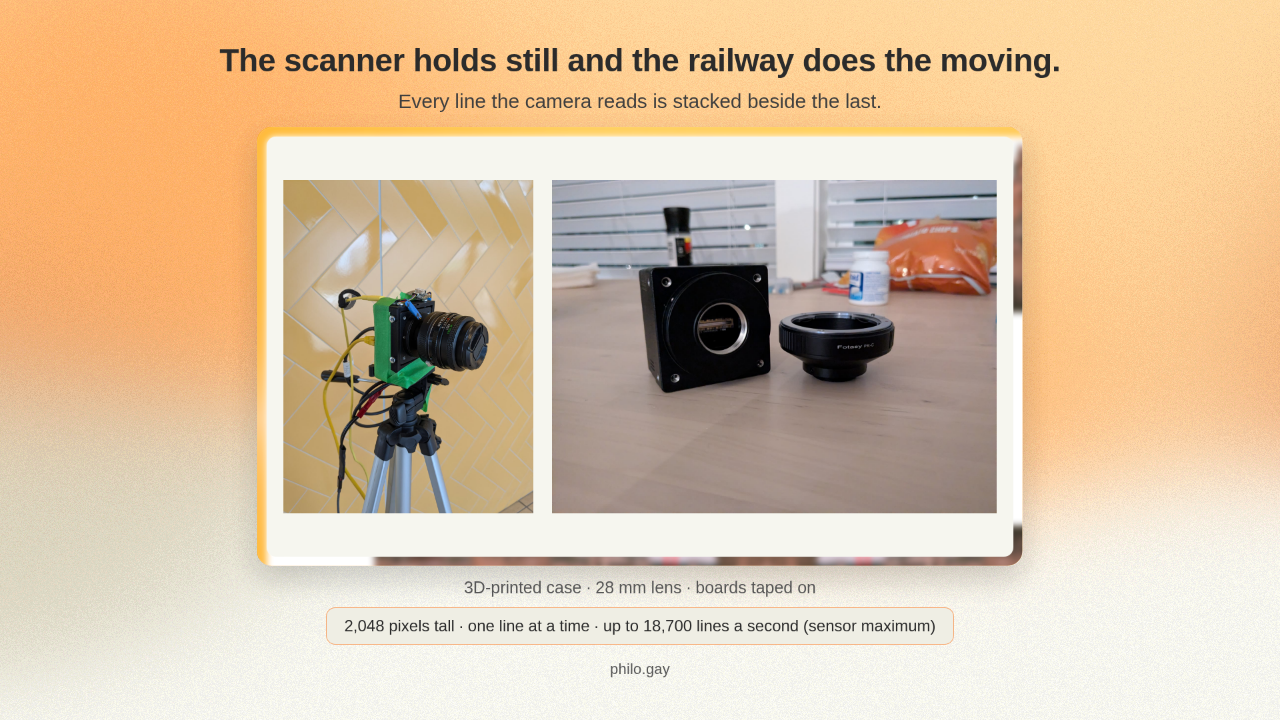
The scanner holds still and the railway does the moving.
A flatbed scanner slides a line of sensors under a still page. Philo holds the sensors still against a train window. The train sweeps the world past them. The camera is built to watch conveyor belts.
The width of this picture is time
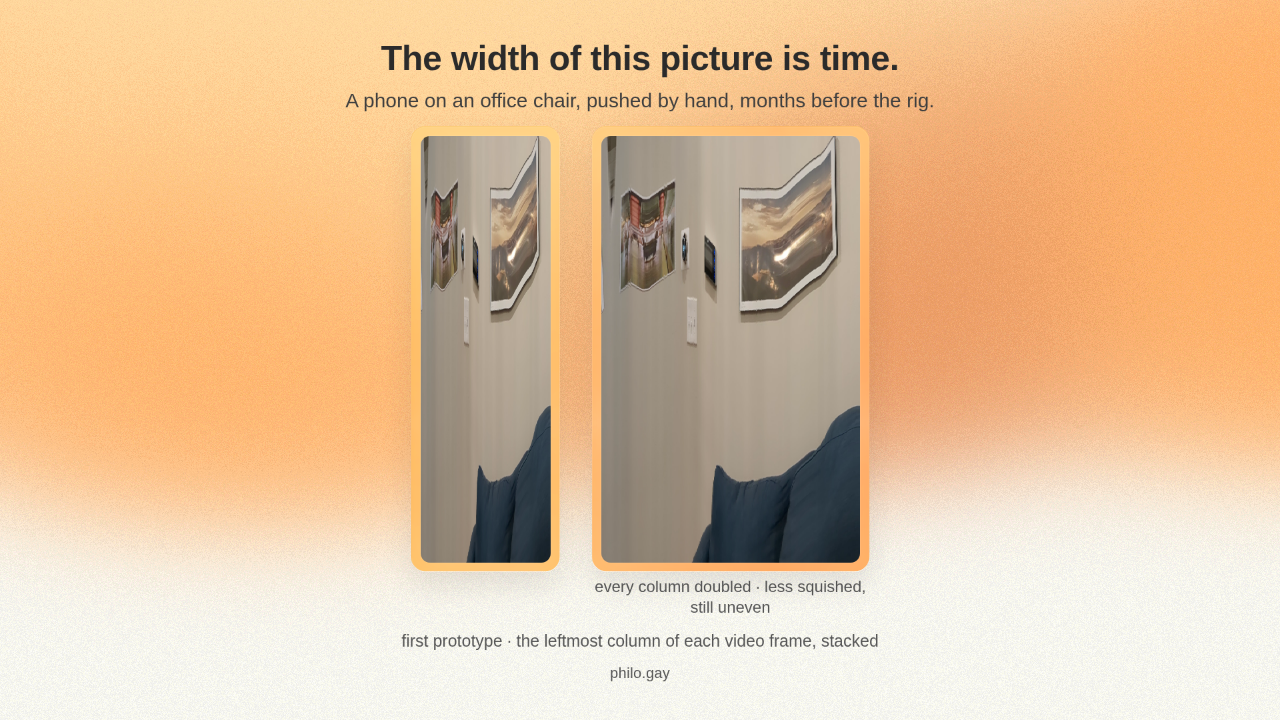
The width of this picture is time.
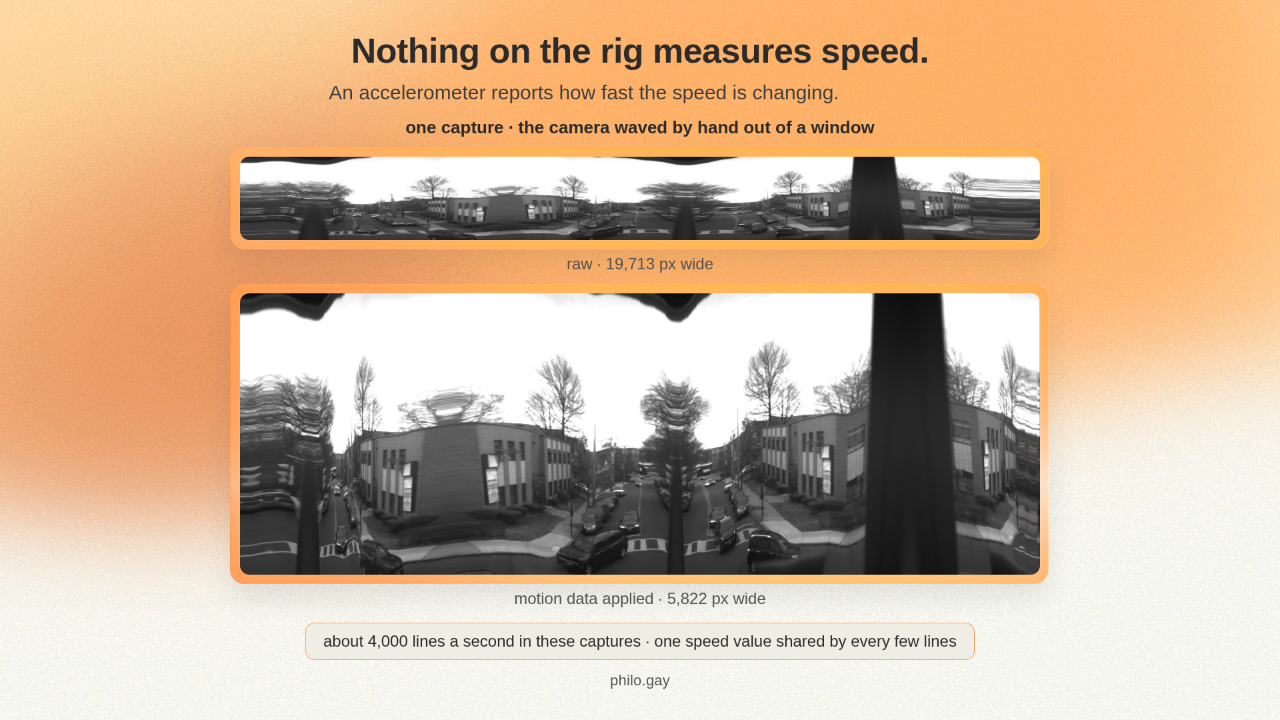
Each line the camera takes is a separate instant. Speed up, and the world gets squeezed. Philo's first test was a phone on an office chair, pushed by hand. The sofa is recognisable. The wall art buckles and ripples.
Nothing on the rig measures speed
Nothing on the rig measures speed.
To undo the stretching, Philo needs the speed at every instant. There is no speedometer on board. The rig carries a chip that senses how hard the camera is being sped up or slowed down. Add those changes up from the start and you get speed. Both frames are one wave of the camera out of a window. With the chip's numbers applied, the buildings stand up again. At a station she can call the start zero. Anywhere else she guesses, and every error stays in the total. On an early ride Philo taped a phone to a subway seat. The numbers said the train finished the trip going backwards.
Parallax means one scale cannot fit the whole frame
Parallax means one scale cannot fit the whole frame.
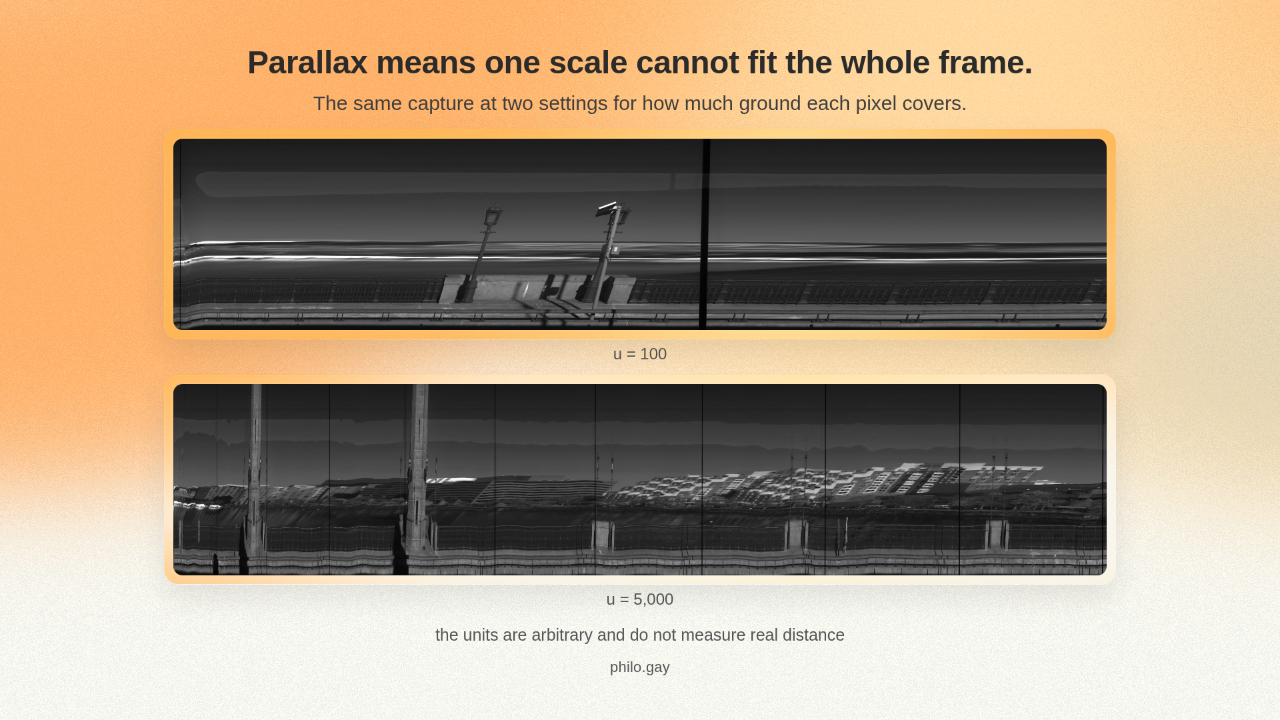
A perfect speed measurement still leaves parallax. Close things sweep past the window faster than distant ones. So Philo sets how much ground each pixel covers by hand, stretch by stretch. Low values bring the railing forward. High values bring in the far bank.
The hull lettering is sharp inside the 56,894-pixel photograph
The hull lettering is sharp inside the 56,894-pixel photograph.
This is the ferry picture again, magnified to the camera's own pixels. On the office chair the wall art rippled. On the ferry the lettering on a ship's hull holds.
Six finished pictures, and the speed problem is still open
A photograph usually gets its width from the lens. This one gets it from the vehicle. The motion data behind that width is on Philo's own list to fix next.