Vibe-Trading backtests your own trading decisions
A finance question in plain English goes in. Strategy code and a validated backtest come out. That's Vibe-Trading. And the cleverest thing it does isn't trading at all. It backtests you. That's coming in a minute.
You ask in plain English

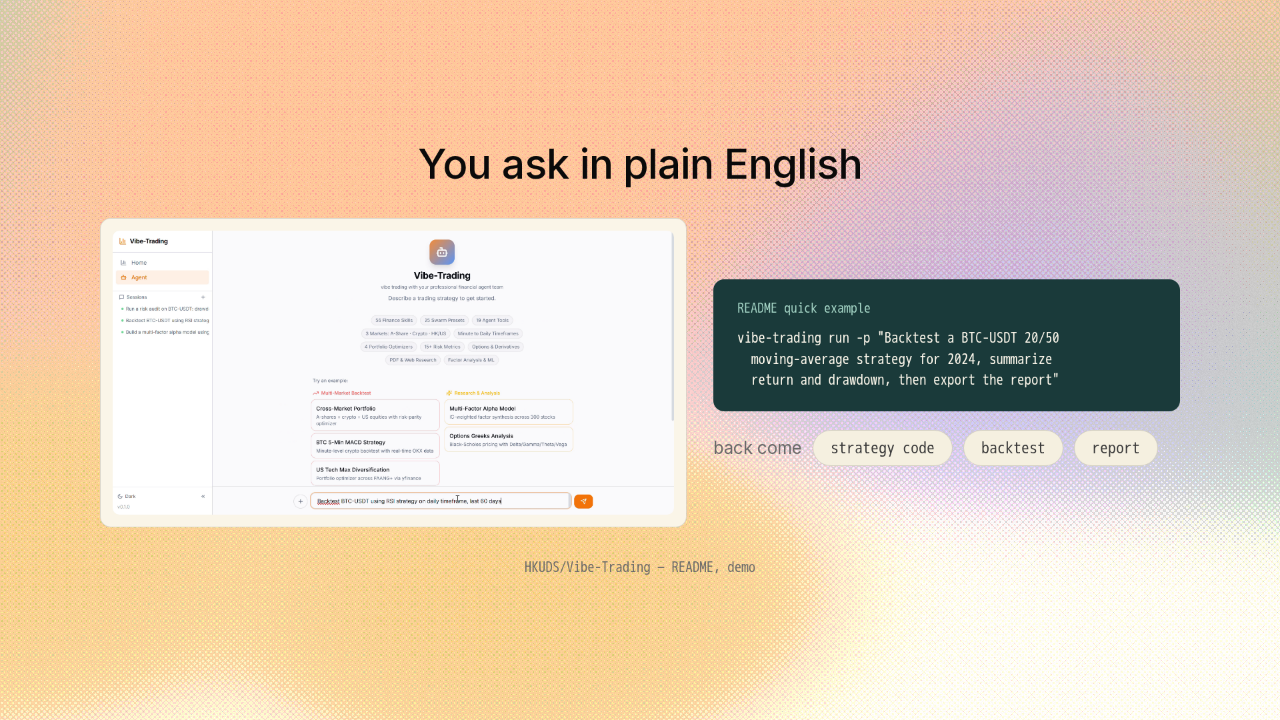
vibe-trading run -p "Backtest a BTC-USDT 20/50
  moving-average strategy for 2024, summarize
  return and drawdown, then export the report"
You ask for a backtest in plain English. Their quick example is one line: backtest a BTC twenty fifty moving-average strategy for twenty twenty-four, summarize return and drawdown, export the report. Back come the strategy code it wrote, the backtest, and a report you can open. It's from HKUDS, the HKU lab behind LightRAG.
The hard part is trusting the backtest
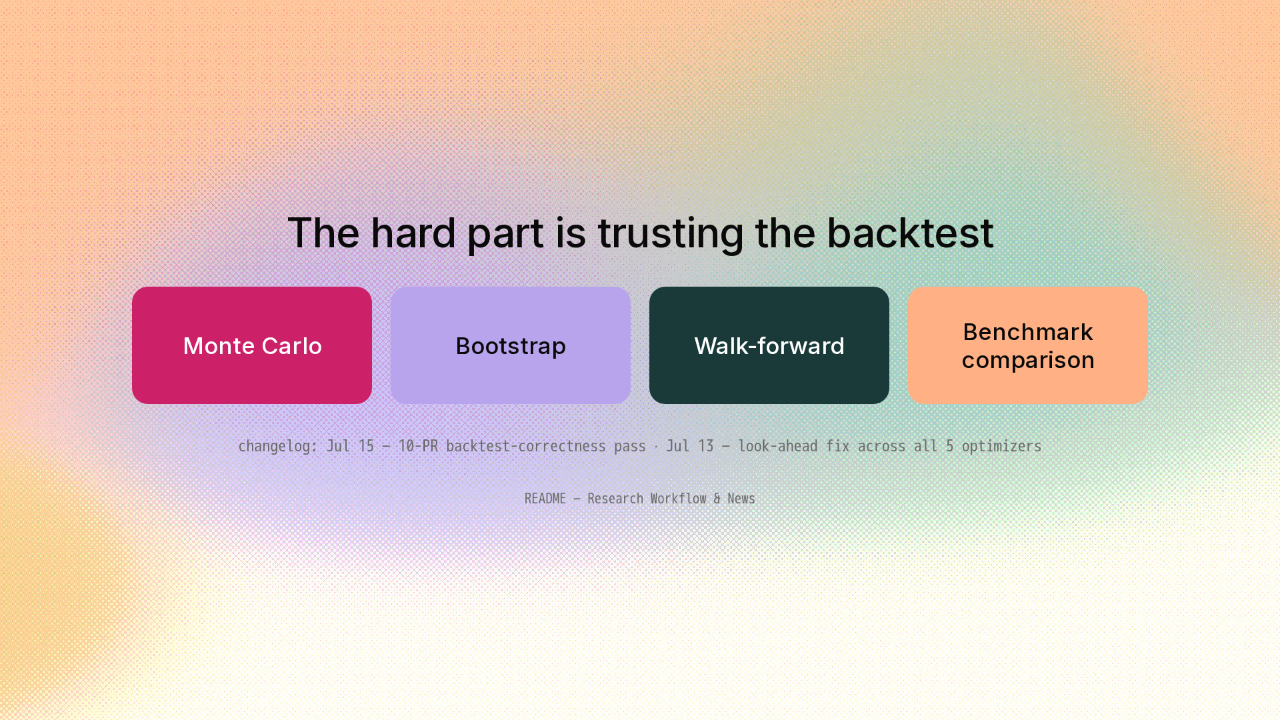
The hard part was never generating strategy code. It's trusting the backtest. Look-ahead bias and overfit curves make most backtests fiction. So validation is built into every run: Monte Carlo, bootstrap, walk-forward, benchmark comparison. This week alone, their changelog shows a ten-PR backtest-correctness pass, and a look-ahead fix across all five portfolio optimizers.
Shadow Account: it backtests you

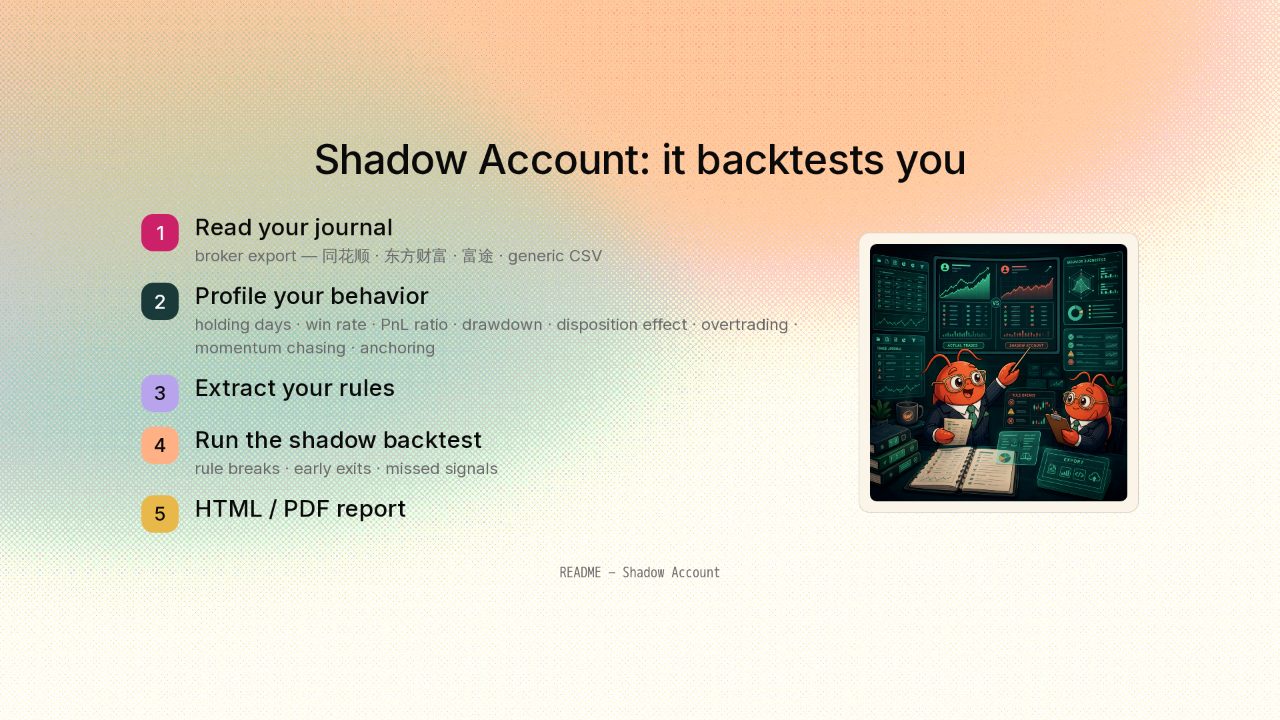
And this part's clever. Every AI trading pitch points the model at the market. Shadow Account points it at you. Feed it your broker export, and it profiles how you actually trade: holding days, win rate, disposition effect, overtrading. Then it pulls your recurring rules into an explicit strategy, and backtests that shadow against your real history: rule breaks, early exits, missed signals. It doesn't backtest a strategy. It backtests you.
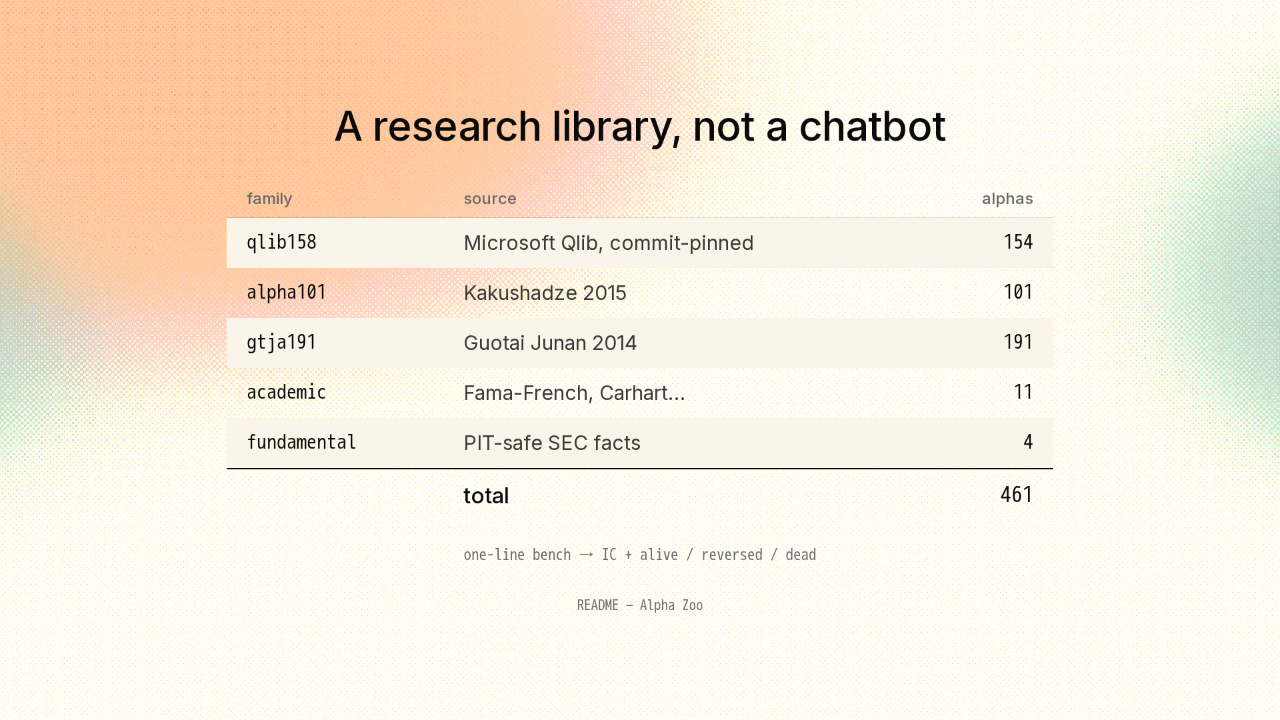
A research library, not a chatbot
| family | source | alphas |
|---|---|---|
| qlib158 | Microsoft Qlib, commit-pinned | 154 |
| alpha101 | Kakushadze 2015 | 101 |
| gtja191 | Guotai Junan 2014 | 191 |
| academic | Fama-French, Carhart… | 11 |
| fundamental | PIT-safe SEC facts | 4 |
| total | 461 |
Under the chat sits a research library, not a chatbot. The Alpha Zoo: four hundred sixty-one prebuilt alphas in five families, from Microsoft's Qlib set to the alpha one-oh-one paper to Fama-French classics. Each benches in a single line, tagged alive, reversed, or dead.
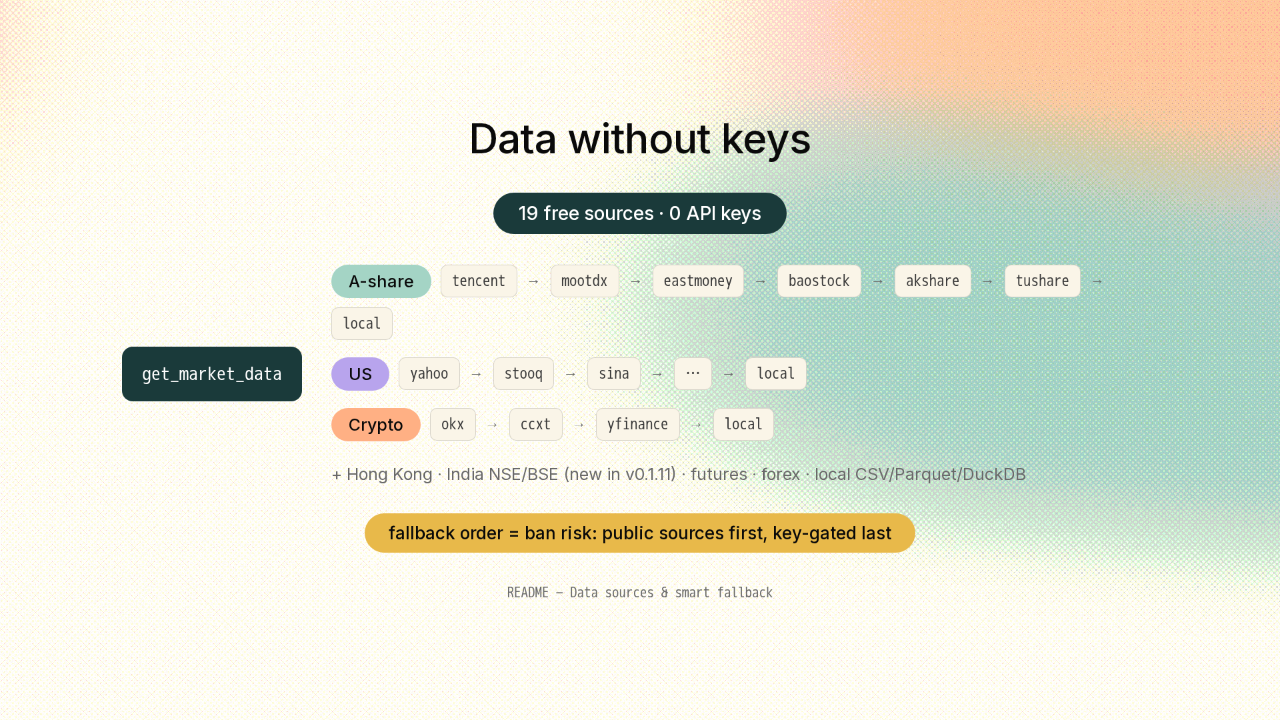
Data without keys
Data's the quiet win: one call, nineteen free sources, zero API keys to start. A-shares, Hong Kong, US, India, crypto on a hundred-plus exchanges, futures, forex, or your own CSV. Each market walks a fallback chain ordered by ban risk: public sources first, key-gated last.
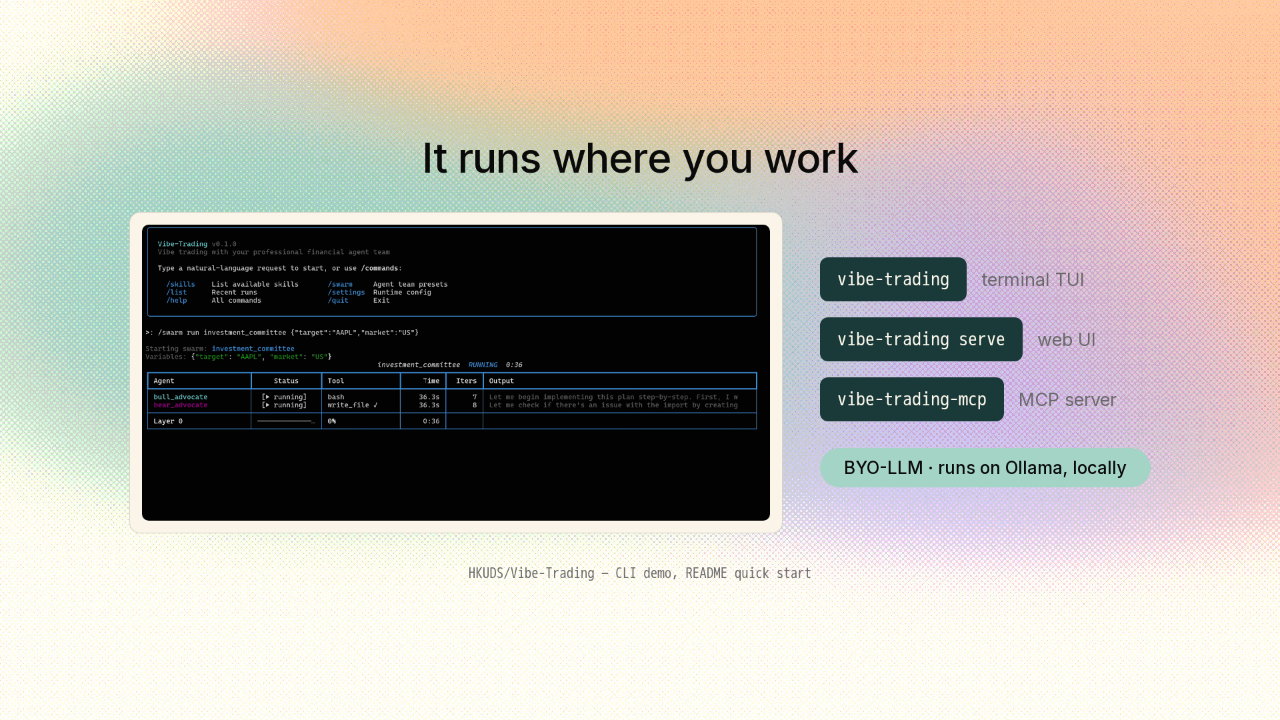
It runs where you work

And it runs where you work. One pip package, three commands: a terminal TUI, a web server, and an MCP server, so Claude Desktop or Cursor can drive the whole bench from your editor. Bring your own model. Point it at Ollama, and your broker history never leaves your machine.
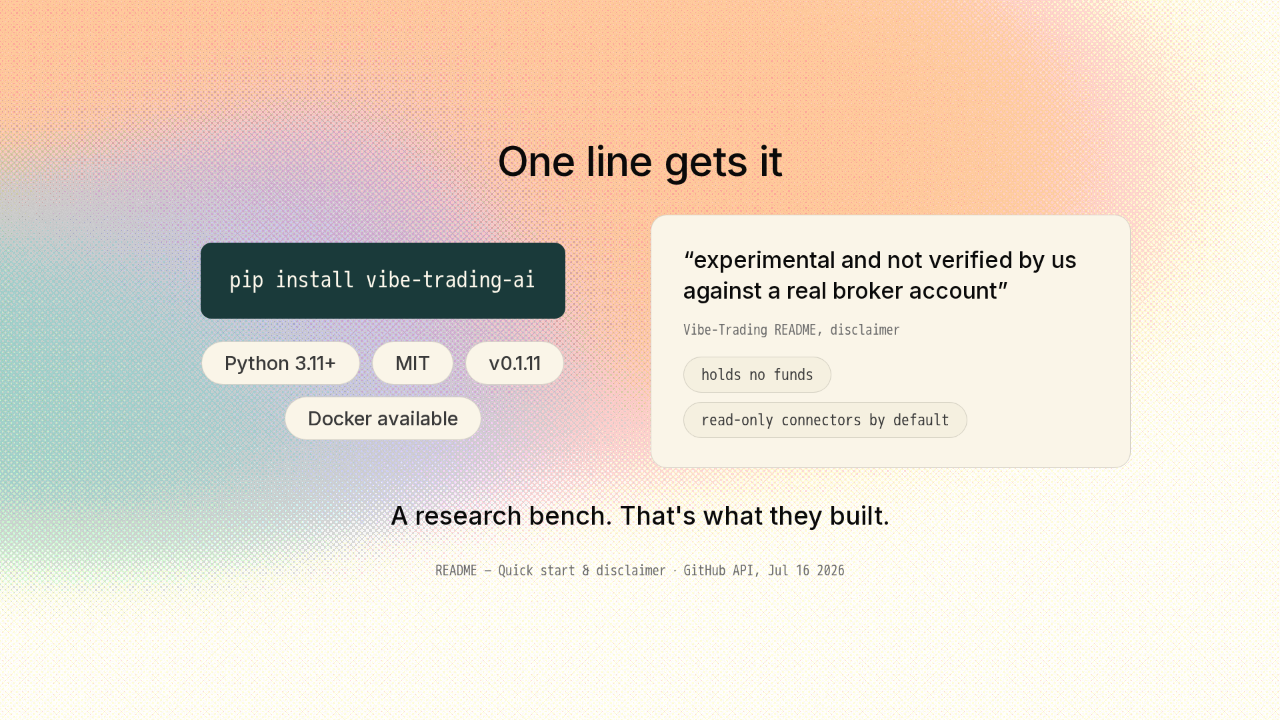
One line gets it
One line gets it: pip install vibe-trading-ai. Python three eleven plus, MIT, v0.1.11 shipped last week. Now the honest part, in their own words: it's built for research, simulation, and backtesting. It holds no funds, broker connectors are read-only by default, and live order placement is experimental, not verified against a real broker account. Treat it as a research bench. That's what they built.
Plain English in → a validated backtest out → it'll even backtest you.
So: a plain-English question in, a validated backtest out, and it'll even audit the trader you already are. Worth thirty minutes this weekend if you tinker with markets. The link's on screen. New repo tomorrow.











