Slide 1
Point this at a system you're allowed to test, hand it a goal, and a whole team of AI agents runs the pentest for you. The recon, the exploit, and the write-up.
What it is
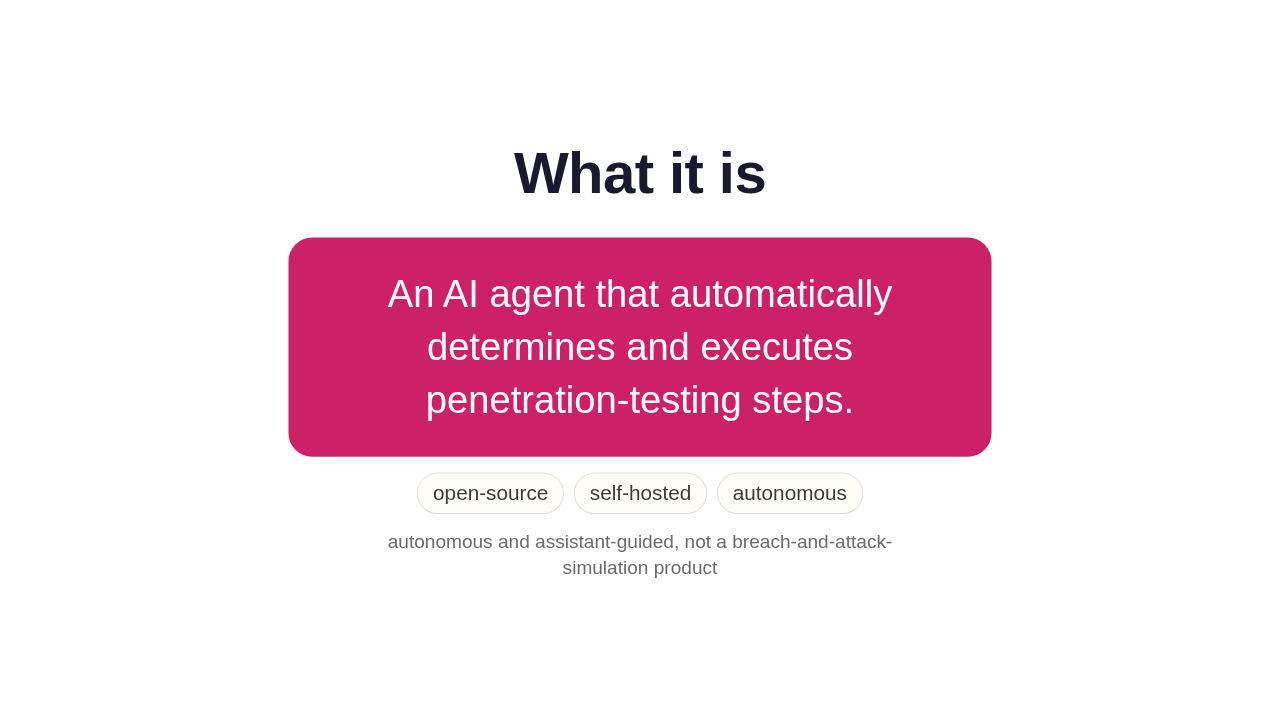
PentAGI is open-source, and you run it yourself. Give it a target and an objective, and a team of specialist agents plans the test, runs it, and writes up what they find. It's built for security pros doing authorized work. And it's honest about the edges: this is an autonomous, assistant-guided platform, not a canned breach-simulation product.
Automated, and built to run safely

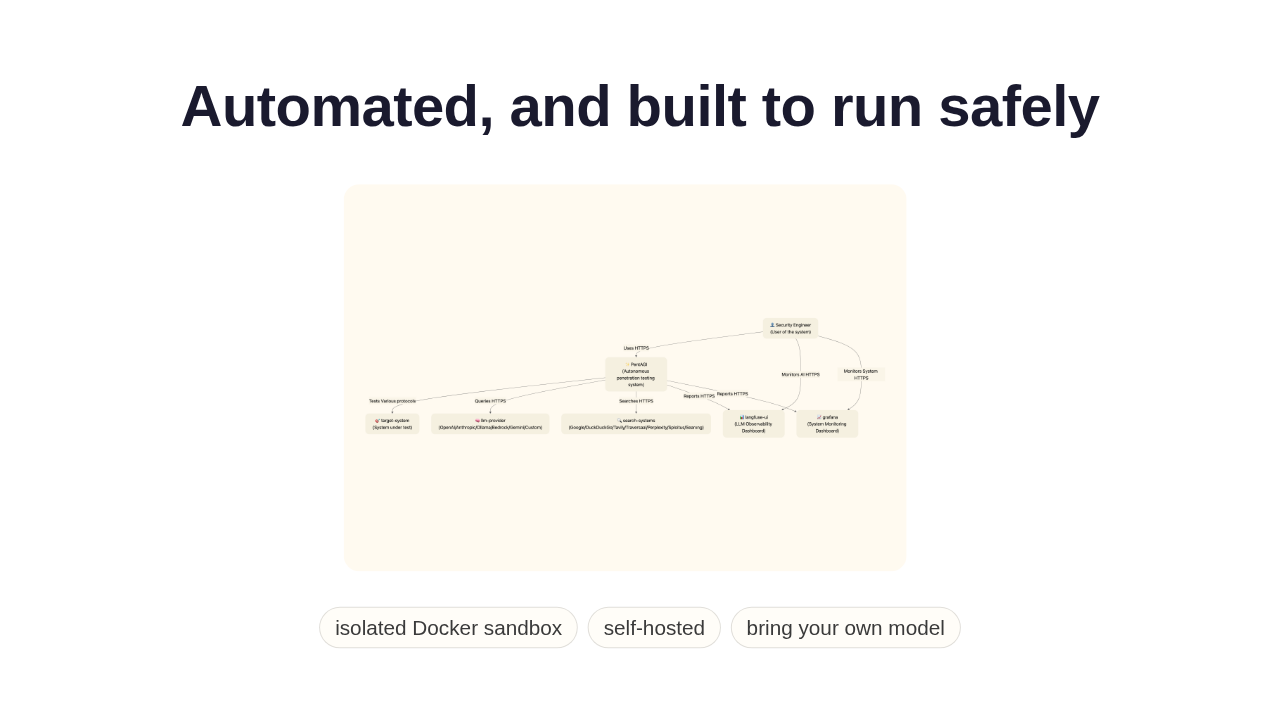
Automating a pentest sounds risky, so here's why it's safe to run. Every operation happens inside isolated Docker containers. You self-host the whole thing, so your targets and your data never leave your own infrastructure. And you bring your own model, any provider, or a local one that never phones home.
Not one agent. A team, with a boss

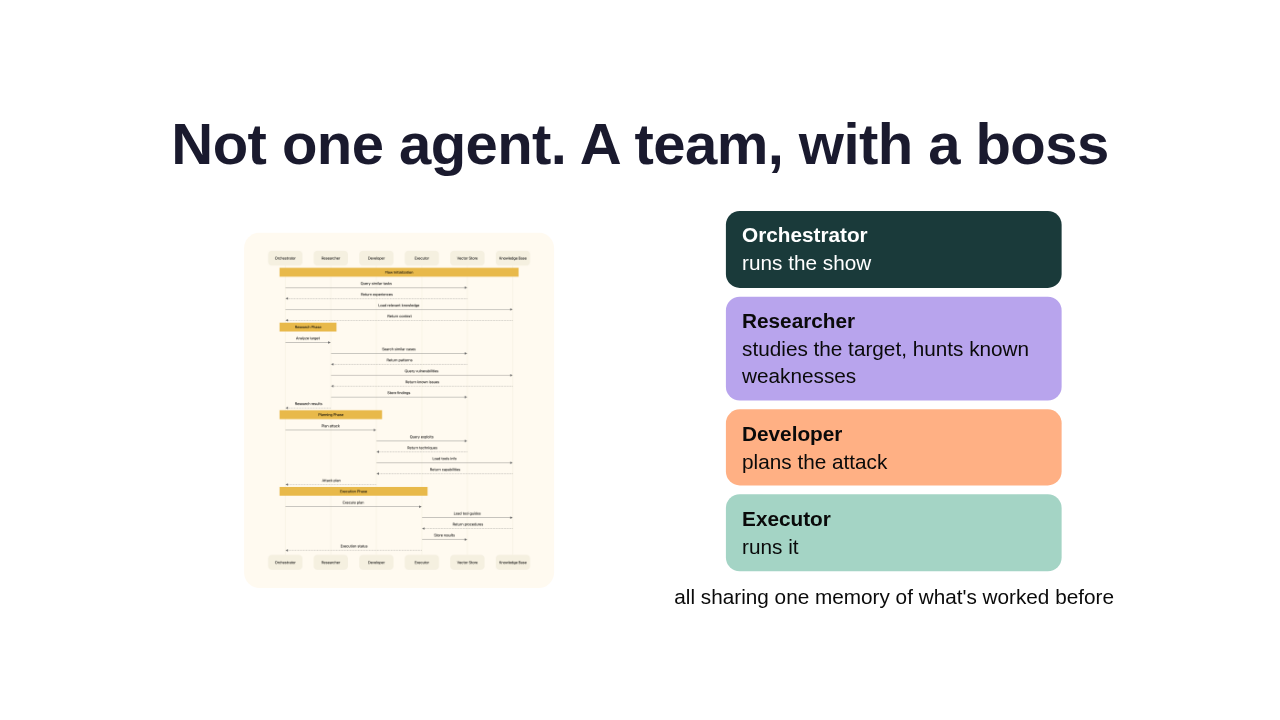
Here's the clever part. It isn't one giant agent, it's a team. An orchestrator runs the show. A researcher studies the target and hunts known weaknesses. A developer plans the attack. And an executor runs it. Every one of them checks a shared memory of what's worked before.
A supervision layer keeps the loop honest
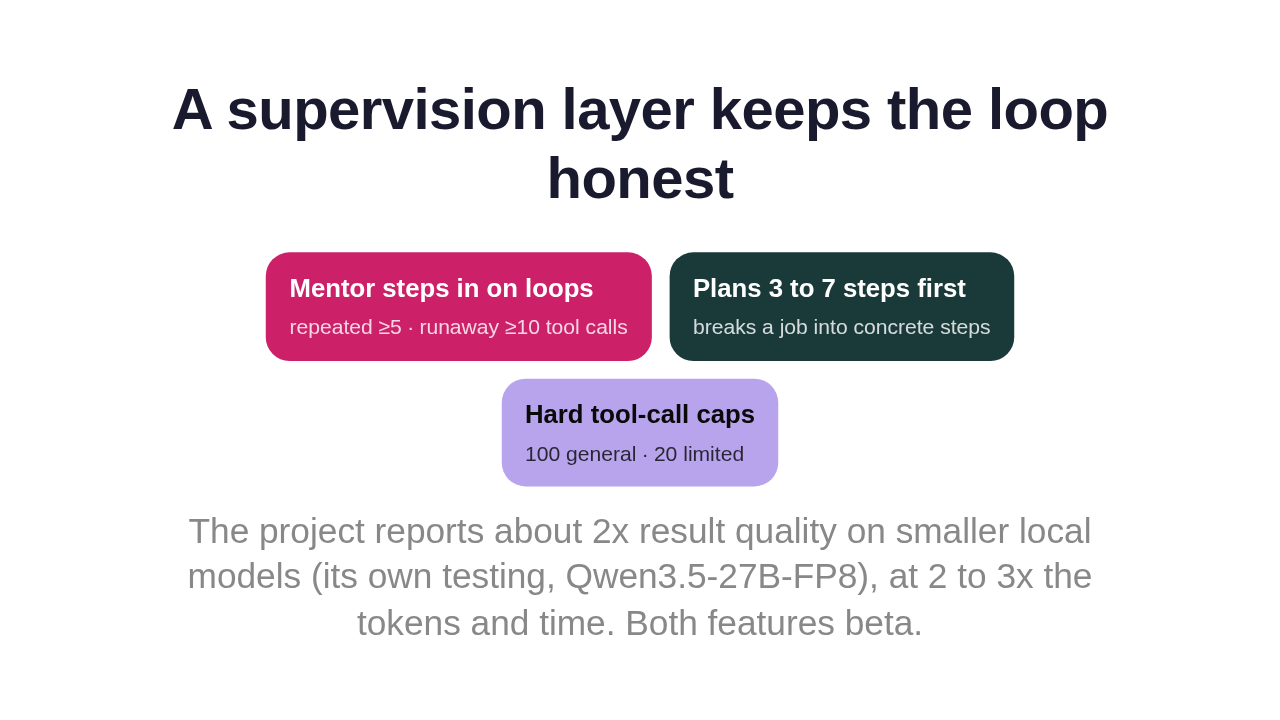
So what stops a loop of agents from going off the rails? A supervision layer. A mentor spots repeated or runaway tool calls and steps in with a new plan. A planner breaks each job into three to seven concrete steps first. And every agent has a hard cap on its tool calls. The project reports that roughly doubles quality on smaller local models, at more tokens and time. Both pieces are still beta.
Every run learns from the last

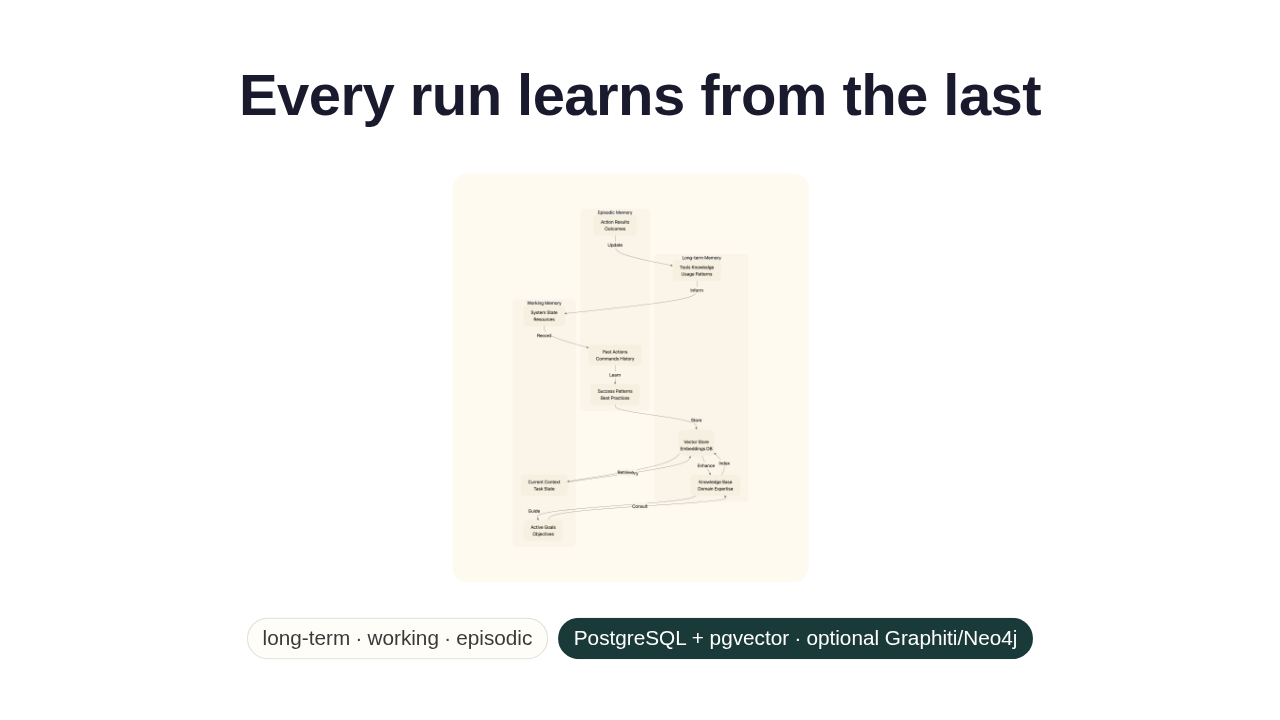
And runs aren't amnesiac. PentAGI keeps three kinds of memory: long-term, for past findings and tool habits, working memory for the current goal, and episodic memory of what actually succeeded last time. So the next run starts from what already worked.
You pick the tools' power and the model's cost
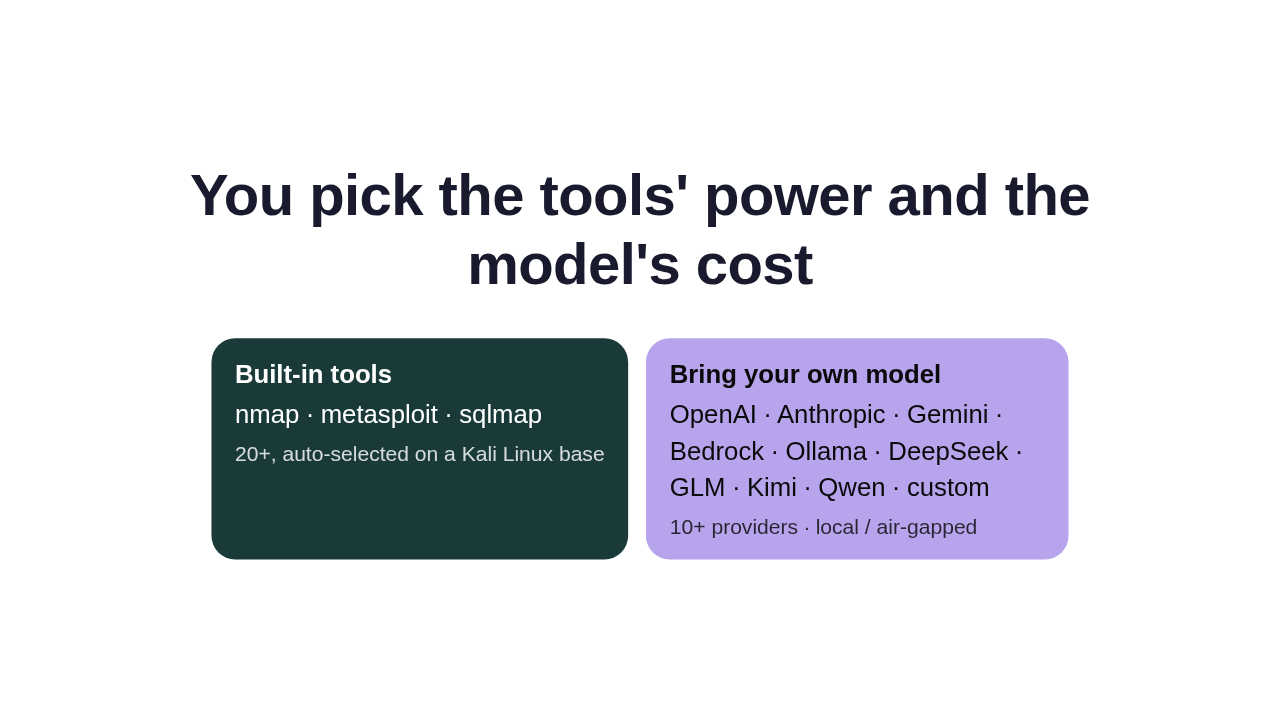
It comes with the toolbox built in. Over twenty professional security tools, things like nmap, metasploit, and sqlmap, picked automatically per task from a Kali Linux base. And it runs on ten-plus model providers. OpenAI, Anthropic, Gemini, or Ollama for something fully local. You pick the tools' power and the model's cost.
Getting it is a Docker Compose up
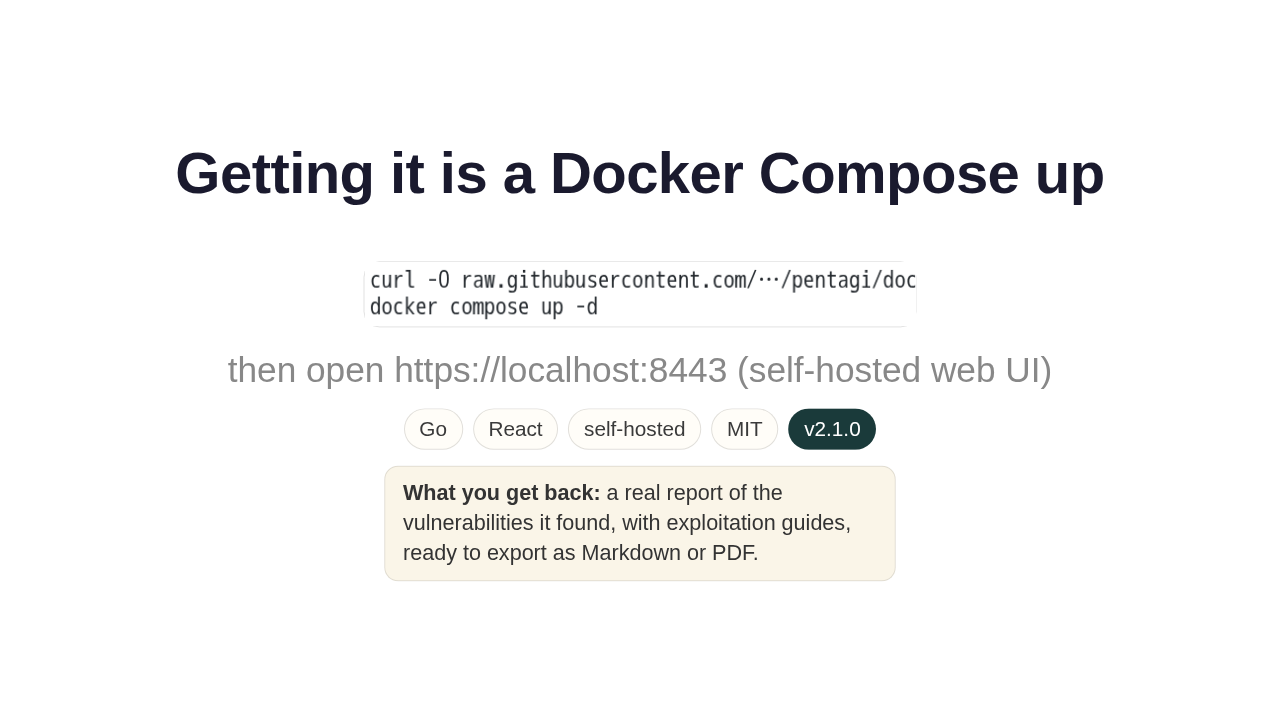
curl -O raw.githubusercontent.com/…/pentagi/docker-compose.yml
docker compose up -dGetting it is a Docker Compose up. Go backend, React front end, self-hosted, MIT licensed, latest release two point one oh. And what you get back is a real report: the vulnerabilities it found, with exploitation guides, ready to export as Markdown or PDF.
PentAGI
So that's PentAGI. An authorized pentest, run by a supervised team of agents you host yourself. You just bring the model. If you work in security, it's worth a look. The link's on screen, and there's a new repo tomorrow.











