Slide 1
Someone rewrote PostgreSQL from scratch in Rust, with AI. And the project says it already passes every test Postgres runs on itself.
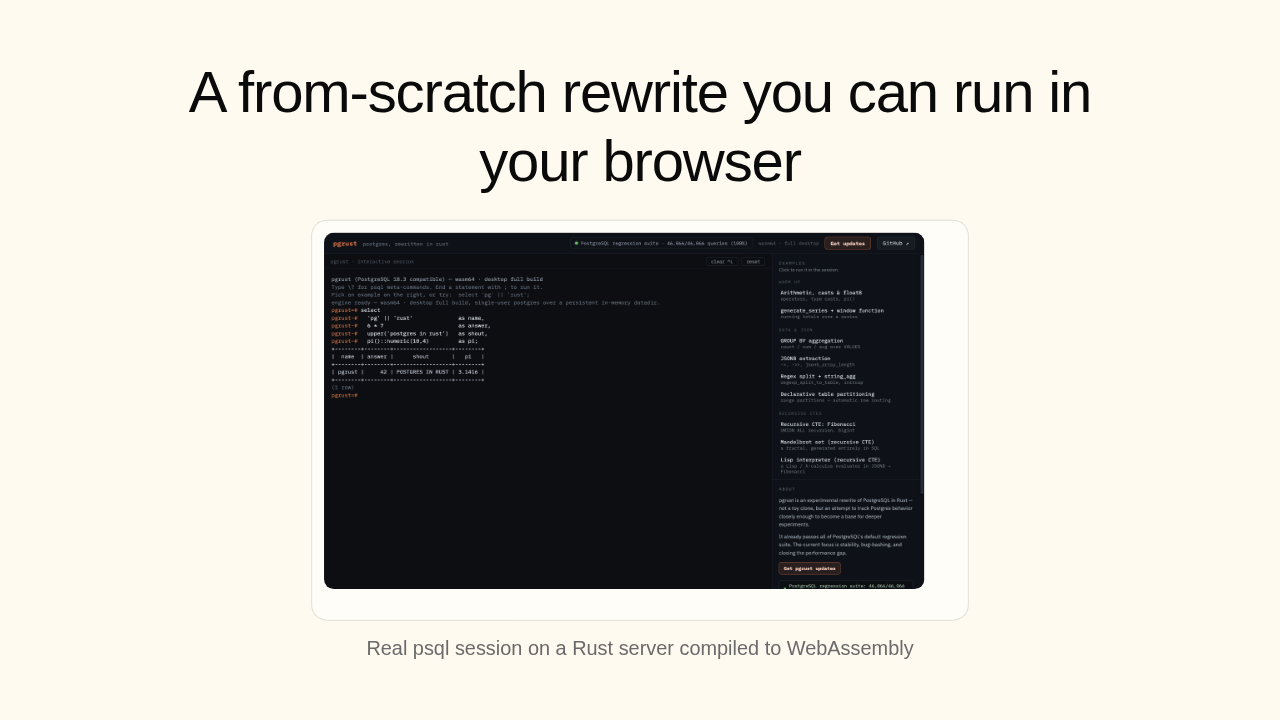
A from-scratch rewrite you can run in your browser

pgrust is a from-scratch reimplementation of Postgres in Rust. Not a fork of the C code, not a wrapper. And you can open a real psql session against it right in your browser. So should you trust an AI-assisted rewrite of a forty-year-old database?
Slide 3

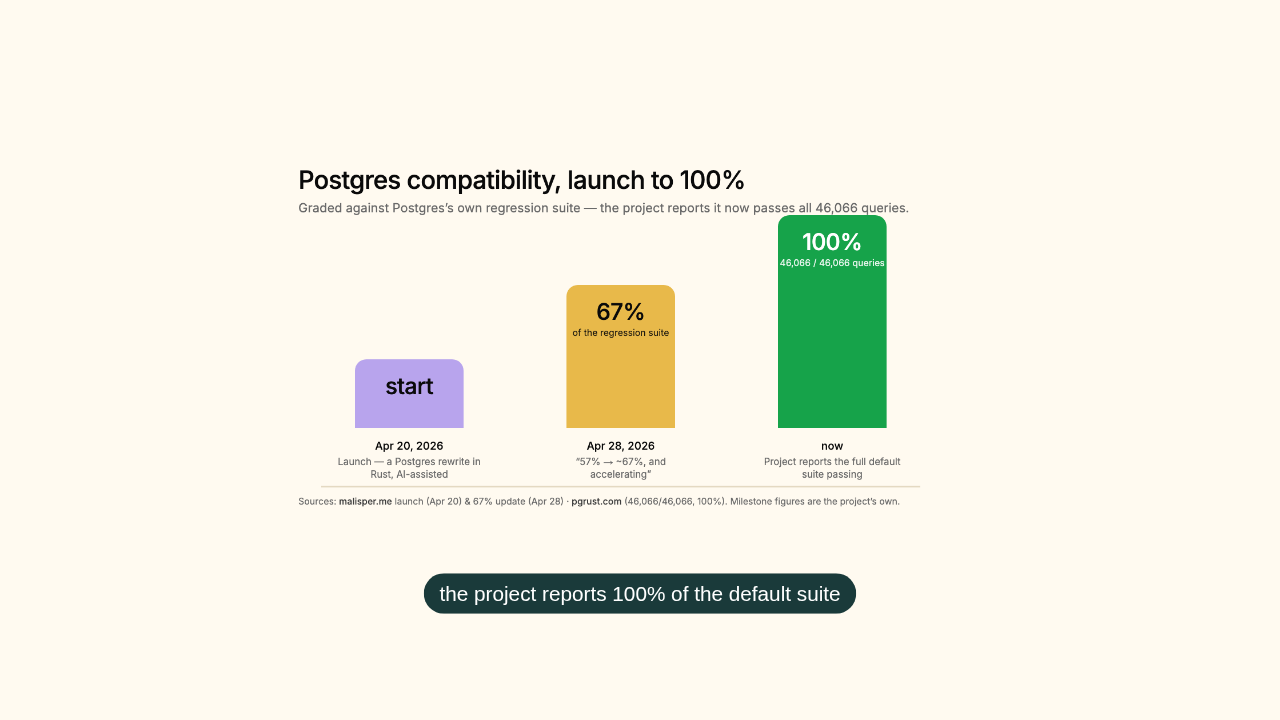
Here's the clever part. Their answer: keep the behavior Postgres-shaped, and make Postgres's own regression suite the judge. Every change gets graded against Postgres's real expected output. Correct isn't a vibe, it's a diff against Postgres. They climbed from around sixty-seven percent to every one of Postgres's forty-six thousand regression queries. The project reports a hundred percent of the default suite. Malis and Seibel built it.
Slide 4
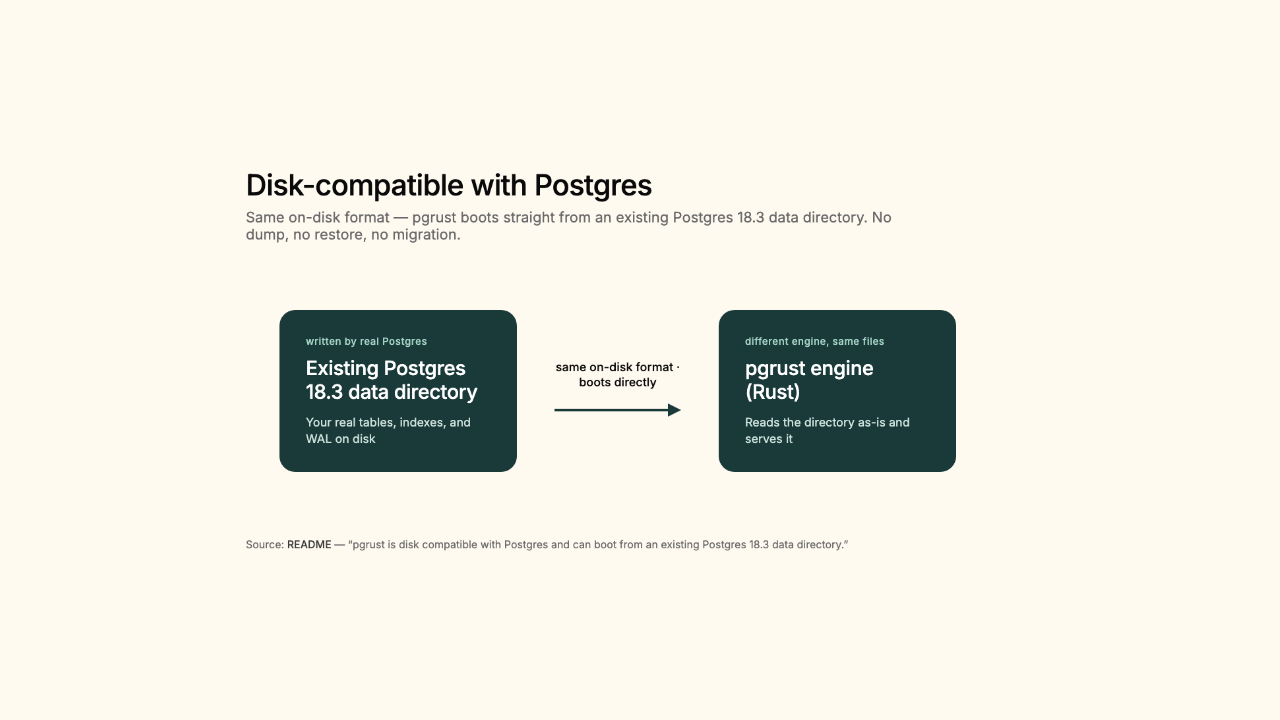
And it reaches below the SQL. pgrust uses the same on-disk format as Postgres. Point it at an existing Postgres eighteen point three data directory, your real tables and indexes, and it just boots and serves them. No dump, no restore, no migration.
Slide 5
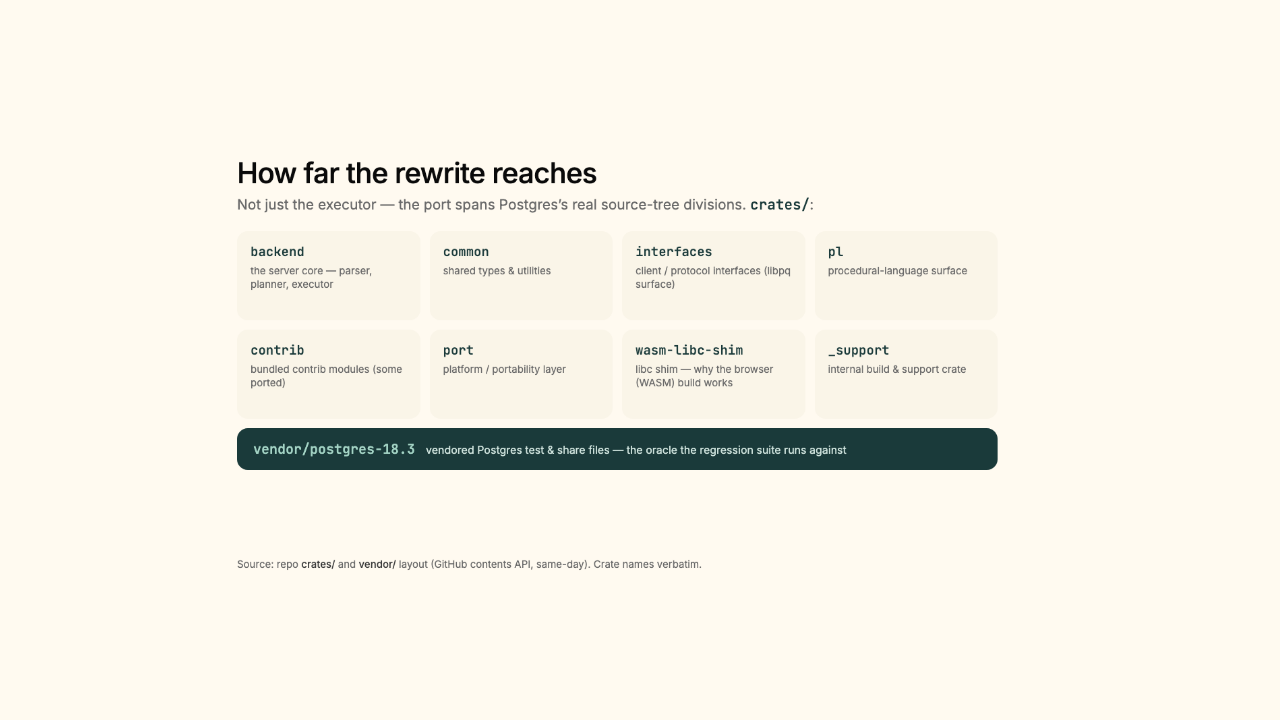
How much did they rewrite? Not just the query engine. The port spans the backend, the client interfaces, the procedural-language layer, contrib modules, even a libc shim for WebAssembly. That shim is why the browser demo works. Underneath sits vendored Postgres, the tests that act as the oracle.
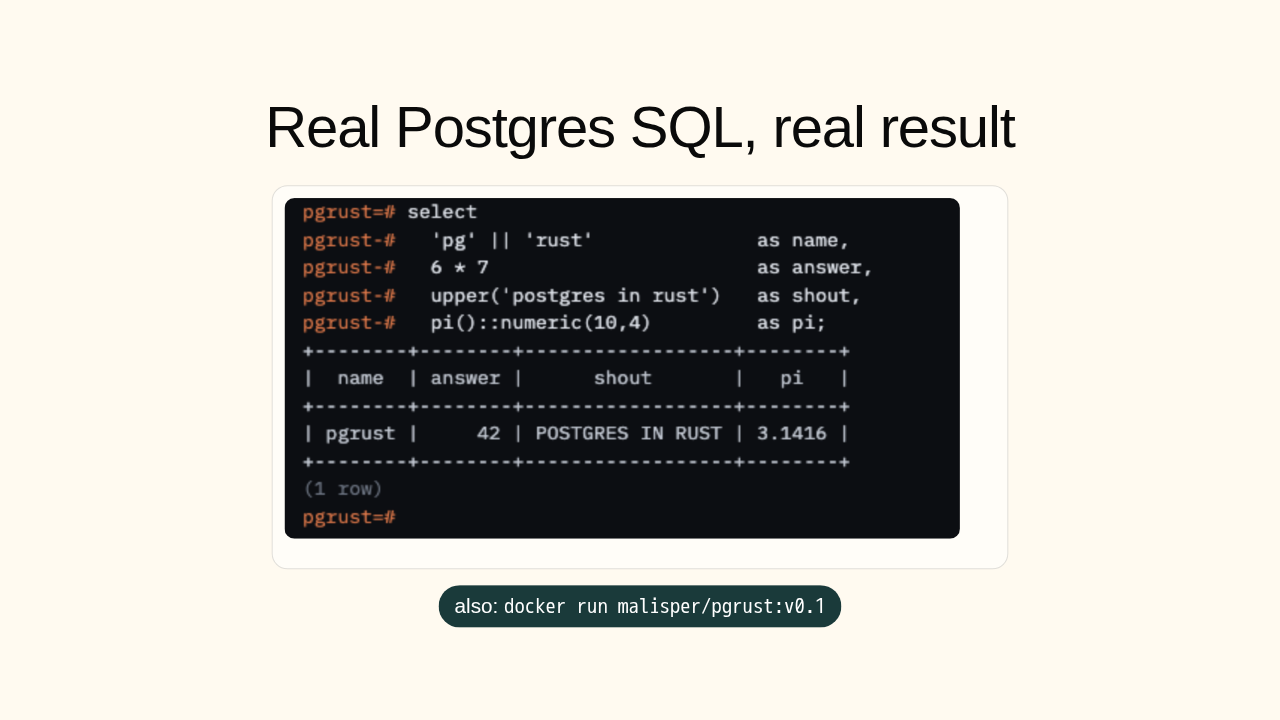
Real Postgres SQL, real result

docker run malisper/pgrust:v0.1
Back to that browser session, the real proof. Genuine Postgres SQL goes in, and the result comes straight back from a Rust server. Not a stub, not a recording. Prefer local? There's a pinned Docker image too.
Slide 7

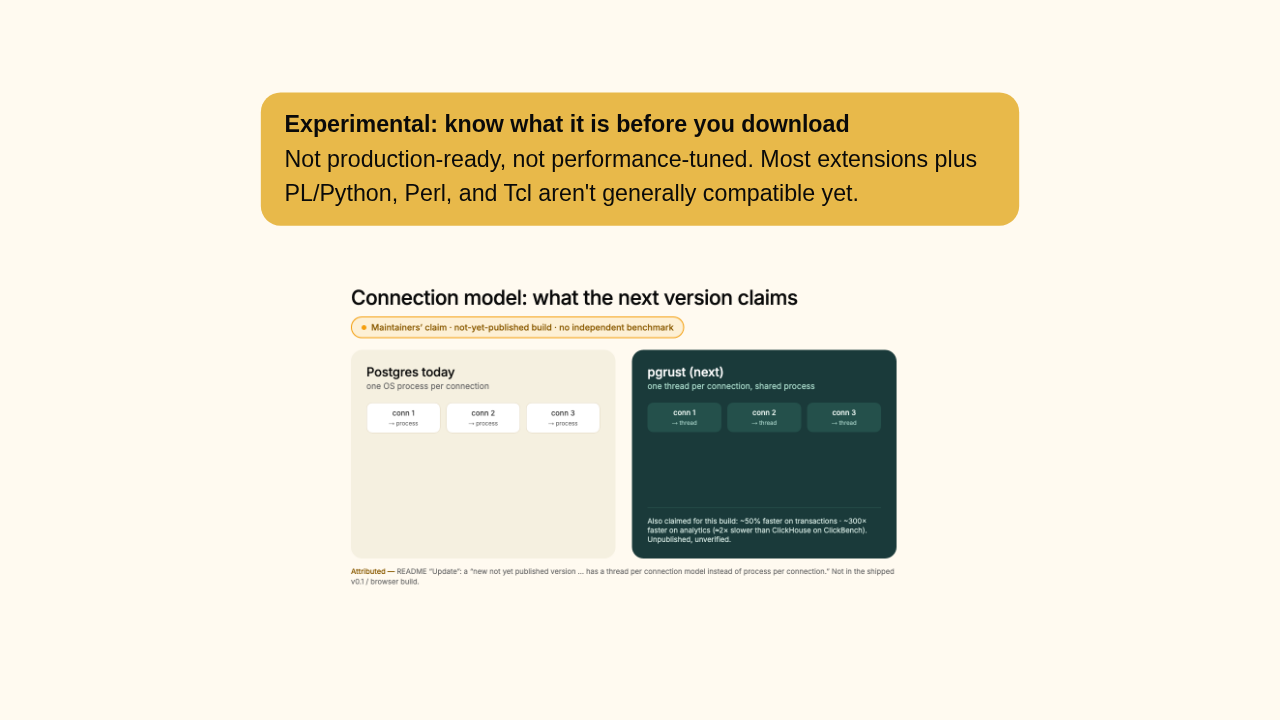
Now the honest part. pgrust is experimental: not production-ready, not performance-tuned, and most extensions plus PL/Python, Perl, and Tcl aren't compatible yet. And those big speed numbers, fifty percent faster on transactions, three hundred times faster on analytics? They're the maintainers' own figures for a version they haven't published, with no outside benchmark. Take them as a claim, not a result. The interest here is the method, not replacing your database this week.
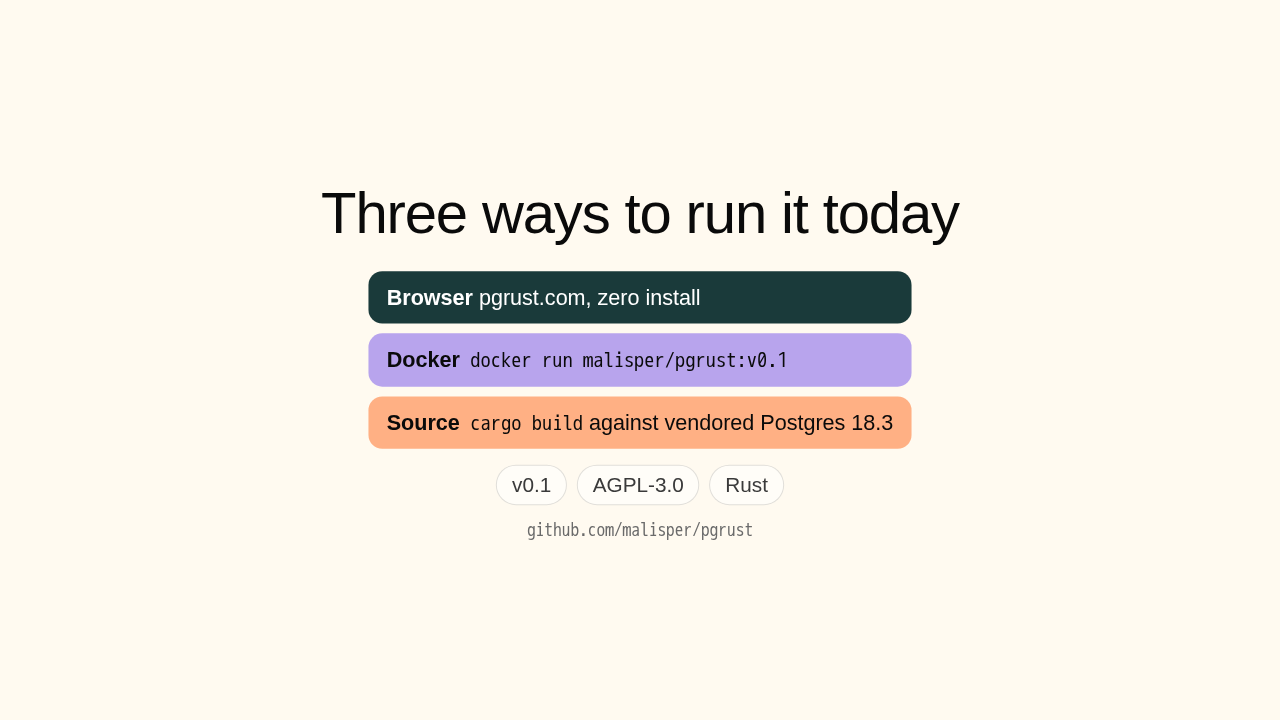
Three ways to run it today
docker run malisper/pgrust:v0.1
cargo build against vendored Postgres 18.3
So how do you try it? Easiest is the browser demo, zero install. Or docker run the pinned zero point one image, or build from source with cargo. It's AGPL-3.0, strong copyleft, so mind that for commercial use. The link's on screen.
pgrust
So that's pgrust. A from-scratch Postgres rewrite that lets Postgres itself grade the work. Even at version zero point one, that's a genuinely clever idea, worth a star and a weekend poke. The link's on screen, and there's a new repo tomorrow.











