

Slide 1
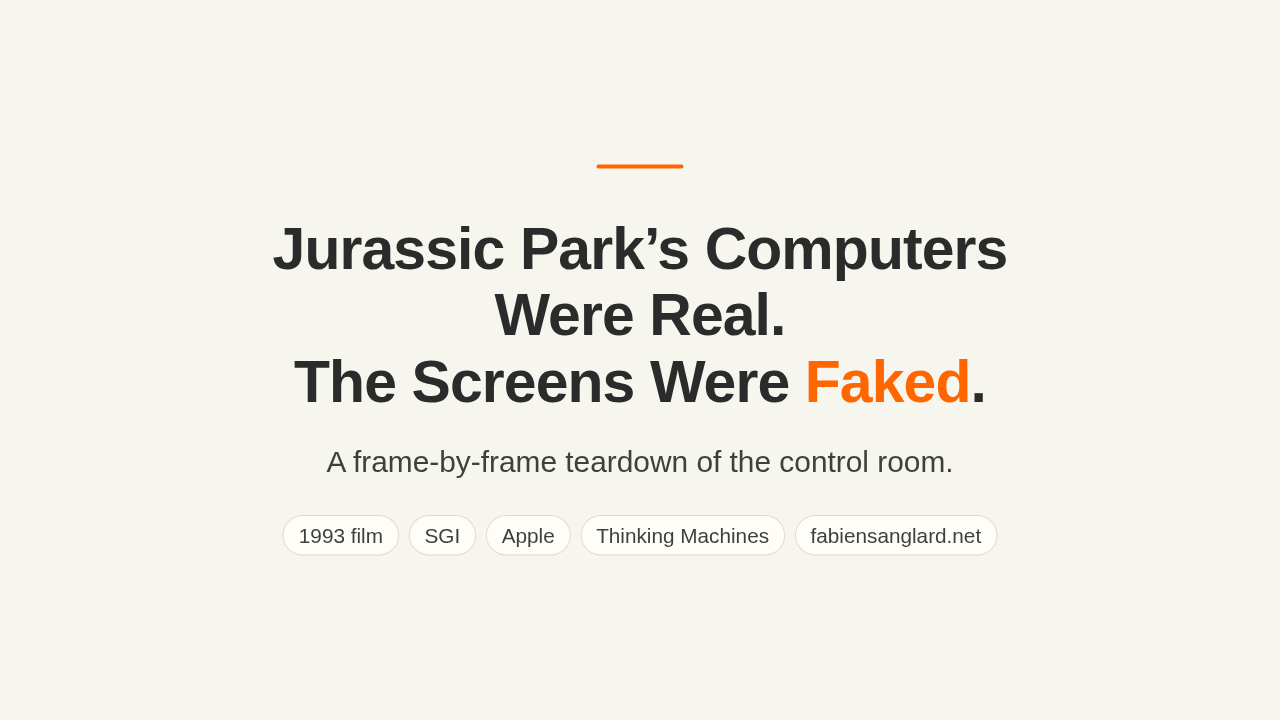
The Screens Were Faked.
Every computer in Jurassic Park's control room was real, working hardware. The graphics on the screens were the fake part.
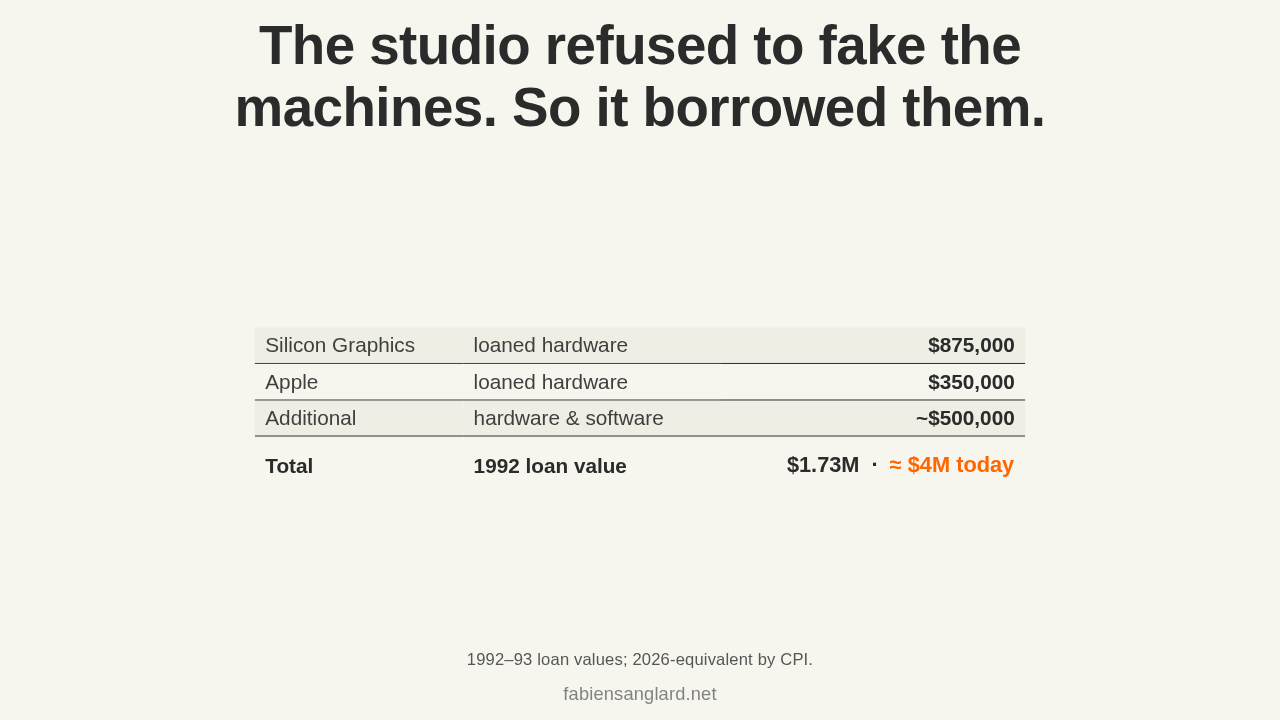
The studio refused to fake the machines. So it borrowed them.
| Silicon Graphics | loaned hardware | $875,000 |
| Apple | loaned hardware | $350,000 |
| Additional | hardware & software | ~$500,000 |
| Total | 1992 loan value | $1.73M · ≈ $4M today |
The effects team refused to fake the machines. By the nineties, audiences knew what a computer looked like. So the studio borrowed the real thing. Roughly four million dollars of Silicon Graphics, Apple, and Thinking Machines hardware, in today's money.
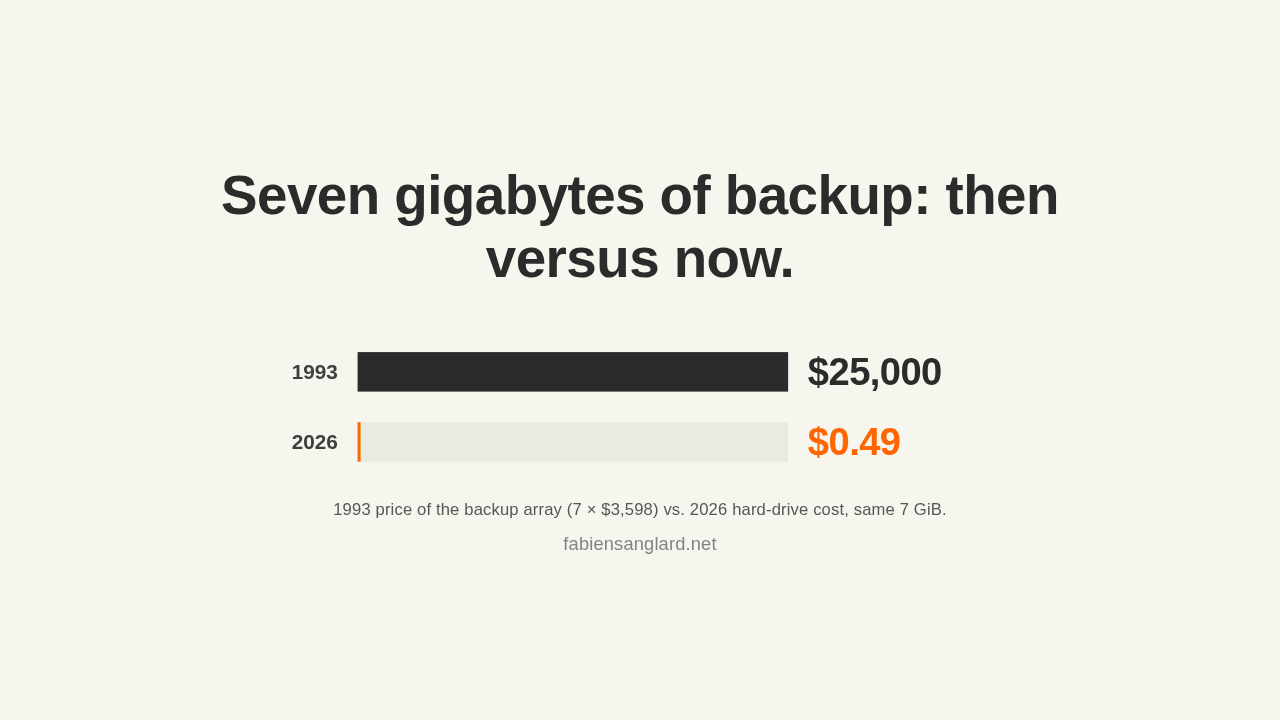
Seven gigabytes of backup: then versus now.
The backup drives make the point. To store seven gigabytes in 1993, the production spent about twenty-five thousand dollars. The same seven gigabytes today costs around fifty cents.
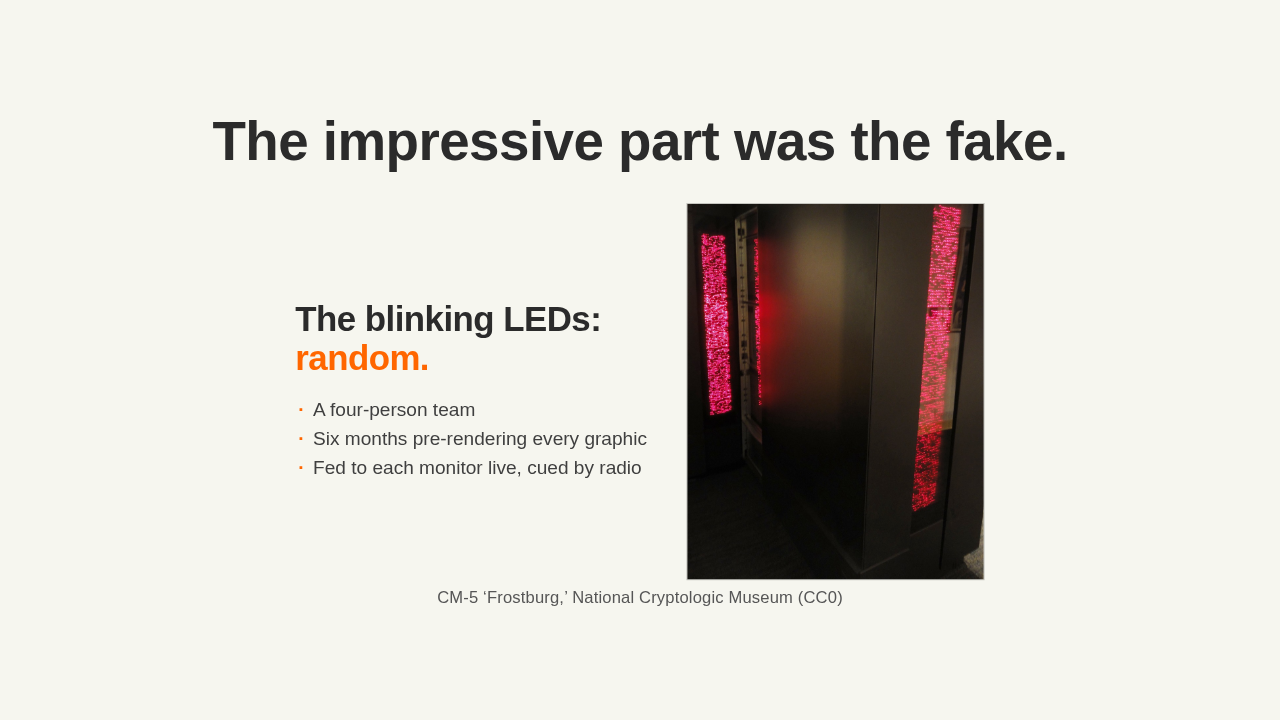
The impressive part was the fake.
random.
- A four-person team
- Six months pre-rendering every graphic
- Fed to each monitor live, cued by radio

The screens themselves were the illusion. A four-person team spent six months pre-rendering every graphic. During filming, they fed each one to the right monitor live, cued by radio from the room next door. Even the blinking lights on the supercomputers were random.
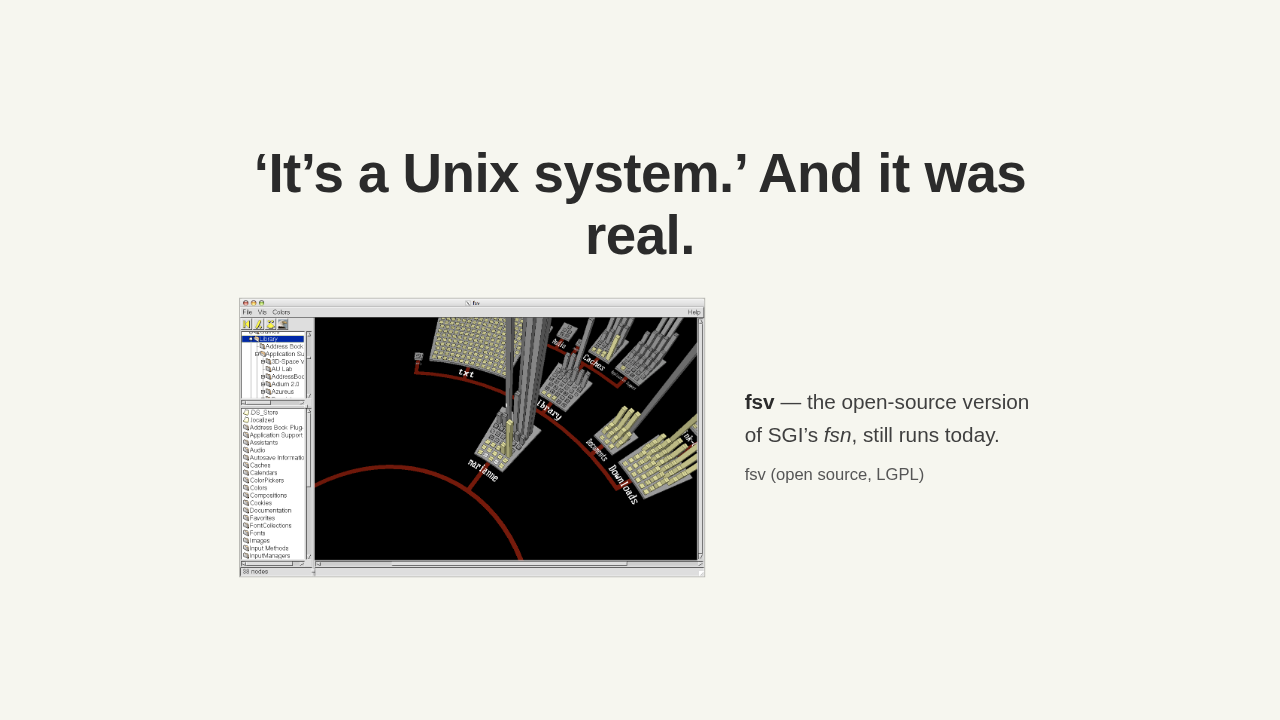
‘It’s a Unix system.’ And it was real.
‘It’s a Unix system.’ And it was real.

And the scene everyone remembers as pure movie magic. The 3D file browser Lex uses to move through the system. That was the one part that was completely real. It was experimental software from Silicon Graphics. You can still run an open-source version of it today.
Every machine on set, catalogued frame by frame.

Someone went through the film frame by frame and identified every machine on set. The workstations, the laptops, the supercomputers, all of it catalogued.
Slide 7
They only faked what they had to.
The reason those scenes still hold up is simple. The hardware was real. They only faked the parts they had to.