Jurassic Park's Computers Were Real. The Screens Were Faked.
4 months ago
Every computer in Jurassic Park's control room was real, working hardware. The graphics on the screens were the fake part.
Ask about this presentation
Chapters

Show transcriptHide transcript
Every computer in Jurassic Park's control room was real, working hardware. The graphics on the screens were the fake part.
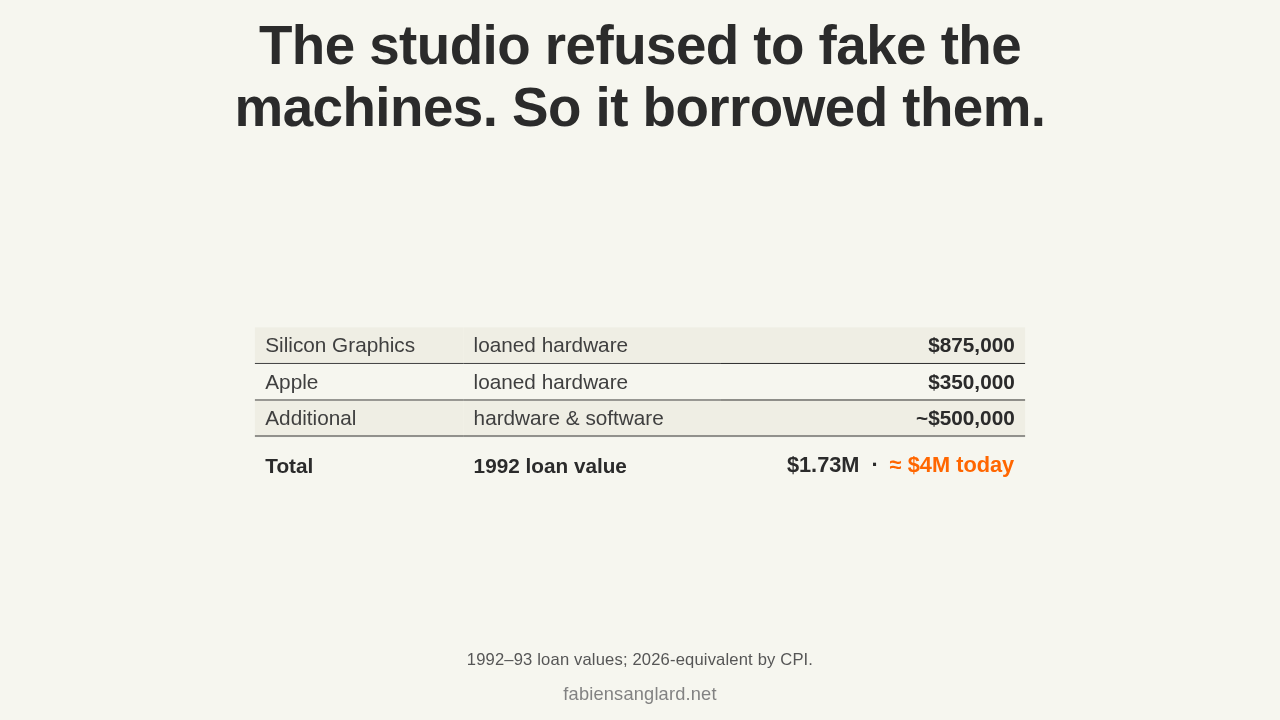
The effects team refused to fake the machines. By the nineties, audiences knew what a computer looked like. So the studio borrowed the real thing. Roughly four million dollars of Silicon Graphics, Apple, and Thinking Machines hardware, in today's money.
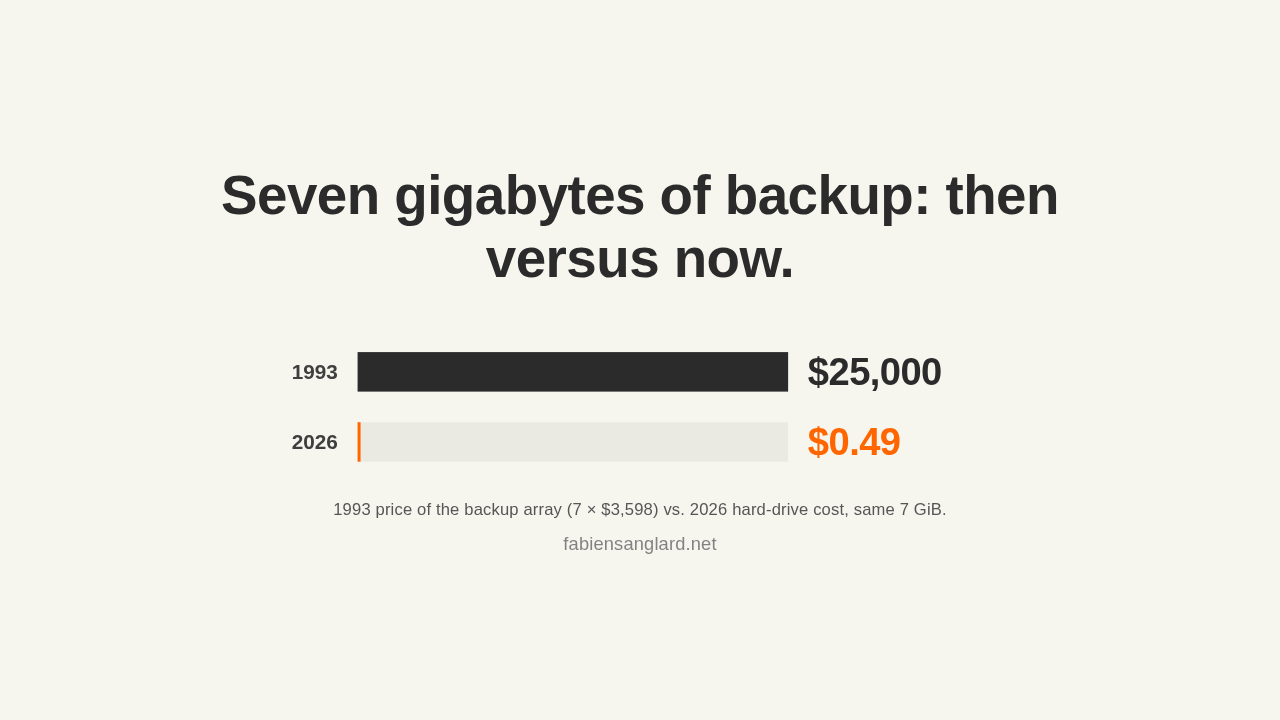
The backup drives make the point. To store seven gigabytes in 1993, the production spent about twenty-five thousand dollars. The same seven gigabytes today costs around fifty cents.
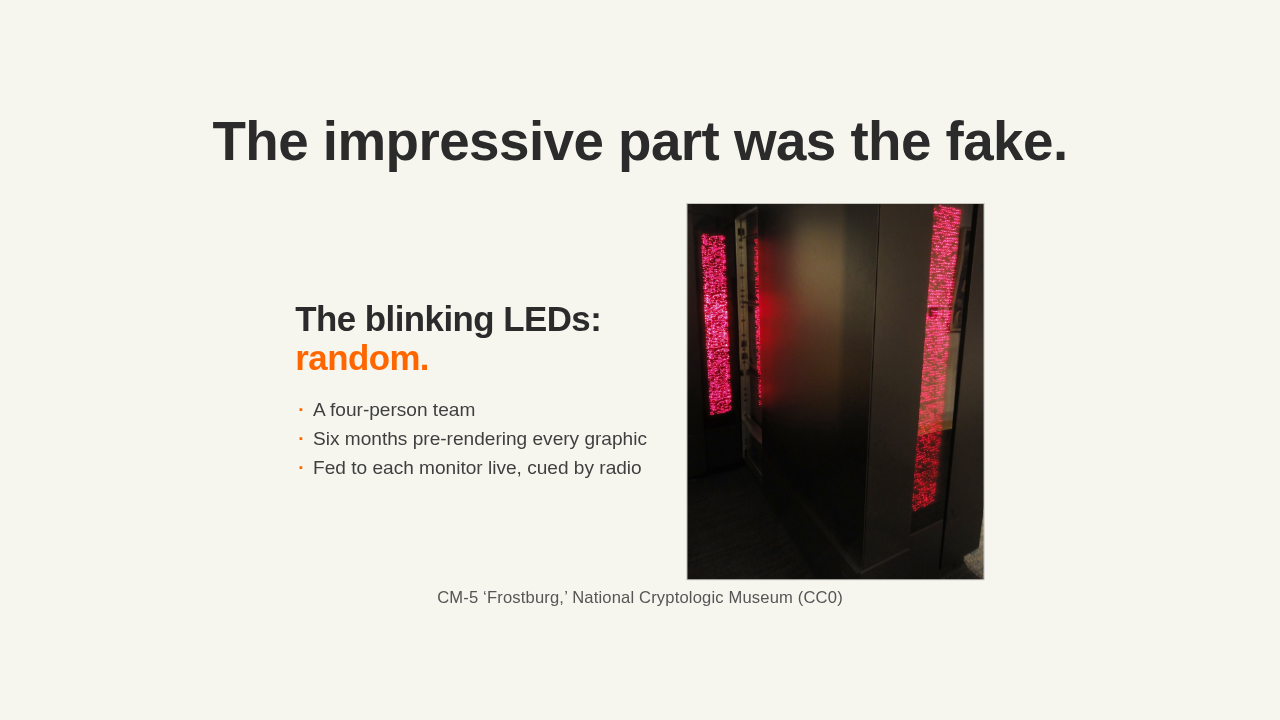
The screens themselves were the illusion. A four-person team spent six months pre-rendering every graphic. During filming, they fed each one to the right monitor live, cued by radio from the room next door. Even the blinking lights on the supercomputers were random.
Slide text
The blinking LEDs:
random.- A four-person team
- Six months pre-rendering every graphic
- Fed to each monitor live, cued by radio
 CM-5 ‘Frostburg,’ National Cryptologic Museum (CC0)
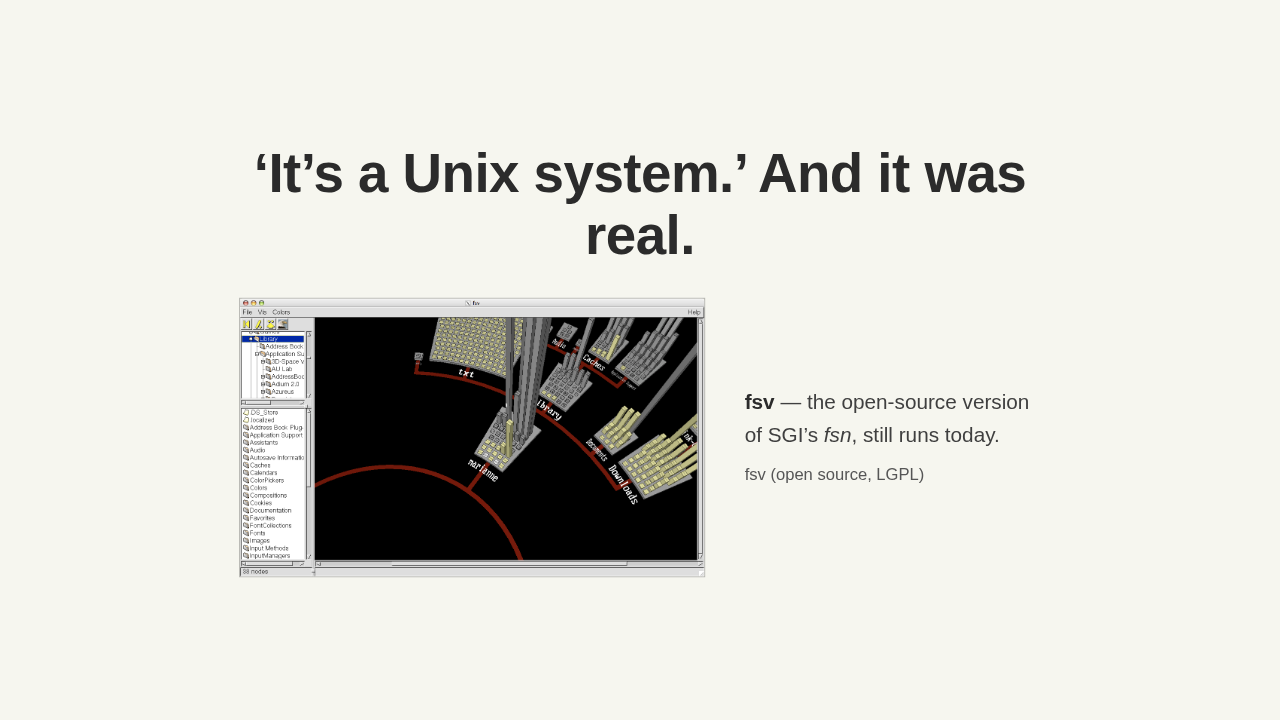
And the scene everyone remembers as pure movie magic. The 3D file browser Lex uses to move through the system. That was the one part that was completely real. It was experimental software from Silicon Graphics. You can still run an open-source version of it today.
Slide text
‘It’s a Unix system.’ And it was real.
 fsv — the open-source version of SGI’s fsn, still runs today. fsv (open source, LGPL)
Someone went through the film frame by frame and identified every machine on set. The workstations, the laptops, the supercomputers, all of it catalogued.
Slide text
fabiensanglard.net Workstations Laptops Supercomputers
The reason those scenes still hold up is simple. The hardware was real. They only faked the parts they had to.
Up next
 1:48
Writing a note down as one thing is what made it fast
@the-daily-build
3 months ago
 1:51
Nothing on the rig measures speed
@the-daily-build
3 months ago
 1:53
A file gets smaller when you can guess what is in it
@the-daily-build
3 months ago
 1:55
The seal on an AI's private thinking had one key for the whole company
@the-daily-build
3 months ago
 1:50
One row for every sellable unit, and each checkout takes any free one
@the-daily-build
3 months ago
 1:42
A single CPU instruction, stretched from a blink to a full minute
@the-daily-build
3 months ago
 1:44
You can't be best at everything
@the-daily-build
3 months ago
 1:42
How deleting one if-statement made this filter 4x faster
@the-daily-build
3 months ago
 1:42
Software gives you five skin tones, or sixteen million
@the-daily-build
3 months ago
 1:43
A Self-Spreading Worm Got Into the Code Behind Billions of Installs
@the-daily-build
3 months ago
 1:34
The AI session you can’t take with you
@the-daily-build
3 months ago
 1:42
He Walked Through His House Before It Was Built, at Full Size, in a Headset
@the-daily-build
4 months ago