A 124MB travel app was really a 50KB web page
4 months ago
A school group was told to install a hundred-and-twenty-four-megabyte app, just to read their trip itinerary. One developer found that odd, and checked what it was doing.
Ask about this presentation
Chapters
Show transcriptHide transcript
A school group was told to install a hundred-and-twenty-four-megabyte app, just to read their trip itinerary. One developer found that odd, and checked what it was doing.
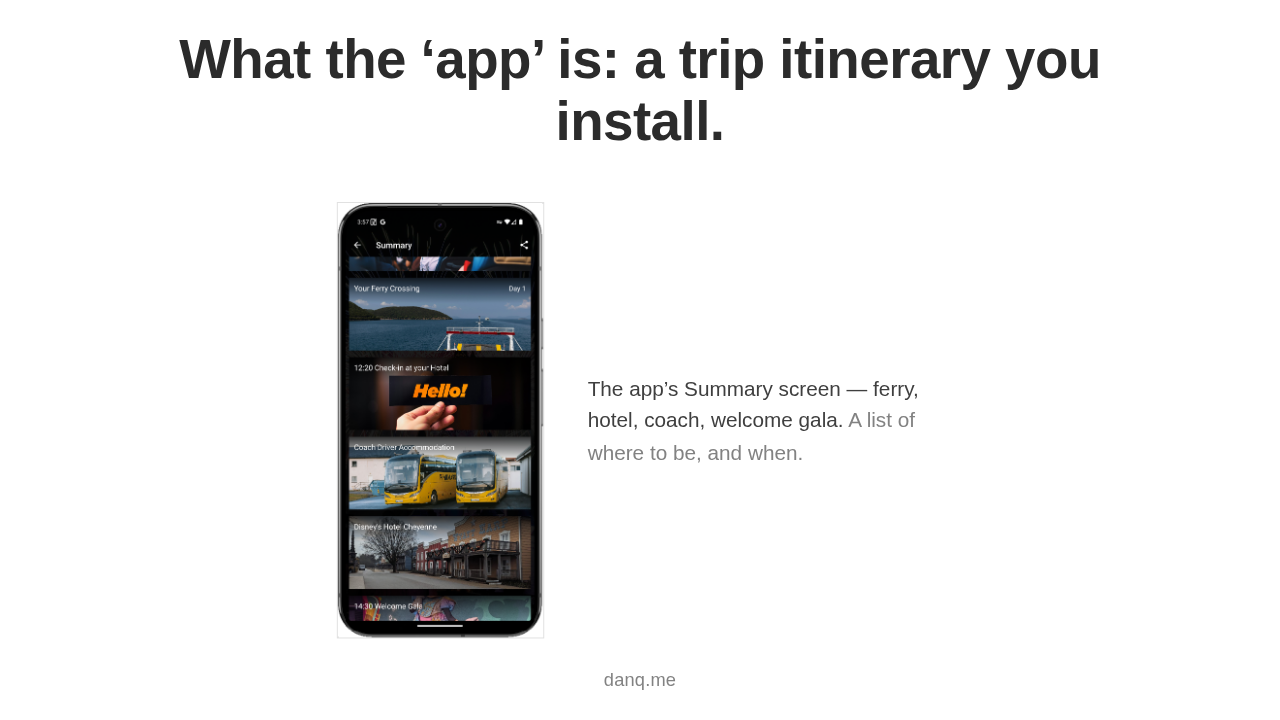
Here's the app: a travel itinerary. The ferry crossing, the hotel, the coach, the welcome gala. A list of where to be, and when. Once, this was a printed sheet.
Slide text
What the ‘app’ is: a trip itinerary you install.
 The app’s Summary screen — ferry, hotel, coach, welcome gala. A list of where to be, and when.danq.me
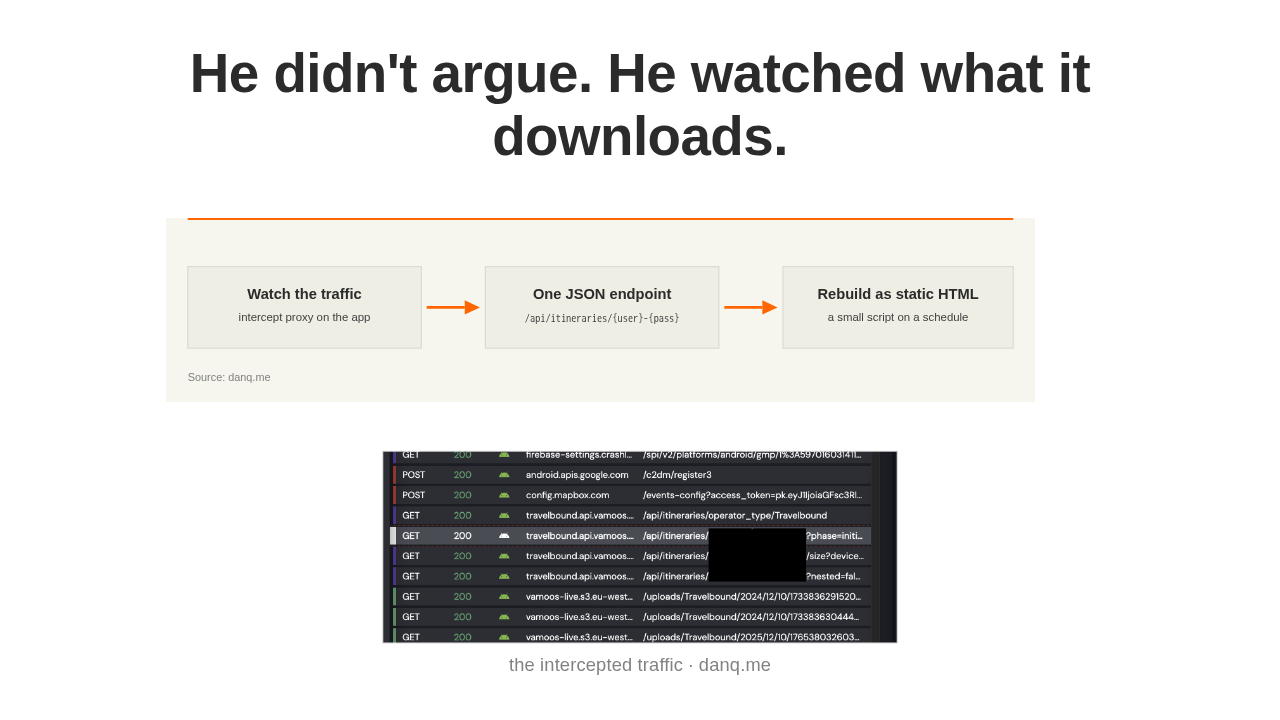
He didn't argue. He watched what the app downloaded, with a proxy that reads its network traffic. Within minutes it was clear: everything loads from one web address. And what came back gave the whole thing away.
Slide text

 the intercepted traffic · danq.me
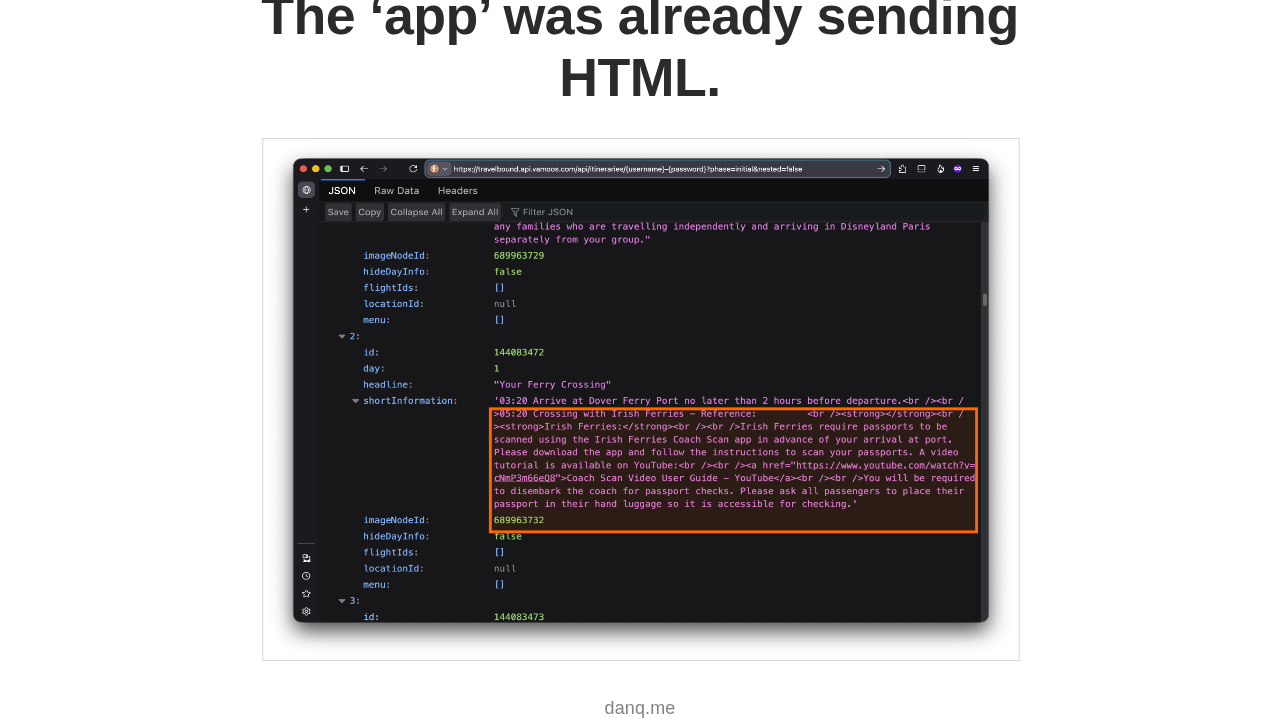
The app fetches one block of JSON. Inside, the text already contains HTML: line breaks, bold tags, links, written out in full. The app wasn't building those pages. It was handed web content, over the web, and drawing it.
Slide text
The ‘app’ was already sending HTML.
 danq.me
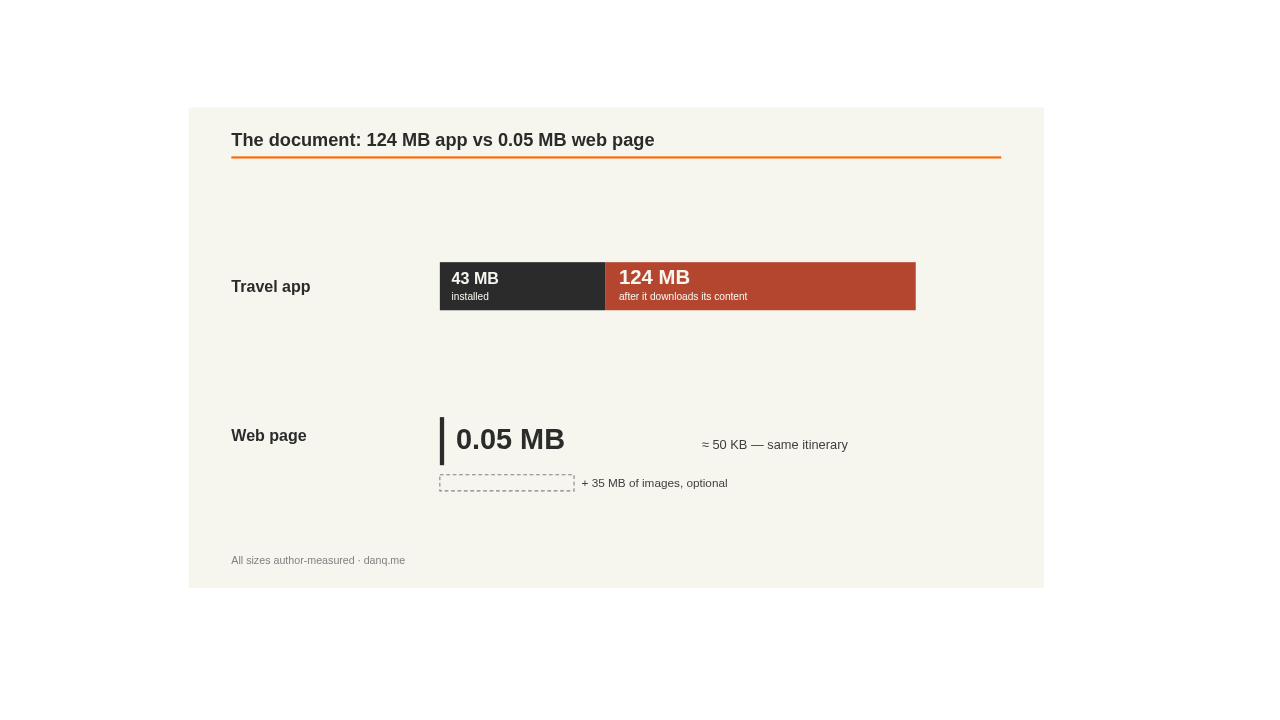
He wrote a small script: pull the same JSON, render it as a plain web page. The app installs at forty-three megabytes, and swells to a hundred and twenty-four. His page is fifty kilobytes. Same trip.
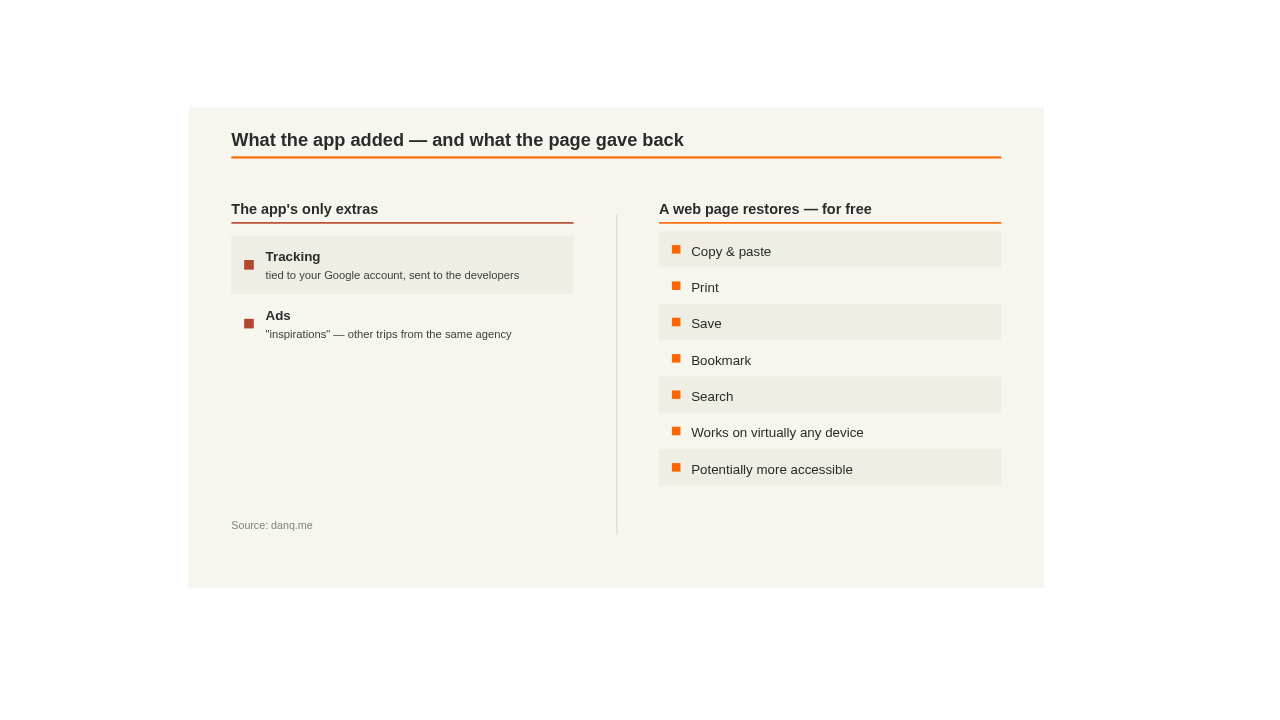
The app added just two things a page wouldn't: tracking tied to your Google account, and ads for the agency's other trips. Drop those, and you get back copy, paste, print, save, search, and it works on any device.
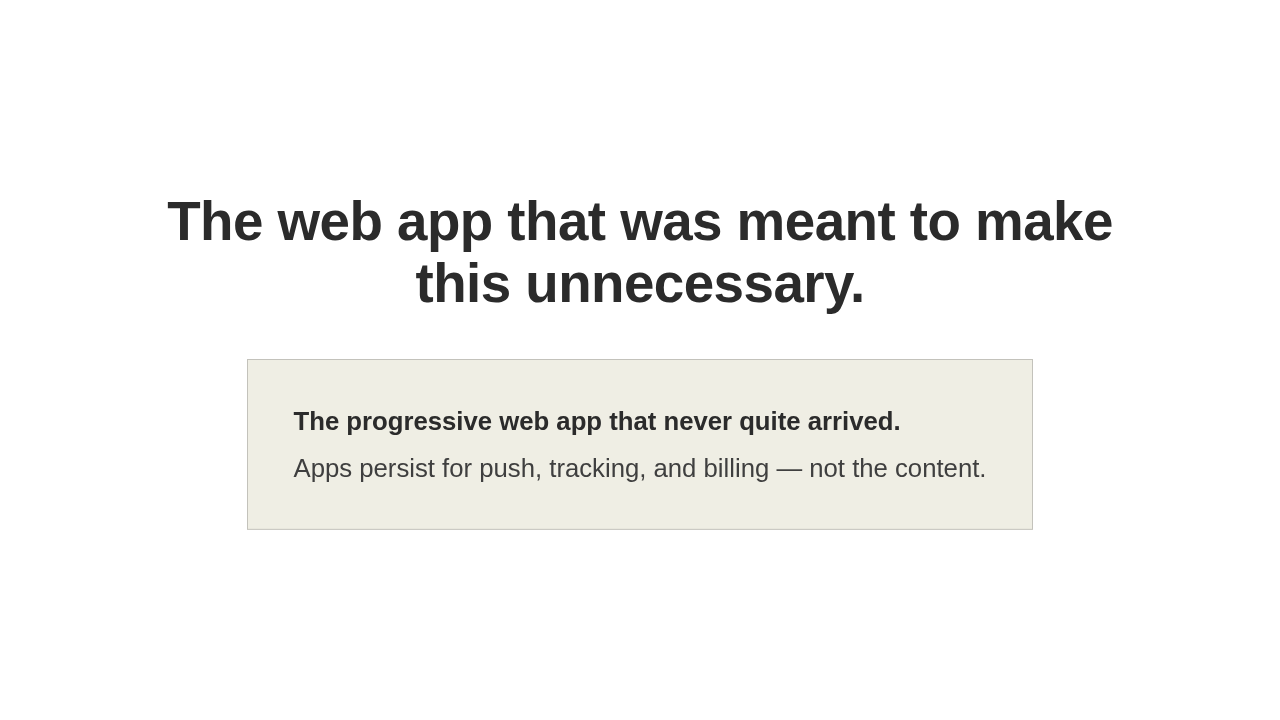
There's a fair objection. We were meant to be in the age of web apps, pages that do all this with no install. But as one engineer put it, apps persist for push notifications, tracking, and billing, not for the content.
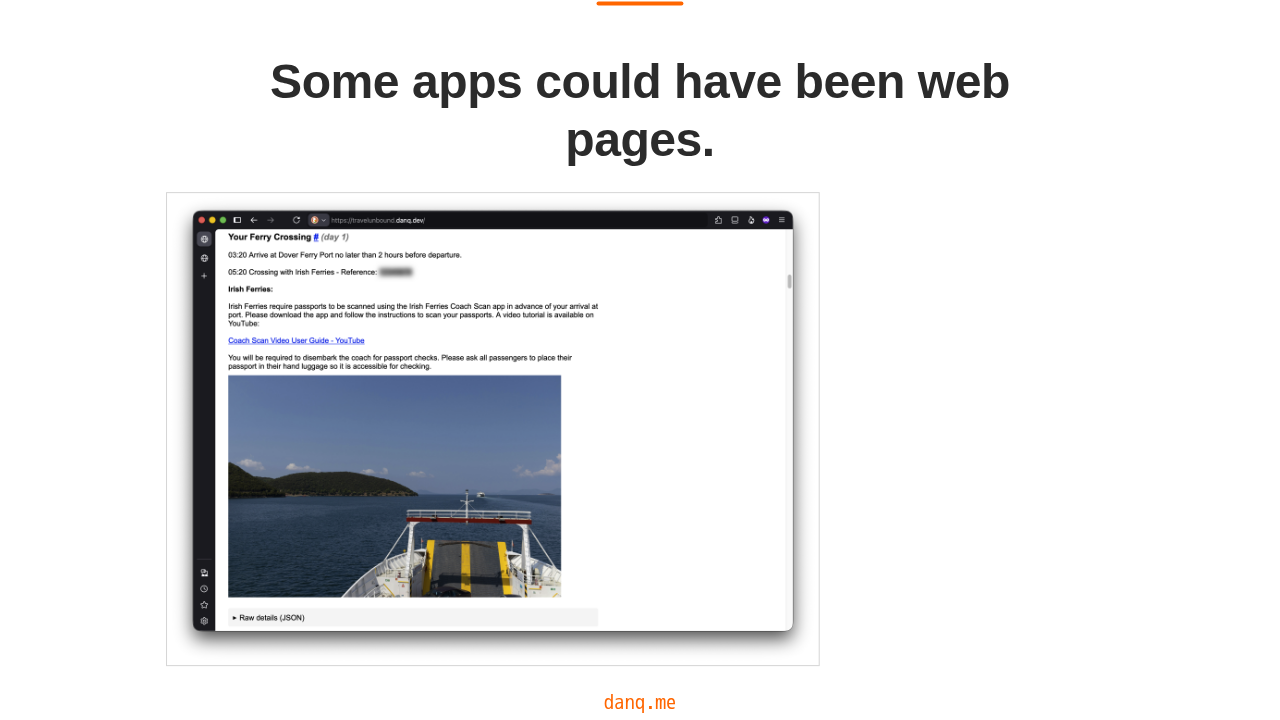
Not every app should be a web page. Some genuinely need to be native. But an app that only hands you a document was a web page all along, wearing an install.
Slide text
Some apps could have been web pages. danq.me
Up next
 1:48
Writing a note down as one thing is what made it fast
@the-daily-build
3 months ago
 1:51
Nothing on the rig measures speed
@the-daily-build
3 months ago
 1:53
A file gets smaller when you can guess what is in it
@the-daily-build
3 months ago
 1:55
The seal on an AI's private thinking had one key for the whole company
@the-daily-build
3 months ago
 1:50
One row for every sellable unit, and each checkout takes any free one
@the-daily-build
3 months ago
 1:42
A single CPU instruction, stretched from a blink to a full minute
@the-daily-build
3 months ago
 1:44
You can't be best at everything
@the-daily-build
3 months ago
 1:42
How deleting one if-statement made this filter 4x faster
@the-daily-build
3 months ago
 1:42
Software gives you five skin tones, or sixteen million
@the-daily-build
3 months ago
 1:43
A Self-Spreading Worm Got Into the Code Behind Billions of Installs
@the-daily-build
3 months ago
 1:34
The AI session you can’t take with you
@the-daily-build
3 months ago
 1:42
He Walked Through His House Before It Was Built, at Full Size, in a Headset
@the-daily-build
4 months ago