PentAGI: a self-hosted AI team that runs a full pentest
4 months ago
Point this at a system you're allowed to test, hand it a goal, and a whole team of AI agents runs the pentest for you. The recon, the exploit, and the write-up.
Ask about this presentation
Chapters
Show transcriptHide transcript
Point this at a system you're allowed to test, hand it a goal, and a whole team of AI agents runs the pentest for you. The recon, the exploit, and the write-up.
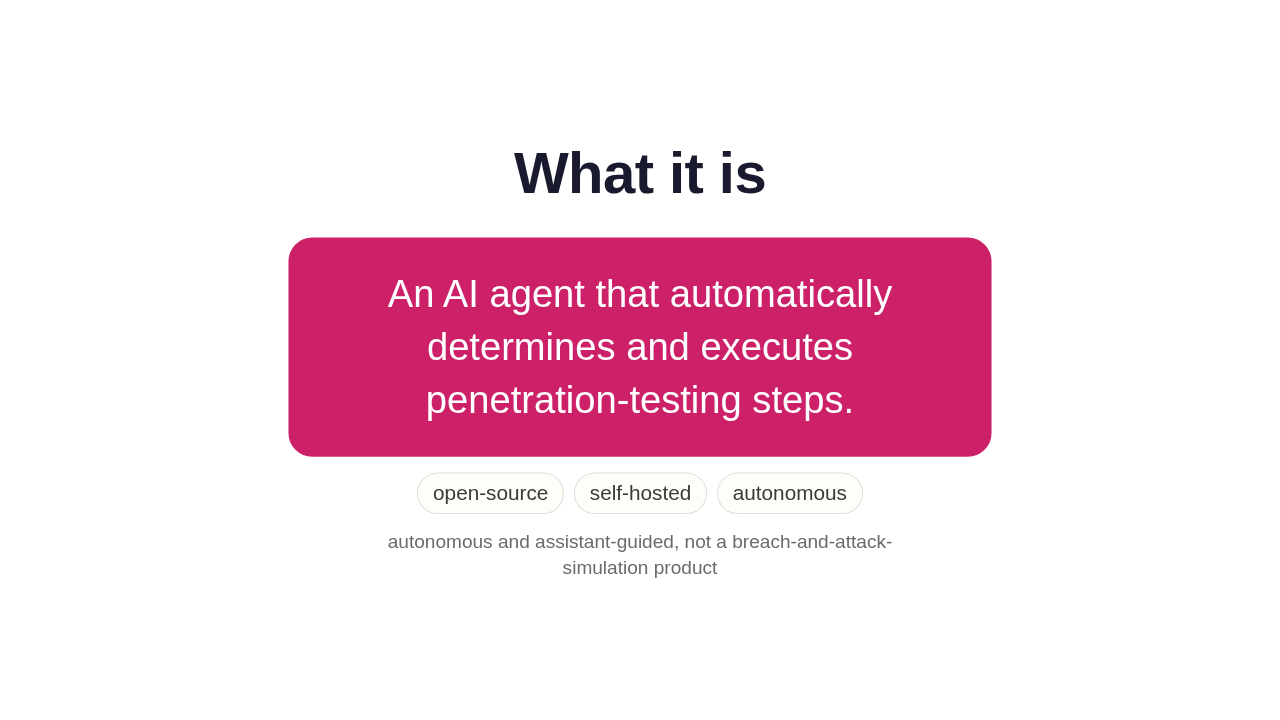
PentAGI is open-source, and you run it yourself. Give it a target and an objective, and a team of specialist agents plans the test, runs it, and writes up what they find. It's built for security pros doing authorized work. And it's honest about the edges: this is an autonomous, assistant-guided platform, not a canned breach-simulation product.
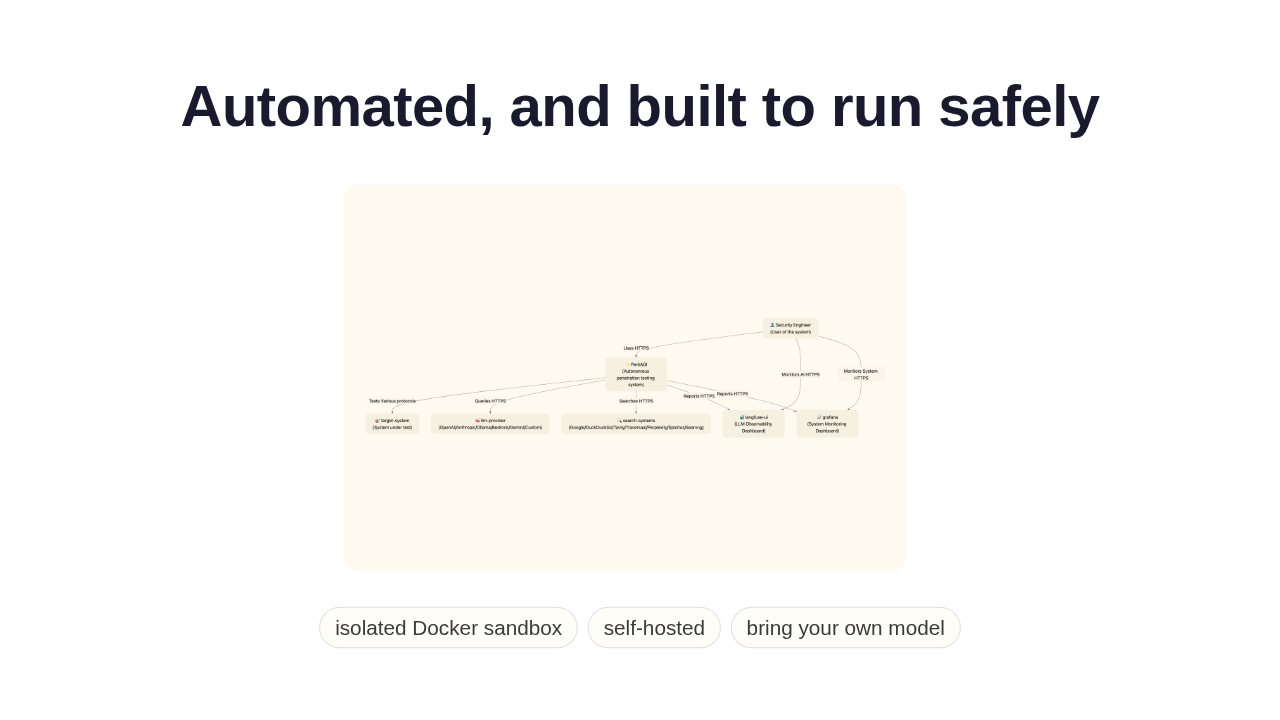
Automating a pentest sounds risky, so here's why it's safe to run. Every operation happens inside isolated Docker containers. You self-host the whole thing, so your targets and your data never leave your own infrastructure. And you bring your own model, any provider, or a local one that never phones home.
Slide text
 isolated Docker sandbox self-hosted bring your own model
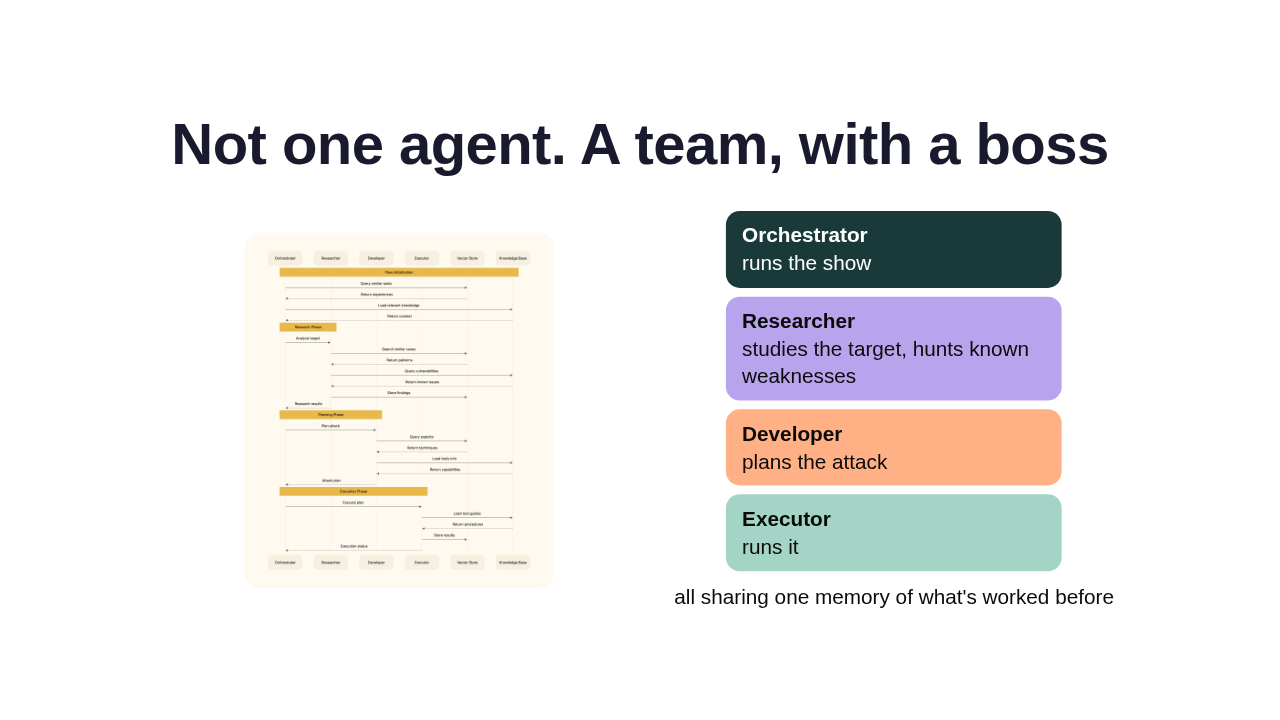
Here's the clever part. It isn't one giant agent, it's a team. An orchestrator runs the show. A researcher studies the target and hunts known weaknesses. A developer plans the attack. And an executor runs it. Every one of them checks a shared memory of what's worked before.
Slide text
 Orchestratorruns the showResearcherstudies the target, hunts known weaknessesDeveloperplans the attackExecutorruns itall sharing one memory of what's worked before
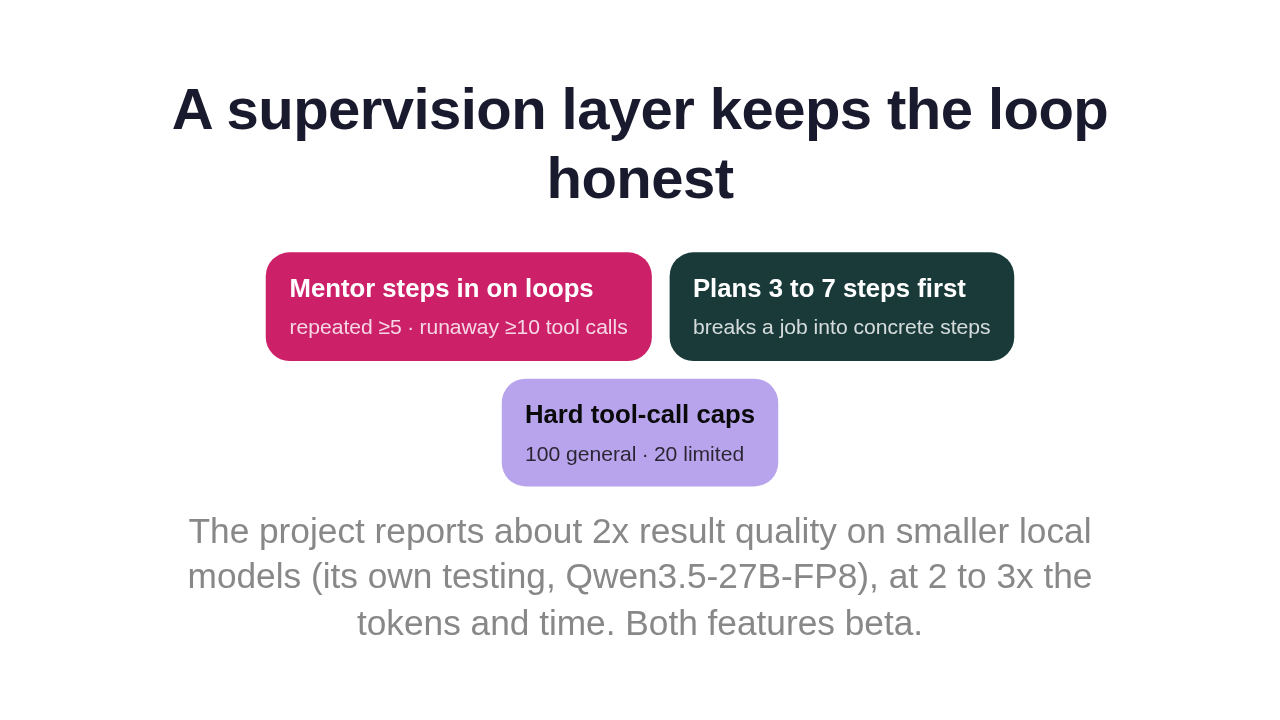
So what stops a loop of agents from going off the rails? A supervision layer. A mentor spots repeated or runaway tool calls and steps in with a new plan. A planner breaks each job into three to seven concrete steps first. And every agent has a hard cap on its tool calls. The project reports that roughly doubles quality on smaller local models, at more tokens and time. Both pieces are still beta.
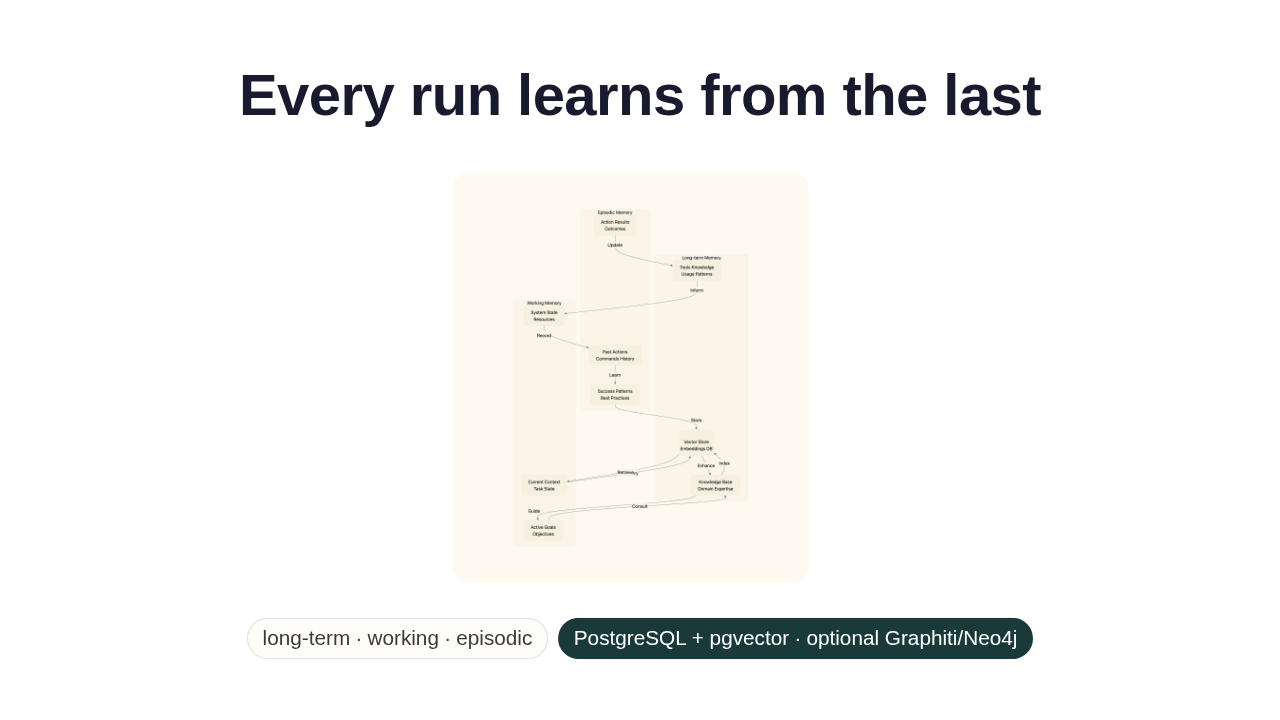
And runs aren't amnesiac. PentAGI keeps three kinds of memory: long-term, for past findings and tool habits, working memory for the current goal, and episodic memory of what actually succeeded last time. So the next run starts from what already worked.
Slide text
 long-term · working · episodic PostgreSQL + pgvector · optional Graphiti/Neo4j
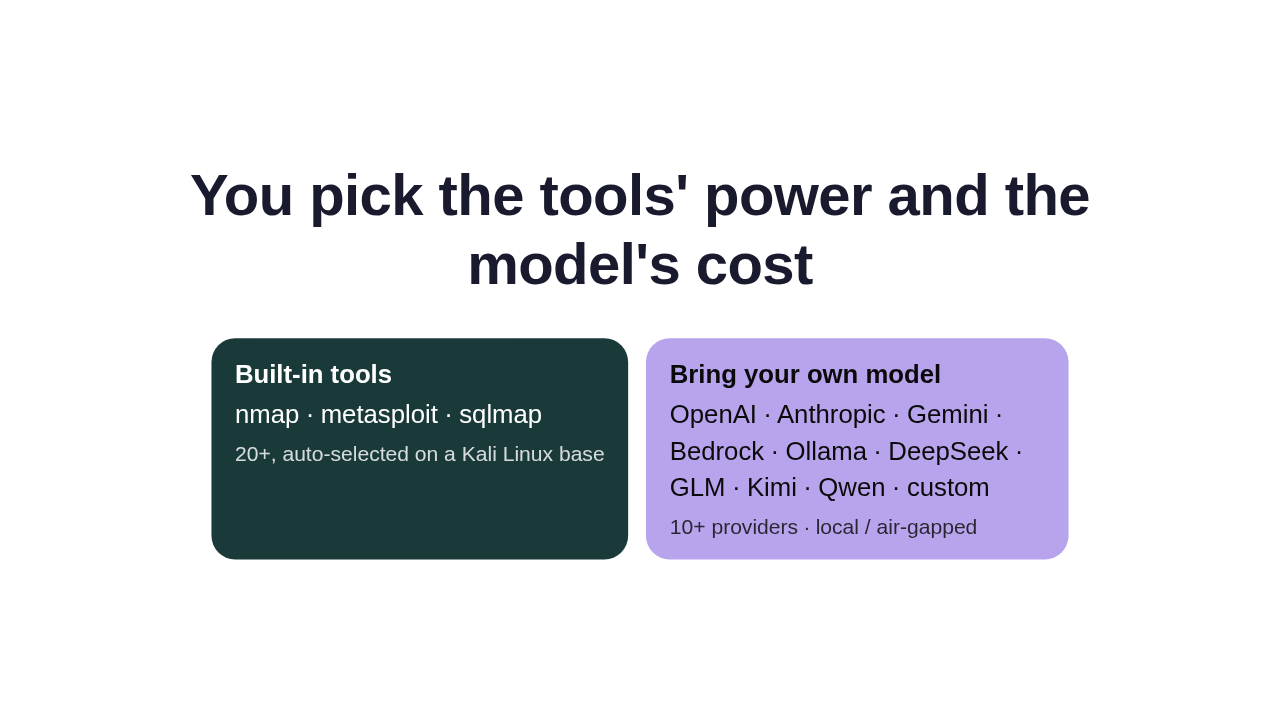
It comes with the toolbox built in. Over twenty professional security tools, things like nmap, metasploit, and sqlmap, picked automatically per task from a Kali Linux base. And it runs on ten-plus model providers. OpenAI, Anthropic, Gemini, or Ollama for something fully local. You pick the tools' power and the model's cost.
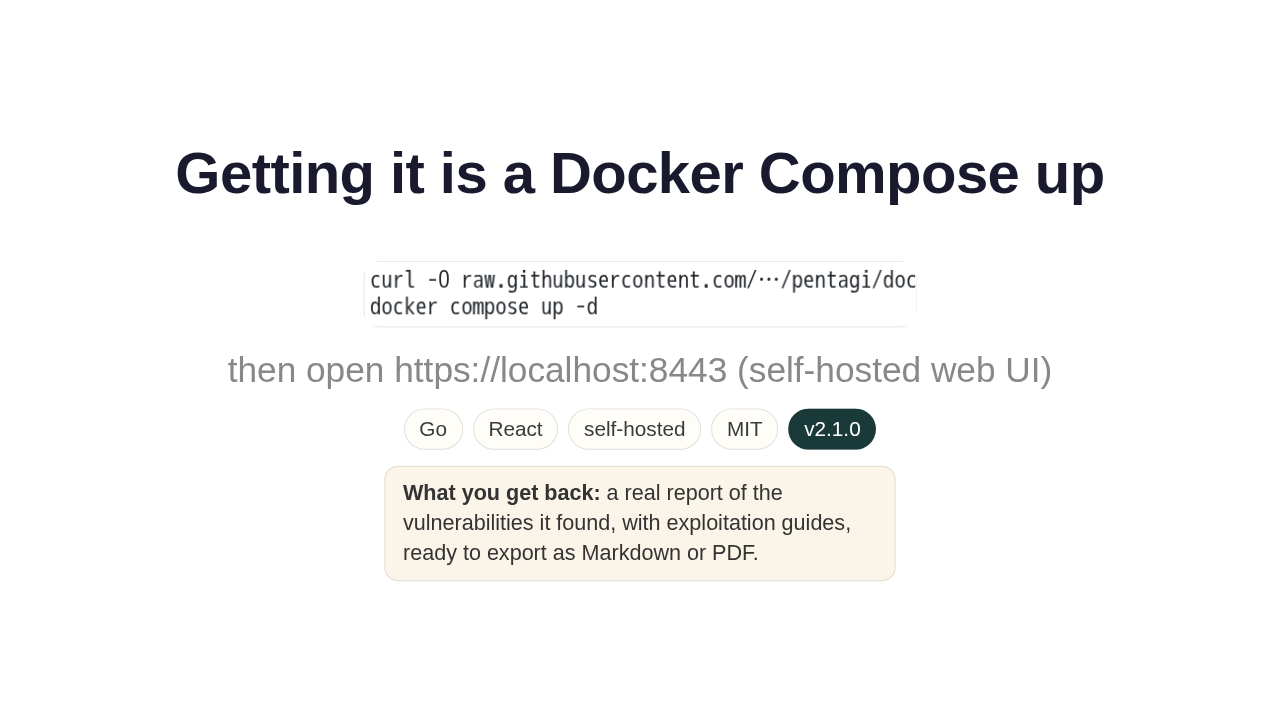
Getting it is a Docker Compose up. Go backend, React front end, self-hosted, MIT licensed, latest release two point one oh. And what you get back is a real report: the vulnerabilities it found, with exploitation guides, ready to export as Markdown or PDF.
So that's PentAGI. An authorized pentest, run by a supervised team of agents you host yourself. You just bring the model. If you work in security, it's worth a look. The link's on screen, and there's a new repo tomorrow.
Up next
 6:49
Hide the tests from your coding agent? StrongDM's holdout idea, tested on Claude Code
@github-trending
3 weeks ago
 0:51
Claude Code built a machine to explain prompt caching
@github-trending
1 month ago
 10:10
reladraw draws your diagram from where you say the boxes go
@github-trending
1 month ago
 7:27
Lap photo manager finds photos by what's in them, offline
@github-trending
2 months ago
 9:04
Spirula Studio does Gaussian splatting on any graphics card
@github-trending
2 months ago
 8:50
Univer puts a spreadsheet, document editor and slides in your app
@github-trending
2 months ago
 18:13
i-have-adhd, ponytail, and 7 more skills that make your agent stop explaining itself
@github-trending
2 months ago
 7:57
Homebrew BrewUI runs every brew command in a clean shell
@github-trending
2 months ago
 8:35
fugleramme draws the birds in your garden on an e-ink frame
@github-trending
2 months ago
 9:01
Open Code Review: Alibaba open-sourced the code reviewer it validated on a million real tasks
@github-trending
2 months ago
 3:03
Portless refuses to touch eight shapes of command, and says why for each
@github-trending
2 months ago
 2:52
The measurement file says 1.571. The stylesheet says 1.57.
@github-trending
2 months ago