Looking Ahead

Looking Ahead makes Wan video models more physically plausible, with generation unchanged
Ruopeng Gao, Yukun Huang, Limin Wang and colleagues · Nanjing University, ARC Lab at Tencent IEG, Zhejiang University
Video models that build a clip chunk by chunk get physics right more often when training also makes them predict further ahead. The method is Future Chunk Prediction, and generation runs exactly as before.
Teacher forcing leaves a shortcut
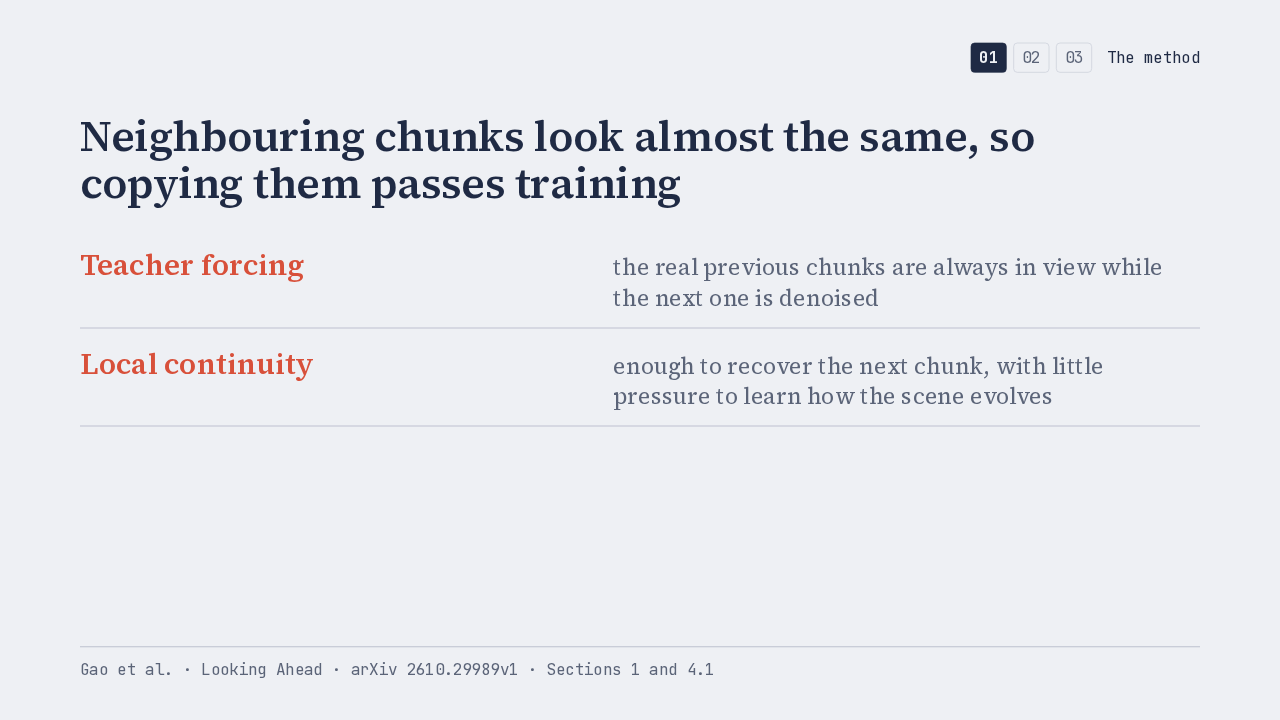
Neighbouring chunks look almost the same, so copying them passes training
These models train with teacher forcing. The model always sees the real chunks right before the one it denoises. Those look nearly identical, so it can copy them and learn little about change.
Side branches predict further ahead
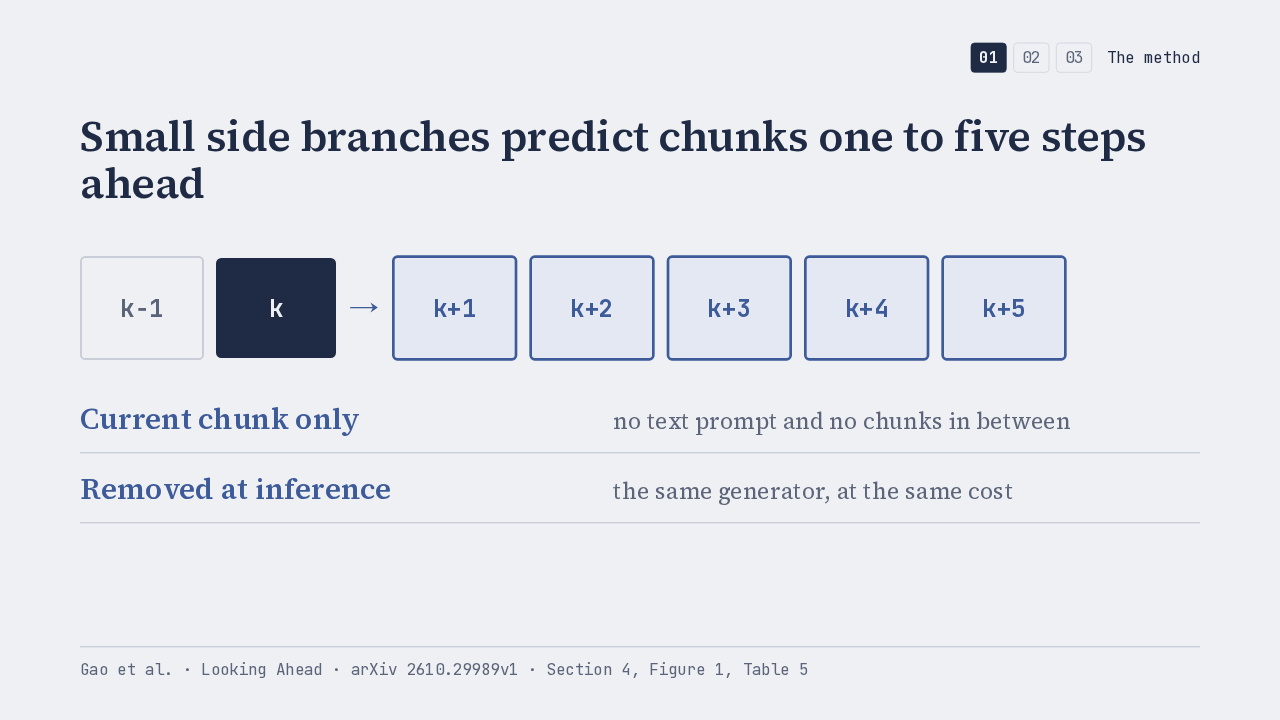
Small side branches predict chunks one to five steps ahead
Future Chunk Prediction adds small side branches. Each predicts a chunk one to five steps ahead from the current chunk alone. They get no prompt and no chunks in between. Generation drops them.
Dominoes and melting ice
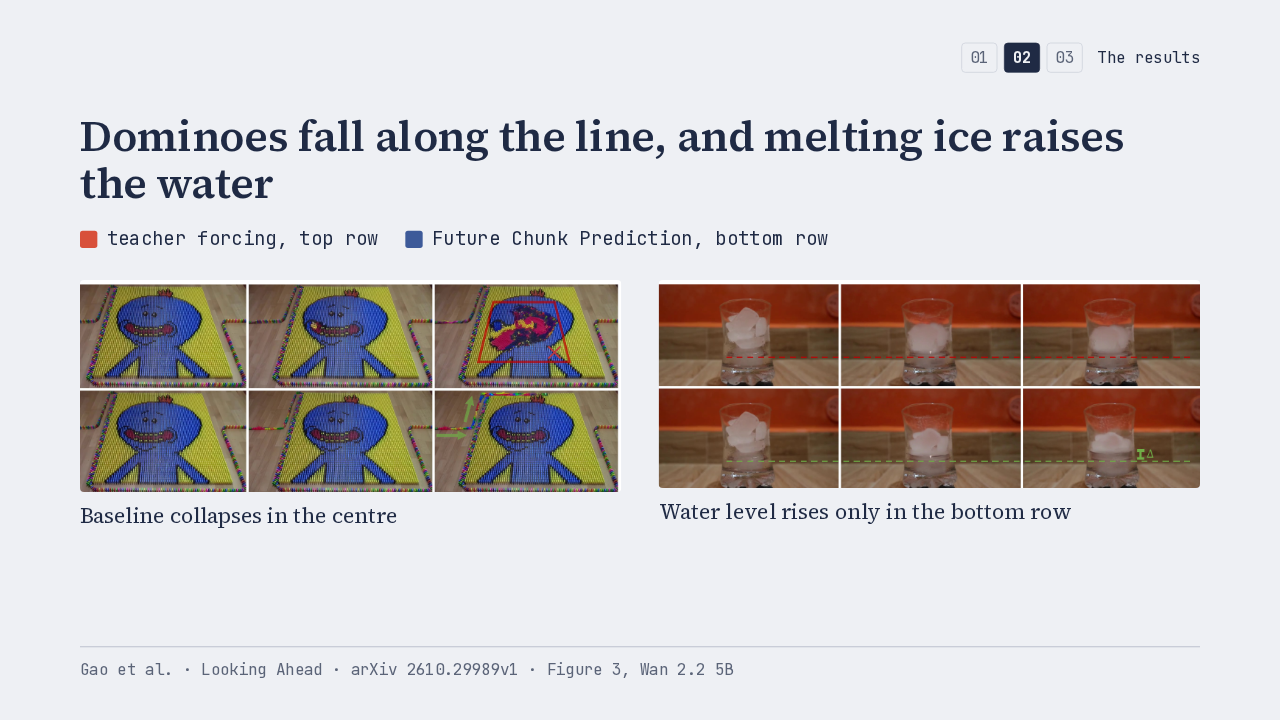
Dominoes fall along the line, and melting ice raises the water

Baseline collapses in the centre

Water level rises only in the bottom row
Plain teacher forcing is on top, Future Chunk Prediction underneath. The baseline's dominoes collapse in the middle, while the new model topples them along the line. Only the new model shows melting ice raising the water.
Higher physics scores at both sizes
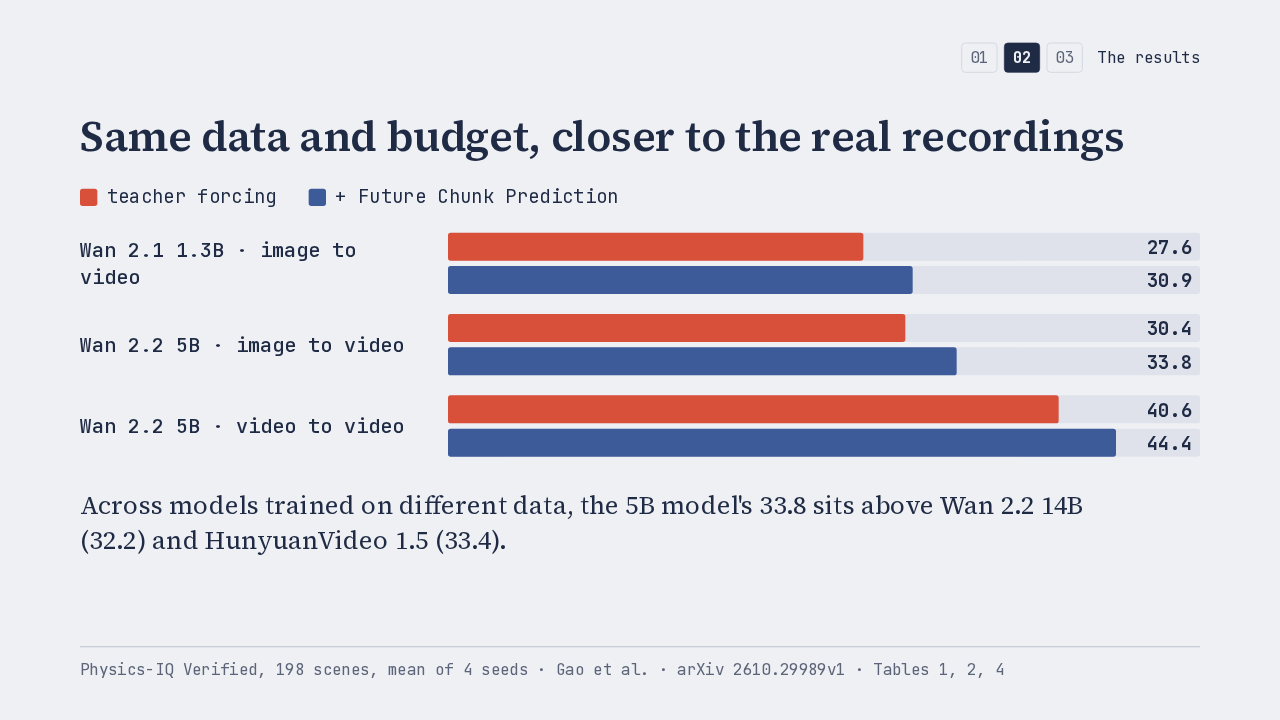
Same data and budget, closer to the real recordings
Across models trained on different data, the 5B model's 33.8 sits above Wan 2.2 14B (32.2) and HunyuanVideo 1.5 (33.4).
Physics-IQ Verified scores a generated clip against a real recording of the same experiment. With the same data and budget, both model sizes score roughly a tenth higher. The 5 billion parameter model edges past Wan 2.2 at 14 billion.
What the branches must not see
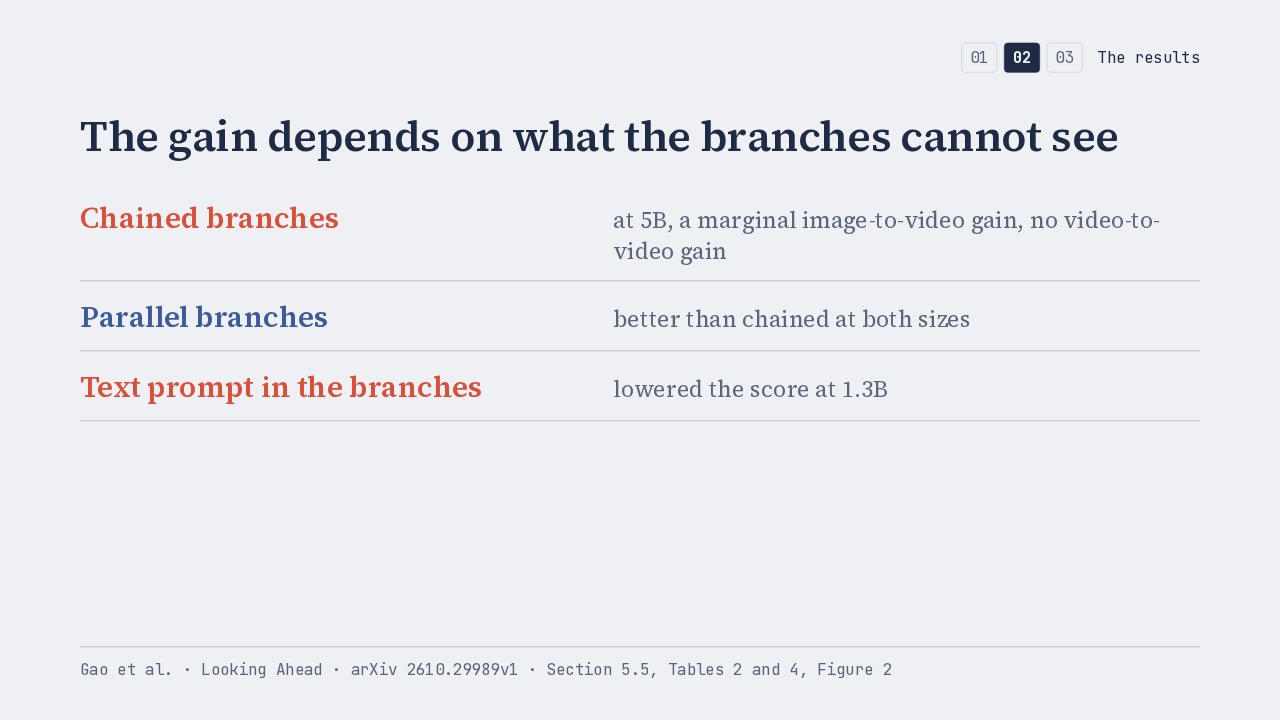
The gain depends on what the branches cannot see
The branches only help when they can't peek. Chained, each branch sees the last one's guess, and the 5 billion parameter model barely improved. Giving them the text prompt also lowered the score.
About half the training compute
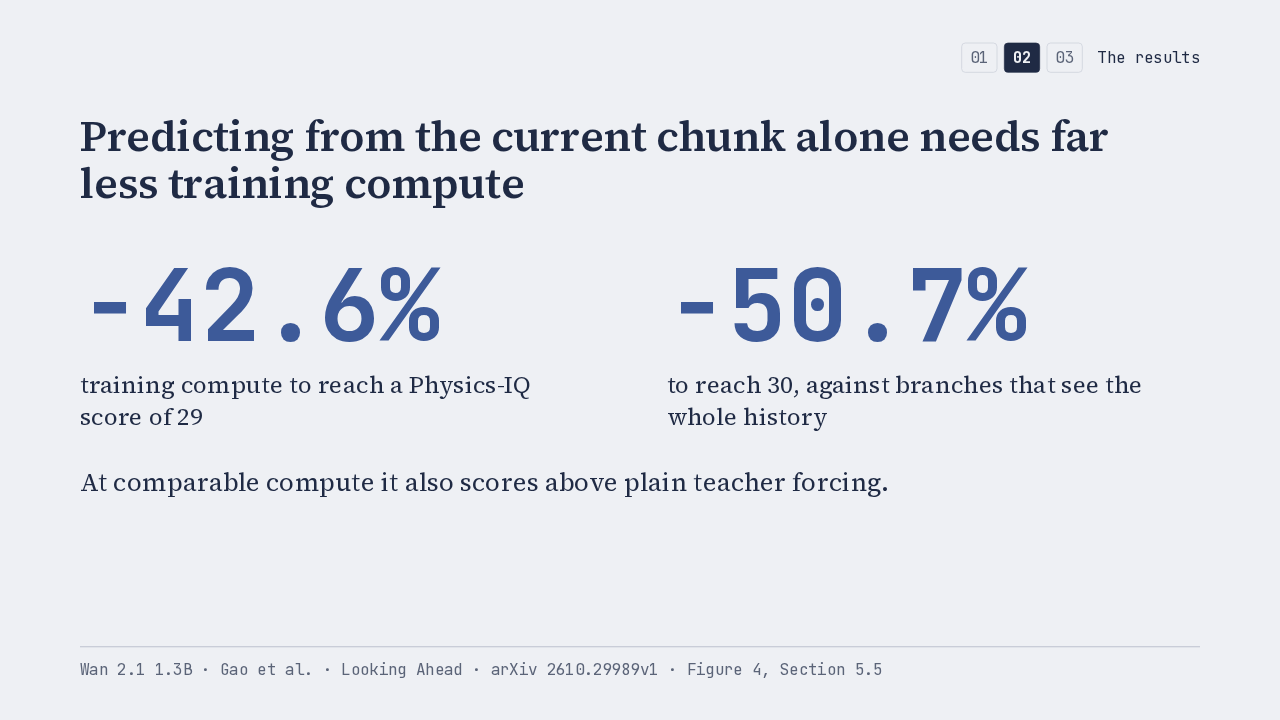
Predicting from the current chunk alone needs far less training compute
At comparable compute it also scores above plain teacher forcing.
Next Forcing, the closest related method, predicts from the whole history. Using only the current chunk reaches the same physics score with roughly half the training compute. At equal compute it still beats teacher forcing.
What is still untested
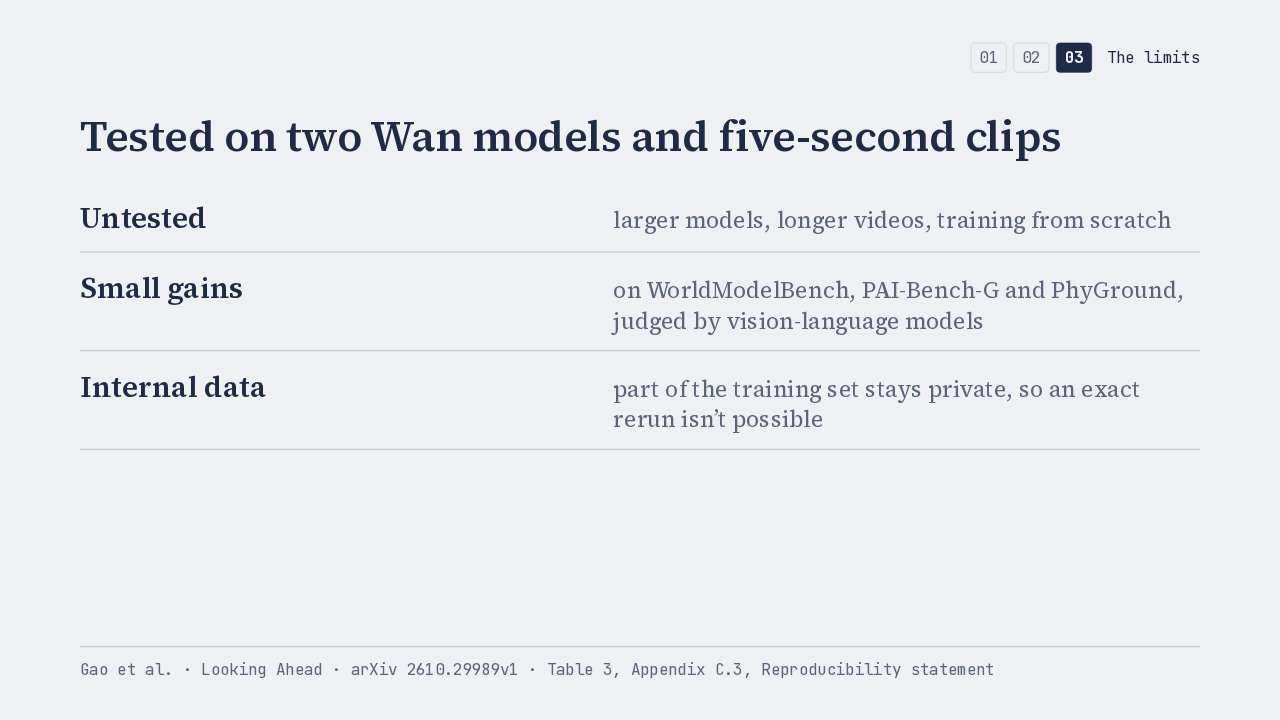
Tested on two Wan models and five-second clips
Both test models start from pretrained Wan checkpoints and make five-second clips. Bigger models and longer videos are untested. Gains on three benchmarks judged by vision-language models are small. Some training data is private.
Code and weights
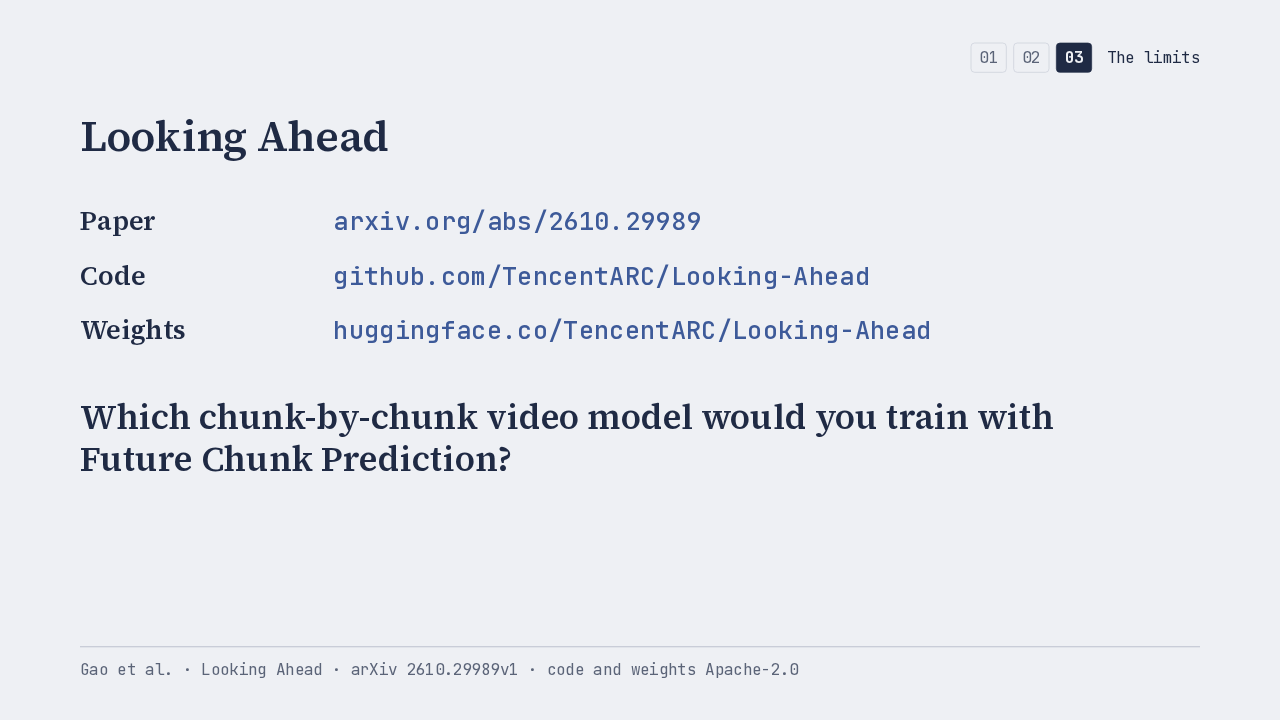
Looking Ahead
Which chunk-by-chunk video model would you train with Future Chunk Prediction?
The code and four checkpoints, both Wan sizes with and without Future Chunk Prediction, are out under Apache 2.0. If you train a chunk-by-chunk video model, which one would you try this on?