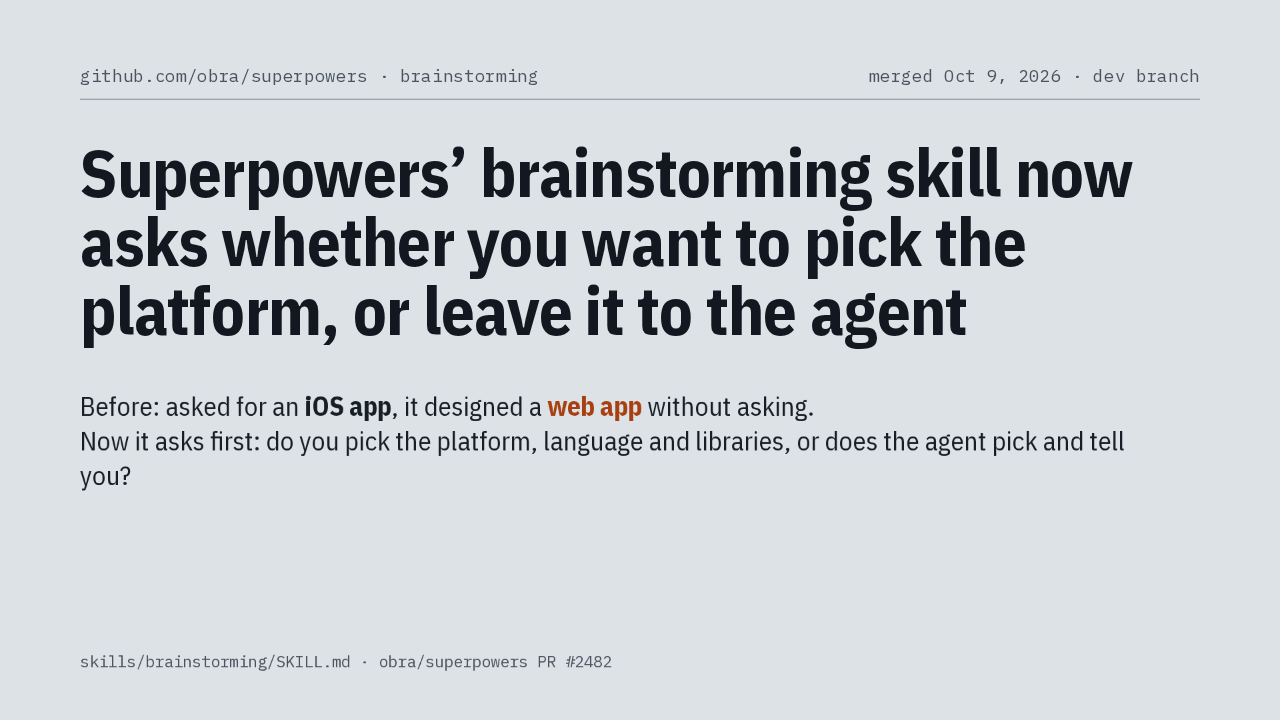
Superpowers’ brainstorming skill now asks whether you want to pick the platform, or leave it to the agent
Now it asks first: do you pick the platform, language and libraries, or does the agent pick and tell you?
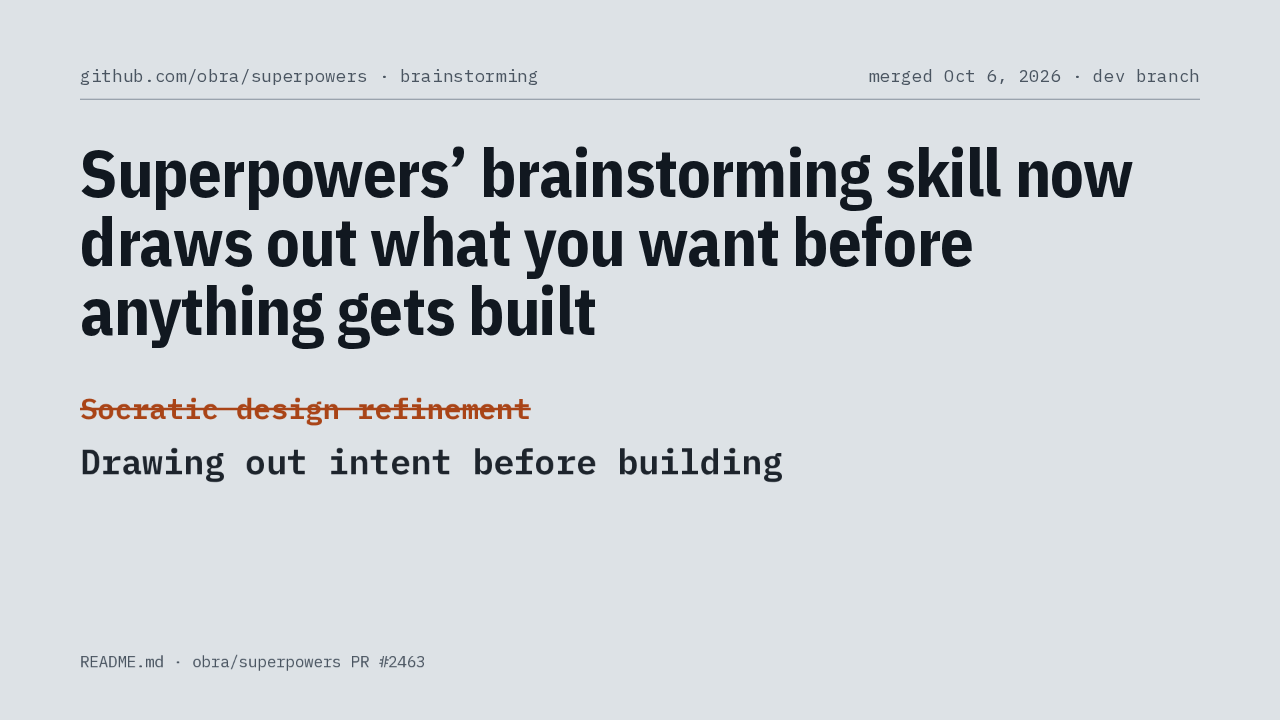
Superpowers changed its brainstorming skill on October 9. Before, someone asked for an iOS app and got a web app, because the agent picked the platform without asking. Now it asks first: do you want to pick the platform, language and libraries yourself, or should the agent pick them and tell you what it chose?
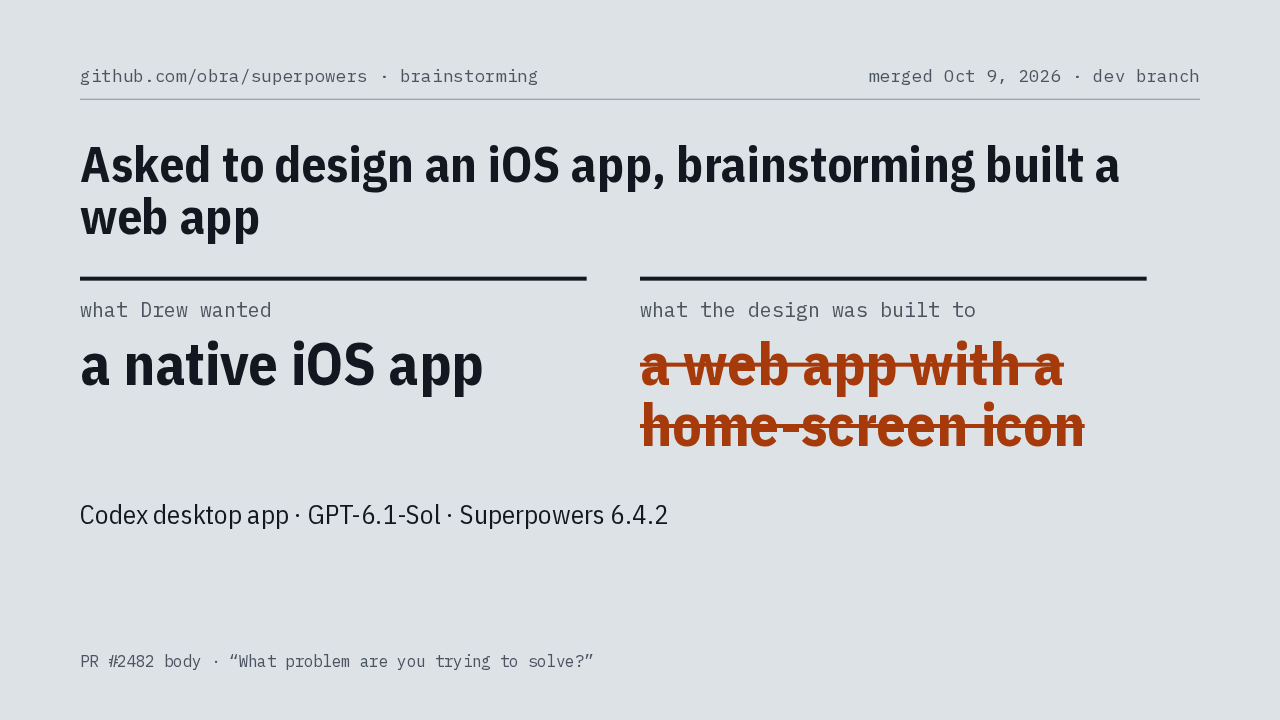
Asked to design an iOS app, brainstorming built a web app
Drew asked Codex, running Superpowers 6.4.2, to design an iOS app for managing OCD. Brainstorming never asked about platform. The design was a web app with a home-screen icon. Drew wanted a native app.
A clean Codex session on dev made the same mistake
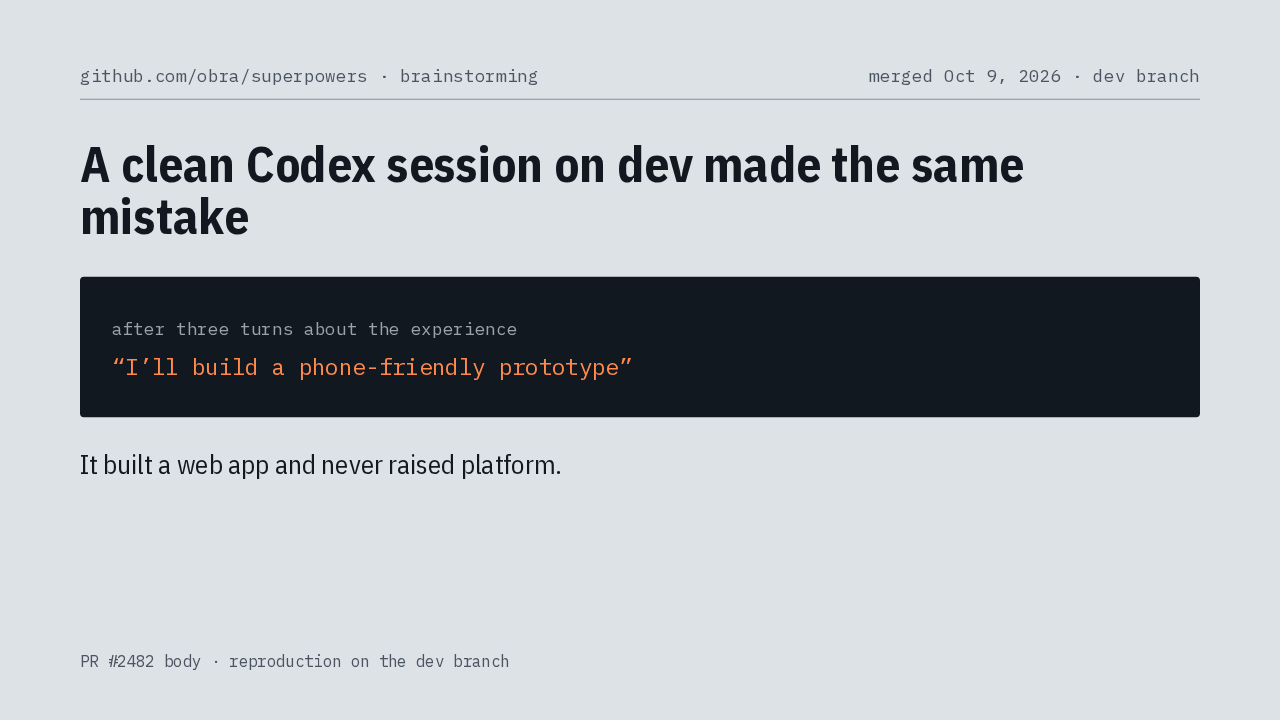
In a fresh Codex session, brainstorming talked through the experience for three turns. Then it announced a phone-friendly prototype, and built a web app without ever bringing up platform.
A new “How it gets made” step asks early who owns each choice
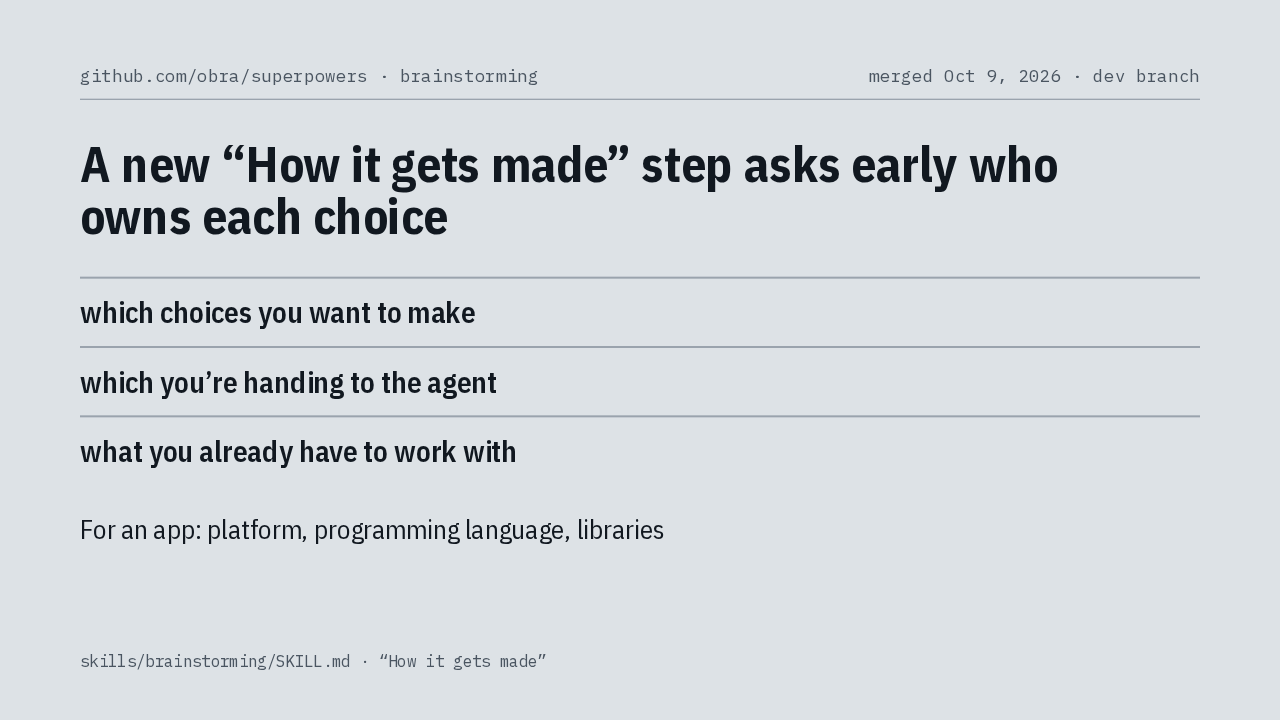
Every project rests on choices like platform, language and libraries. Early on, the agent now asks which of those you want to make, which you're handing over, and what you already have.
What it does next depends on who it’s working with
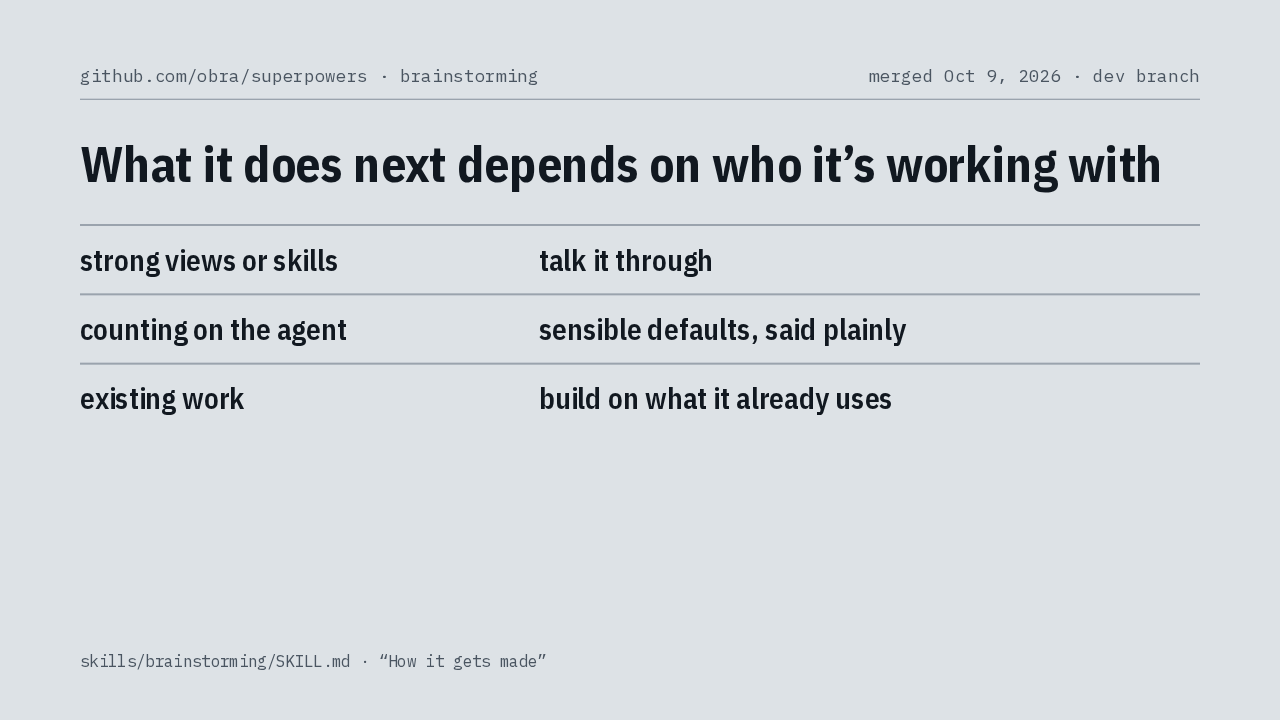
Some users have firm views on their stack, and novices want the agent to decide. It talks it through with the first, picks defaults out loud for the second, and builds on an existing project's stack.
A default the agent picks goes in the design as its own call
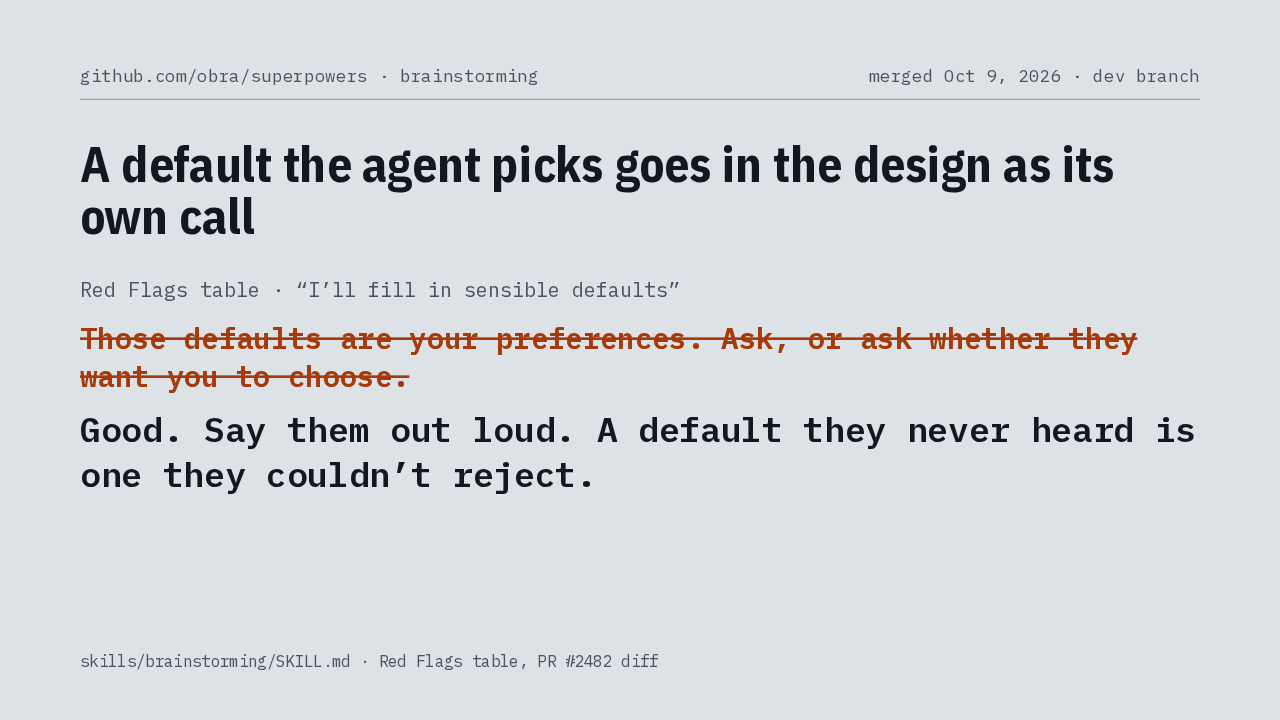
A choice the agent makes goes in the design as its call, never as something you agreed to. Filling in defaults used to be a red flag. Now it's fine, if the agent says them out loud.
The same step covers a painting or a cake
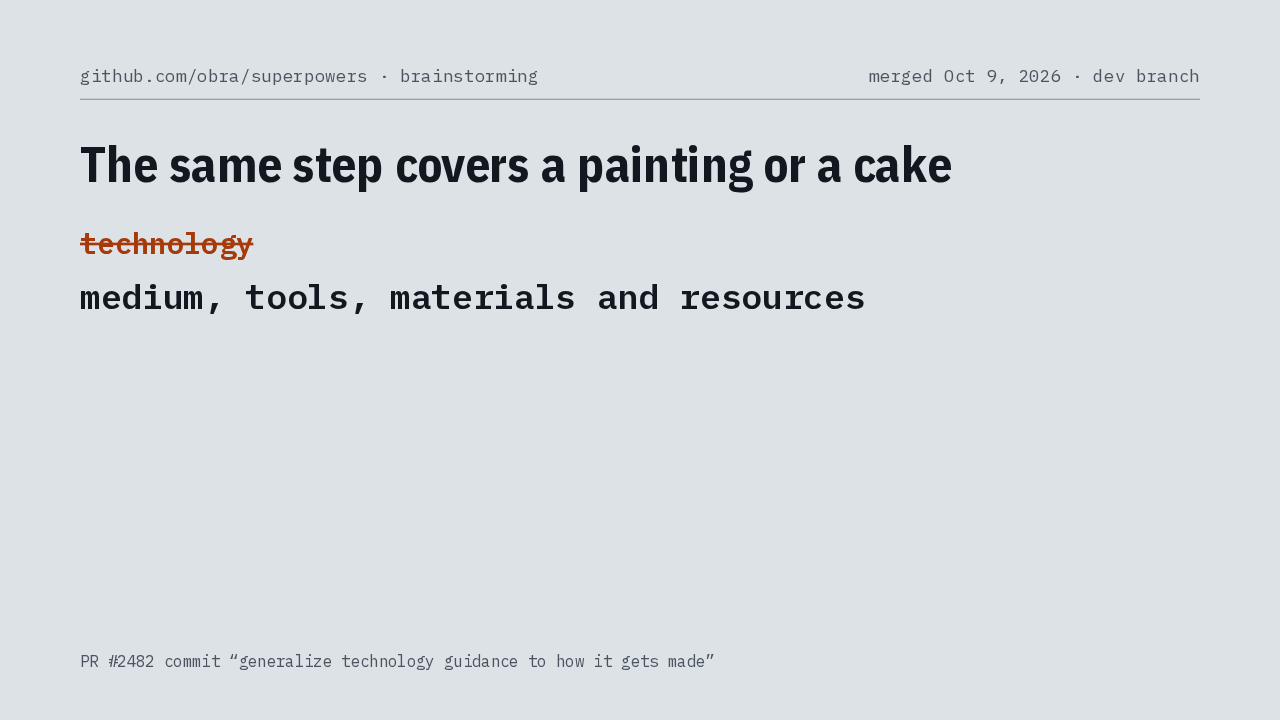
Brainstorming gets used outside software too. The first draft only covered technology. The merged version says medium, tools, materials and resources, so it applies to a painting or a cake.
In Claude Code, every hobbyist run now offered a say before choosing
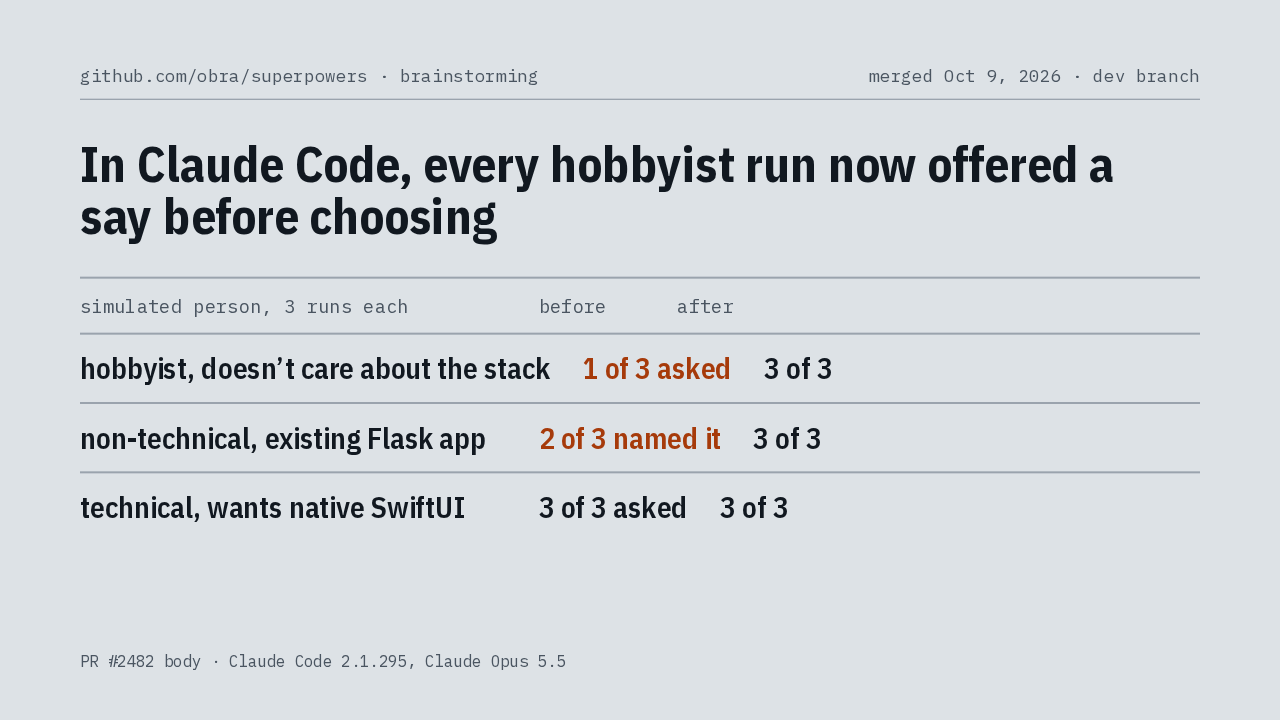
In Claude Code with Claude Opus 5.5, tested against simulated people, every hobbyist run asked whether they wanted a say, then stated defaults. On an existing Flask app, all three runs named the stack.
On Codex, the results are inconclusive
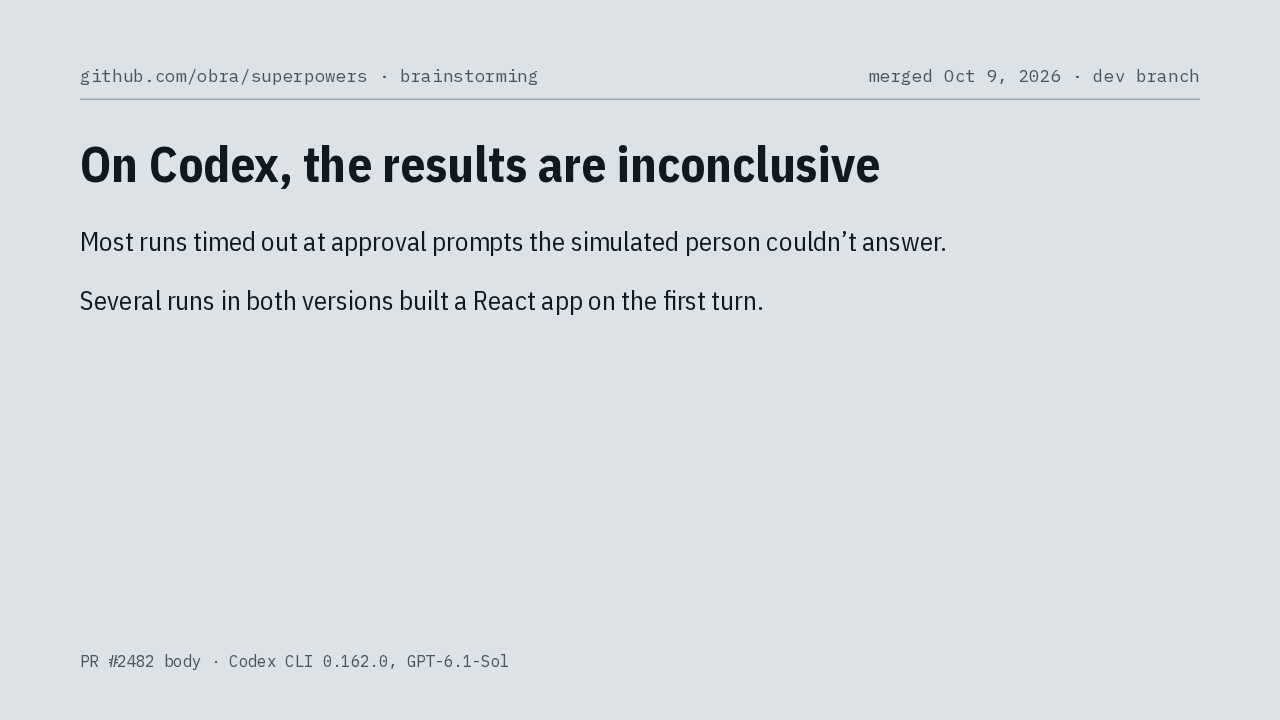
On Codex, where Drew's failure happened, the authors don't claim an improvement. Most runs stalled on approval prompts. They report no regression, and hand testing on Codex comes next.
It still guesses the kitchen equipment before planning a cake
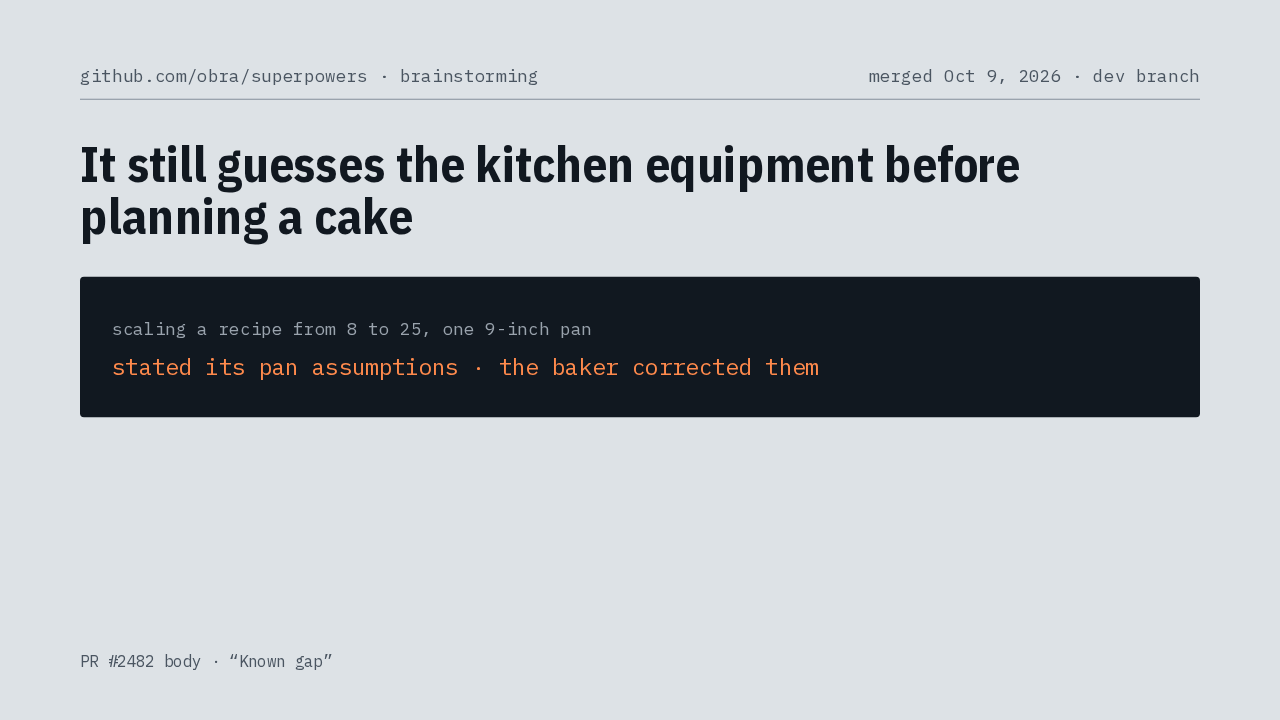
One gap remains. Planning a scaled-up cake, the agent still assumed which pans the baker owned and let the baker correct it. The assumption was said out loud, and silent choices were Drew's failure.
The change is on the dev branch, after release 6.4.2
It's on the dev branch, so the latest release, 6.4.2, still has the old wording. The full results are in pull request 2482 in the Superpowers repository.