LCU installs again on the newest Windows ChatGPT app
56 minutes ago

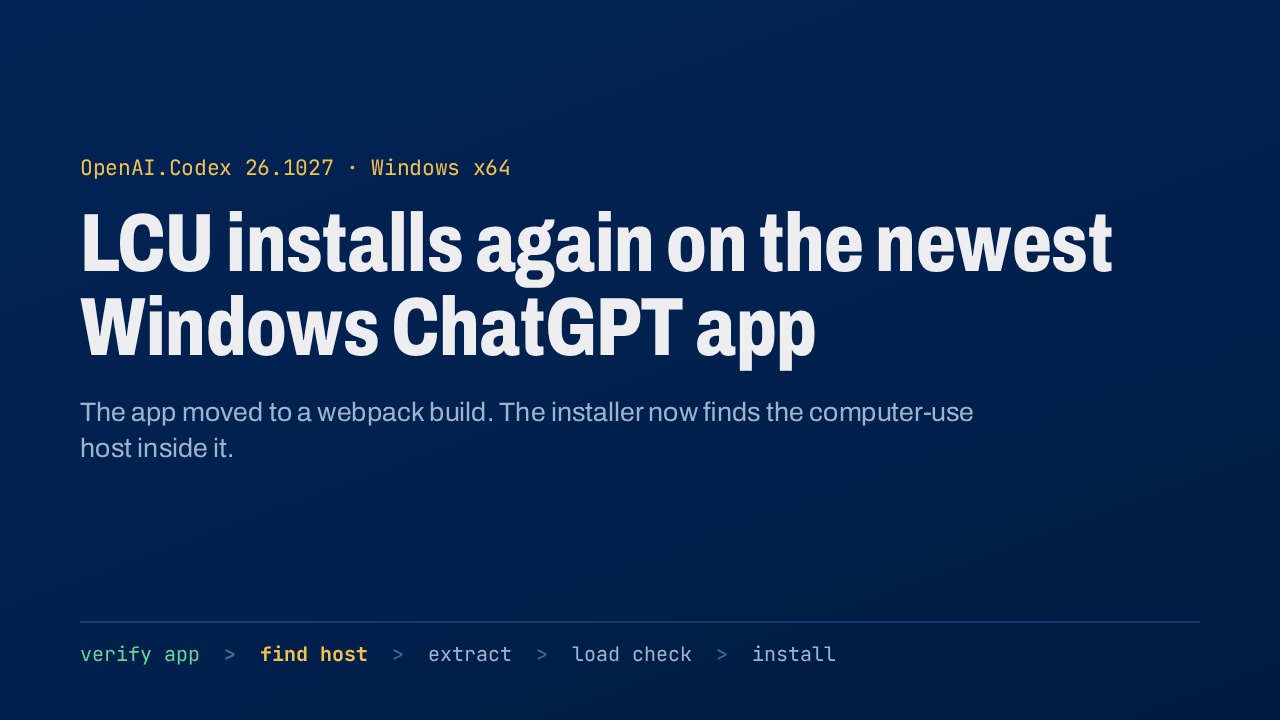
If you install LCU on Windows, the late October release of the ChatGPT app from the Store stopped the installer partway through. This change gets it past that point. LCU now finds the app's own computer-use host inside the app's new webpack build, extracts it, and loads it once to check it works before the install goes on. Mac and Linux installs don't change.
Ask about this presentation
Chapters
Show transcriptHide transcript
If you install LCU on Windows, the late October release of the ChatGPT app from the Store stopped the installer partway through. This change gets it past that point. LCU now finds the app's own computer-use host inside the app's new webpack build, extracts it, and loads it once to check it works before the install goes on. Mac and Linux installs don't change.
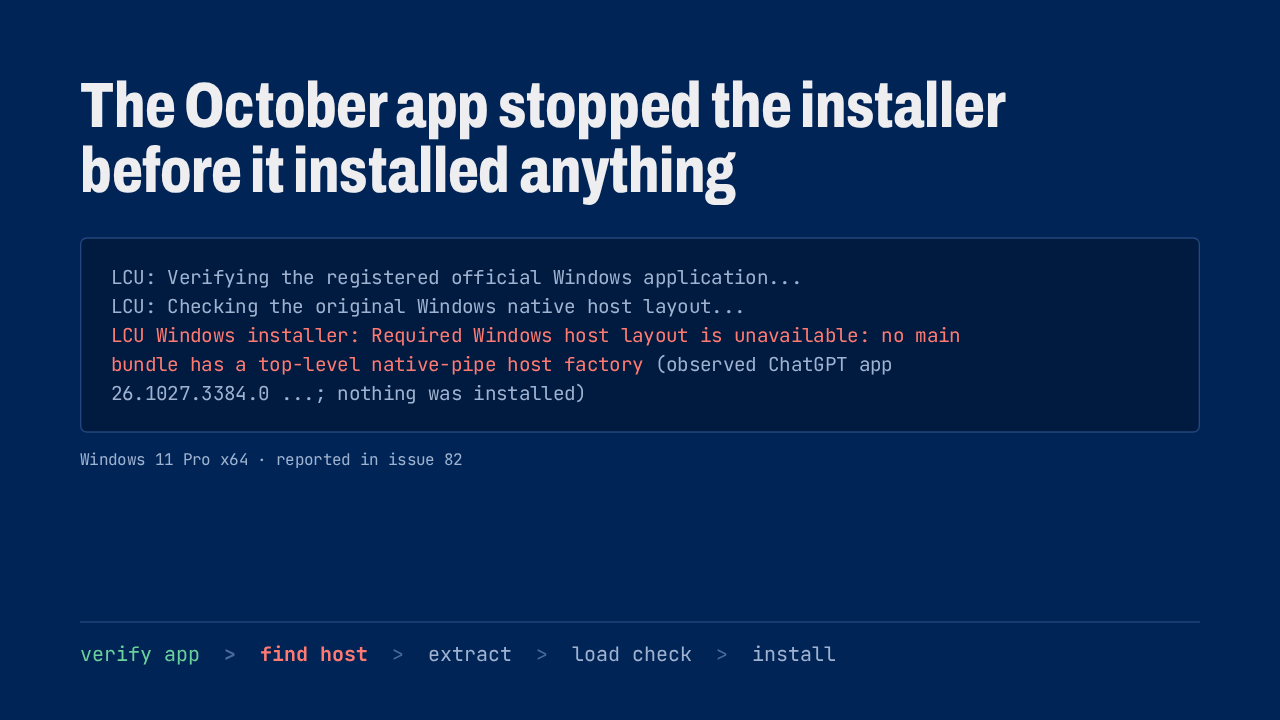
This is the output from a real Windows 11 machine. The app's identity, publisher, signature and architecture all passed. Then the host check failed, because LCU only looked in files named main.js, and the new app ships none. The installer stopped cleanly, with nothing installed. The file name was only the first problem, though. The host itself had moved.
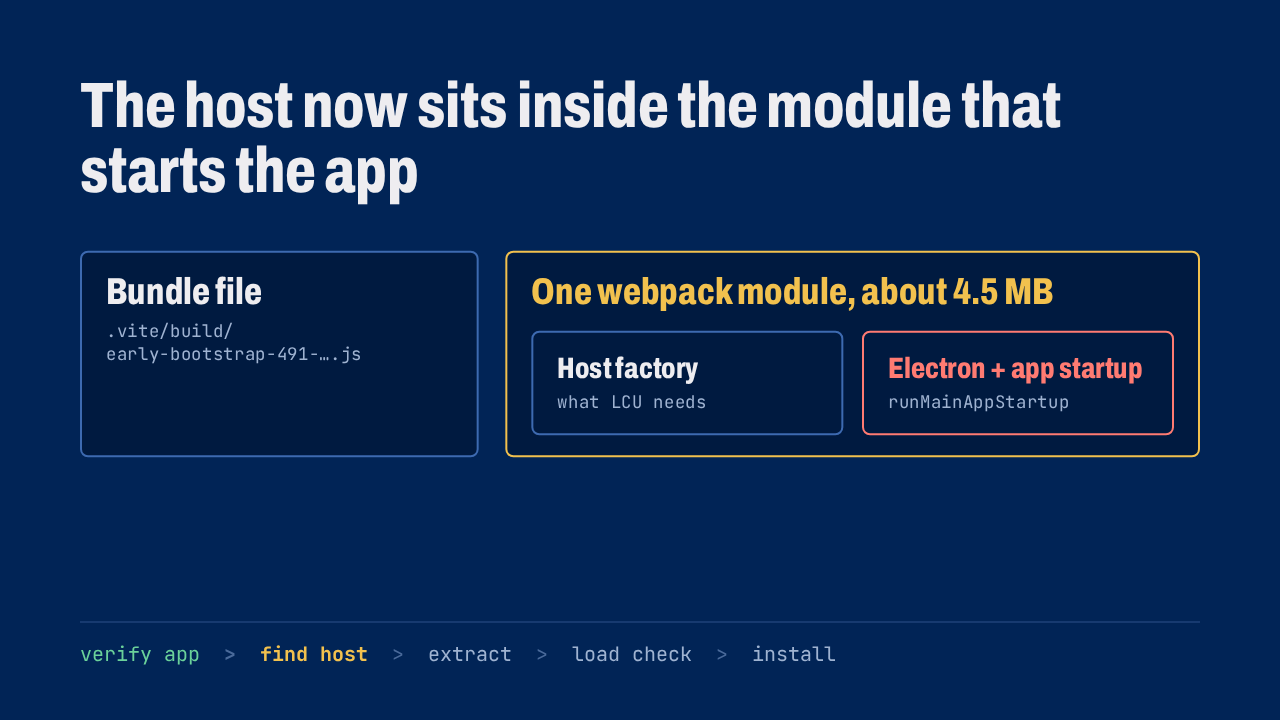
In the new build, the app's whole main process is one webpack module of about four and a half megabytes. The host factory LCU needs is a function inside that module. Right beside it is the code that imports Electron and starts the desktop app. LCU runs the host on the app's plain Node, which has no Electron, so it can't just load the module whole.
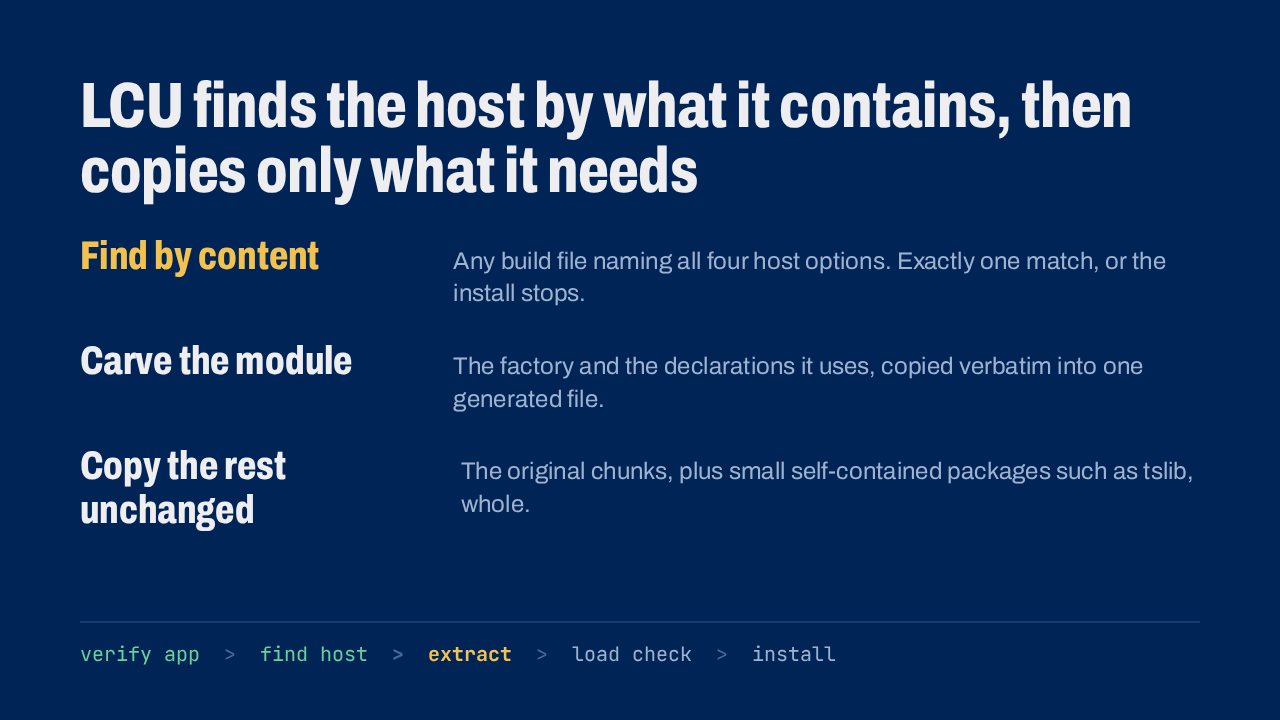
LCU no longer cares what the file is called. It scans every build file that names all four of the host's options, and it needs exactly one match. Inside the webpack module, it treats the module's body like a whole program and copies out only the factory and what that factory uses, unchanged. Everything else the host needs is copied from the app as it is. If any of it would reach Electron, the install stops.
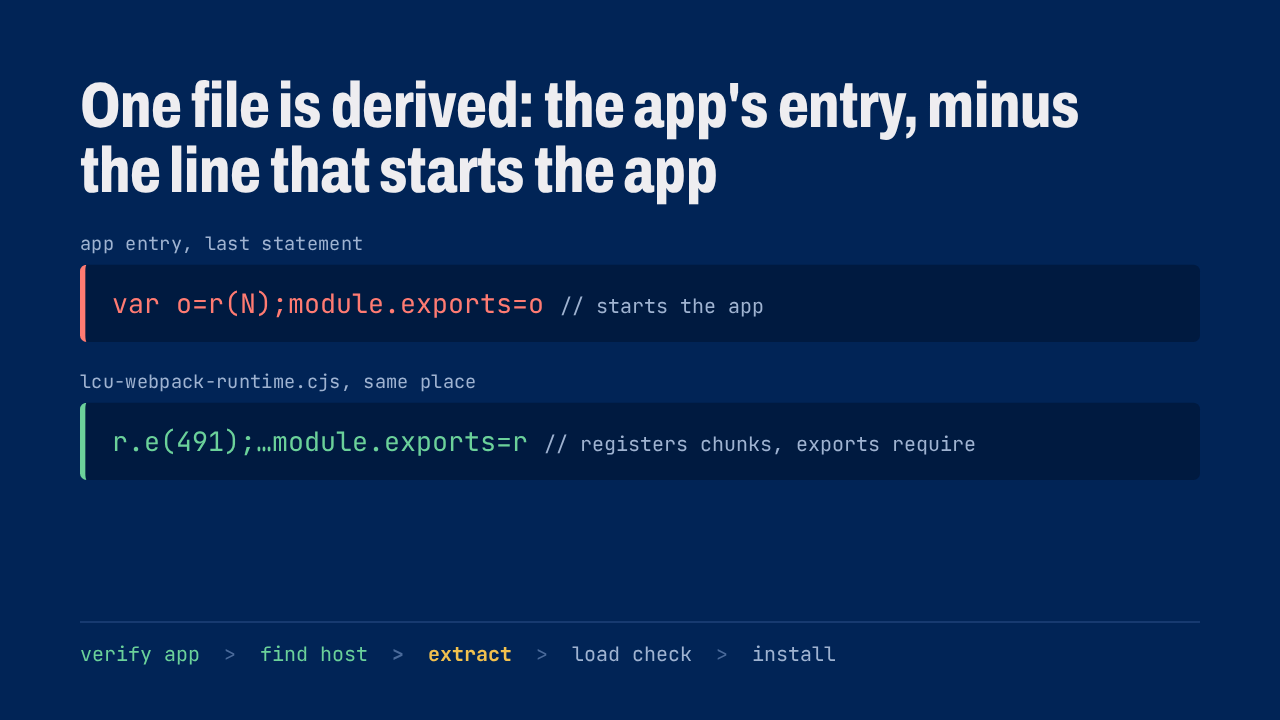
The original chunks still need webpack's loader to run. So LCU writes one derived file. It is the app's own entry, with its last statement removed, the one that starts the app. In its place, it registers every early bootstrap chunk and exports the loader. Registering a chunk runs none of its code. If the entry has any other shape, the install stops.
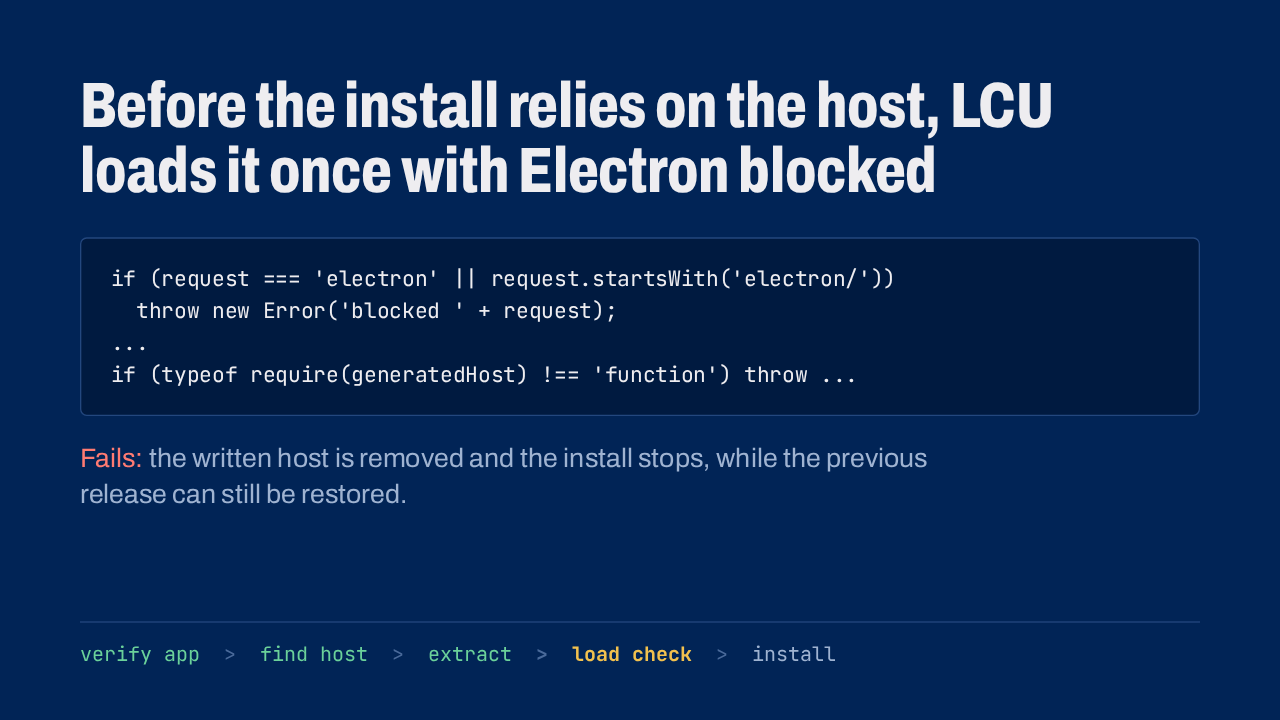
Reading the code can only suggest the host will load. So after writing it, the installer loads it once, on the app's own Node, with any attempt to load Electron turned into an error. It never calls the factory. If loading fails, LCU deletes what it wrote and stops, early enough that the previous LCU release can still be put back.
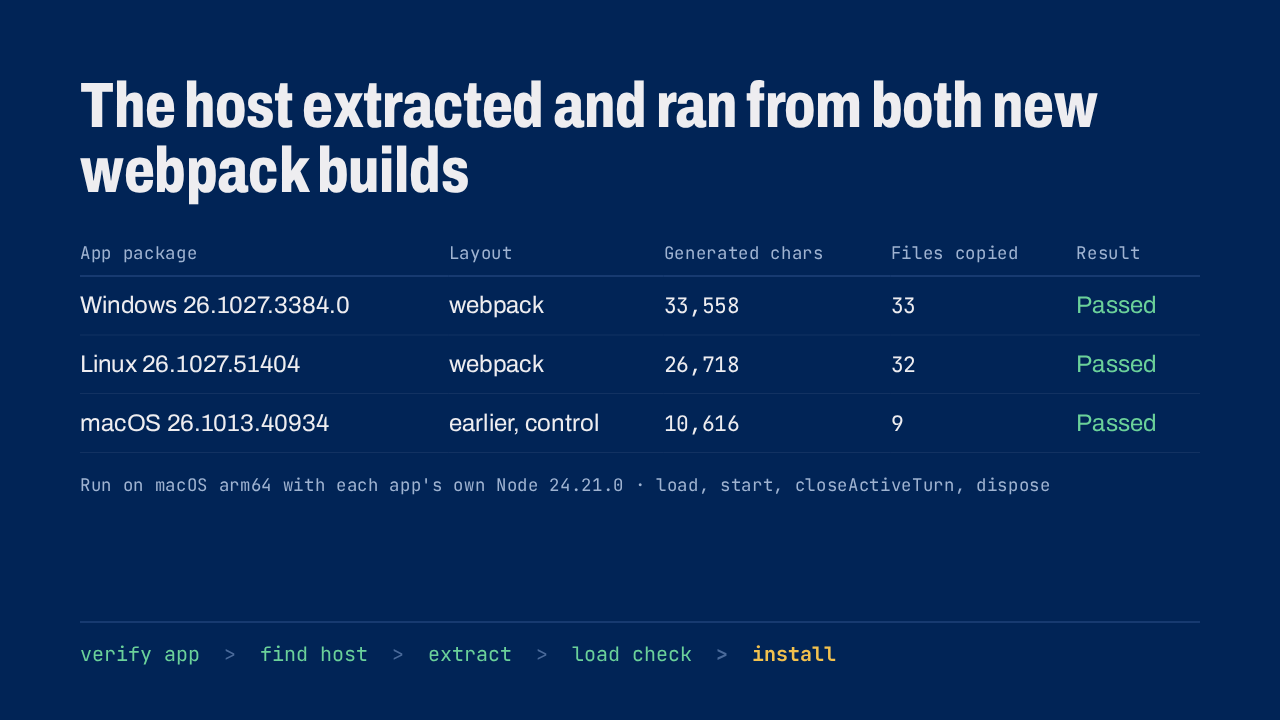
The check ran against the Windows package itself, the Linux package from the same release, and an older Mac app as a control. For each one, the host was extracted, loaded with Electron blocked, started, asked to close a turn, and shut down. A separate probe drove each host through its real socket, and the two webpack builds behaved the same. Loading took about 135 milliseconds, against 40 for the control.
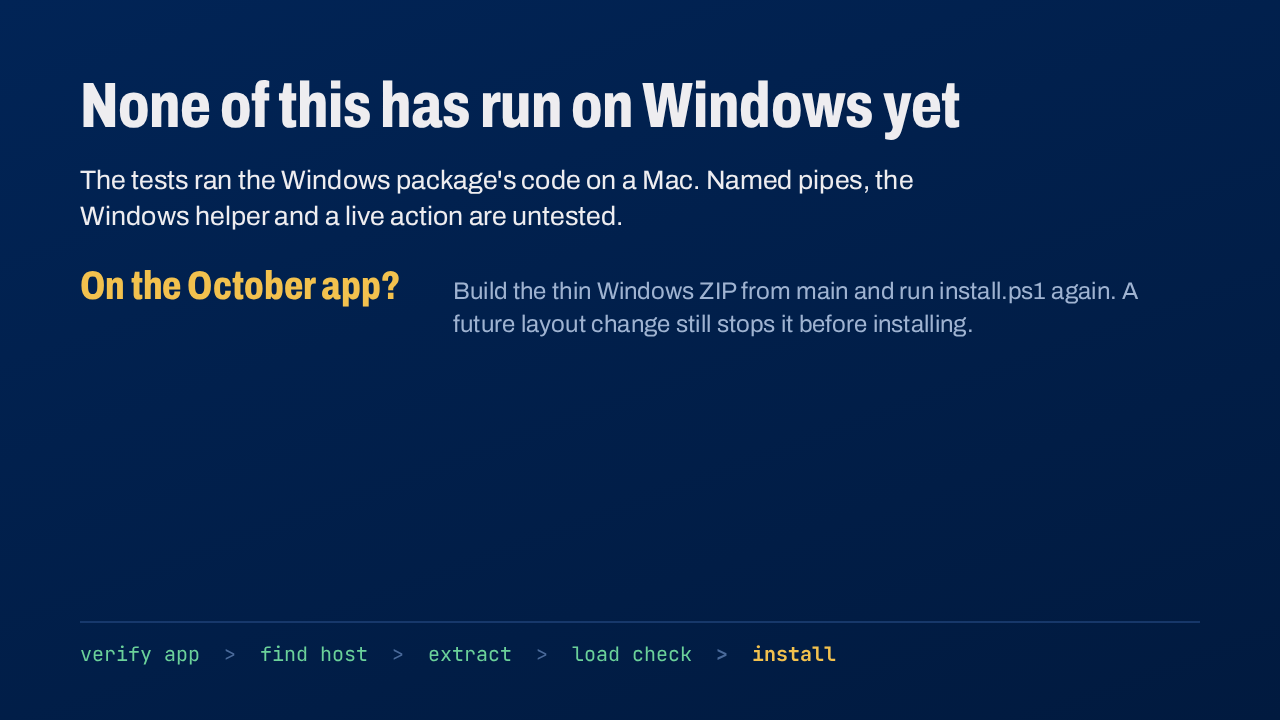
This change has a clear limit. Nothing in it ran on Windows. The Windows named pipes, the Windows helper and a real computer-use action are still unproven, and the newer Store build couldn't be downloaded to inspect. The person who reported the bug offered to try a fix on their Windows 11 desktop. Windows support in LCU is still a candidate. If you hit this error, build the thin Windows zip from main and run the installer again. It should now get past the host check on the newest Windows ChatGPT app.