Every merged pull request now gets a short video
2 hours ago

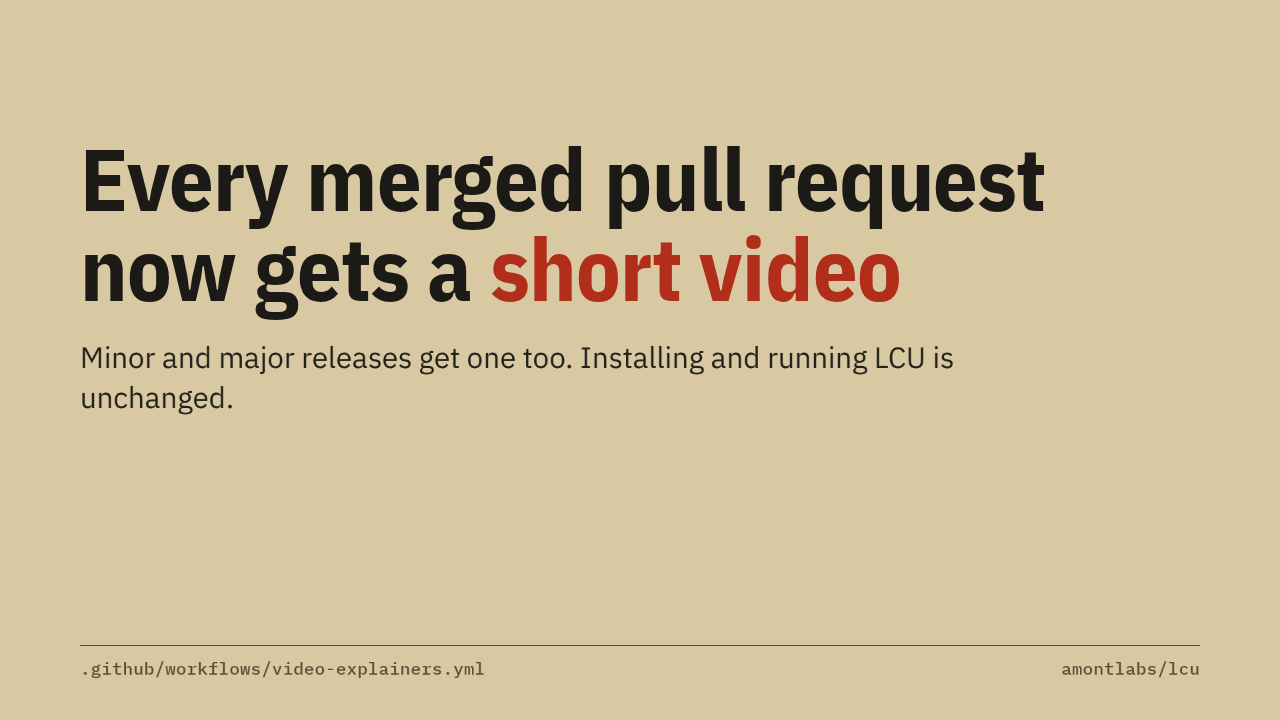
Now, when a pull request is merged into main of LCU, a short narrated video that explains it gets posted as a comment on that pull request. Minor and major releases get one too, linked from their release notes. This is a new workflow in the repository's automation. How you install and run LCU stays the same.
Ask about this presentation
Chapters
Show transcriptHide transcript
Now, when a pull request is merged into main of LCU, a short narrated video that explains it gets posted as a comment on that pull request. Minor and major releases get one too, linked from their release notes. This is a new workflow in the repository's automation. How you install and run LCU stays the same.
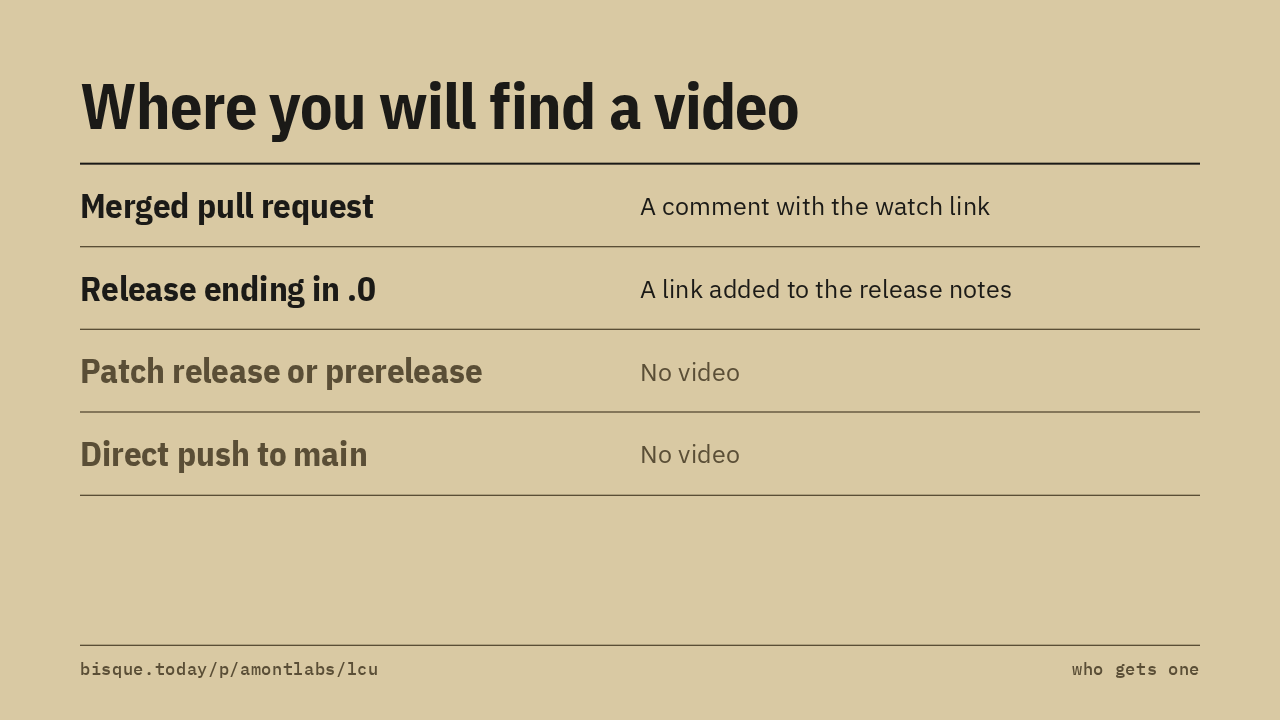
A merged pull request gets a comment with a watch link, and a minor or major release, one whose tag ends in point zero, gets the link in its notes. The videos are published on bisque.today. Patch releases, prereleases and direct pushes to main get none. The writer also skips a change too small to explain, like a dependency bump, formatting, or a typo.
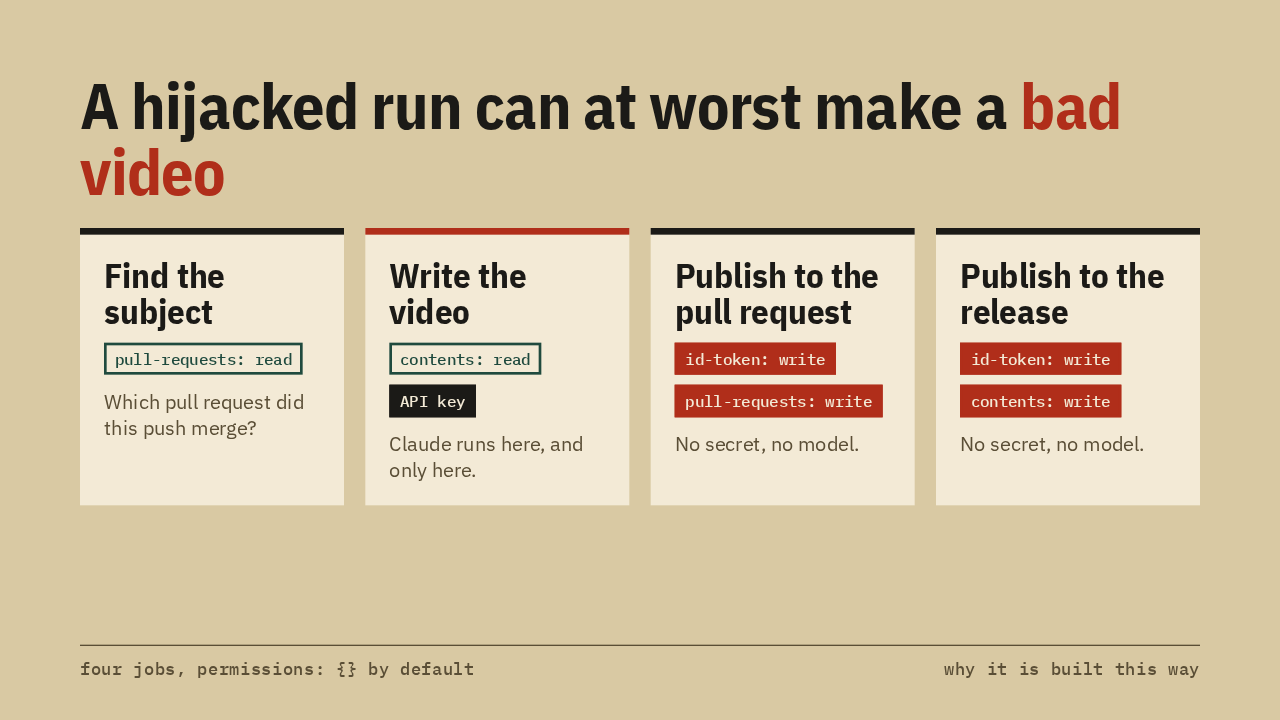
A model that reads the repository can be steered by text planted in it, so the workflow splits the work into separate jobs. The first one only looks up which pull request a push merged. Claude writes the video in a job that can read the repository and holds the Anthropic key, and nothing else. Separate jobs, with no secret and no model, publish the folder it uploaded and post the link. They sign in with the repository's own GitHub identity token, so there's no Bisque account to protect.
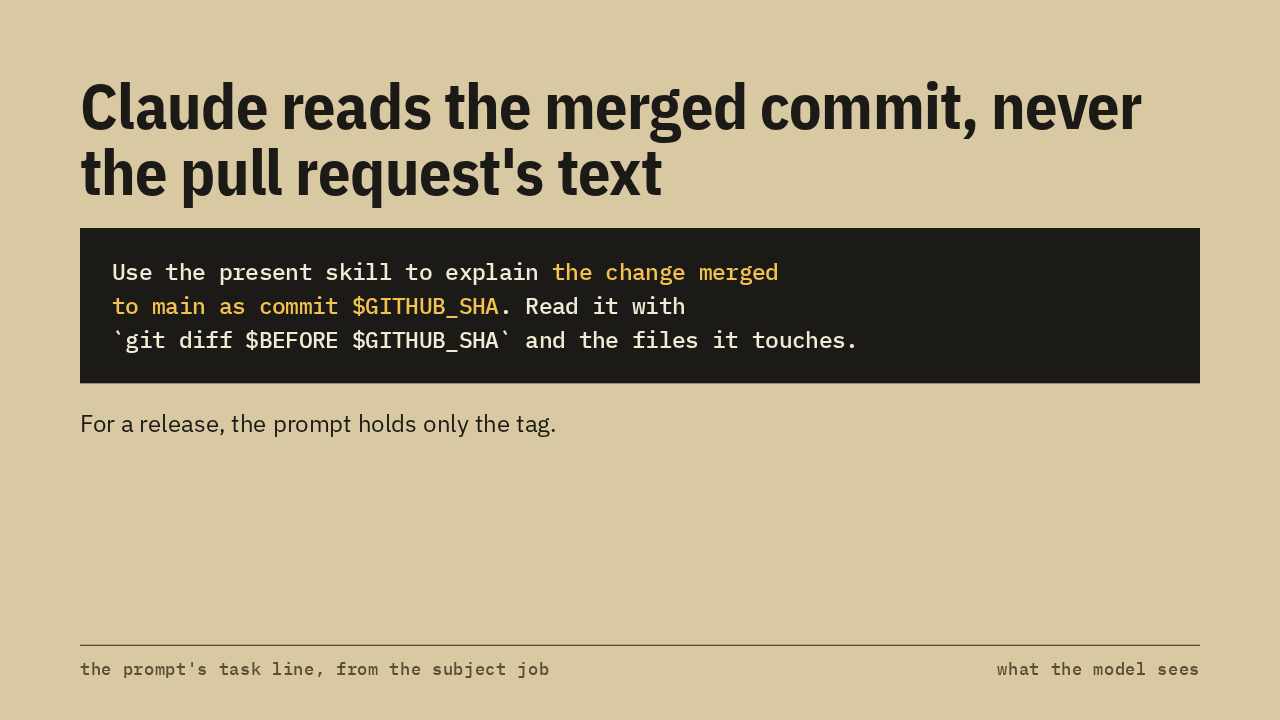
A pull request's title, description and comments are where anyone can write anything, so the writer never sees them. Its prompt carries a commit hash, and Claude starts in that merged commit on main and reads the change with git. For a release it gets the tag, then reads the release notes and the history since the previous release.
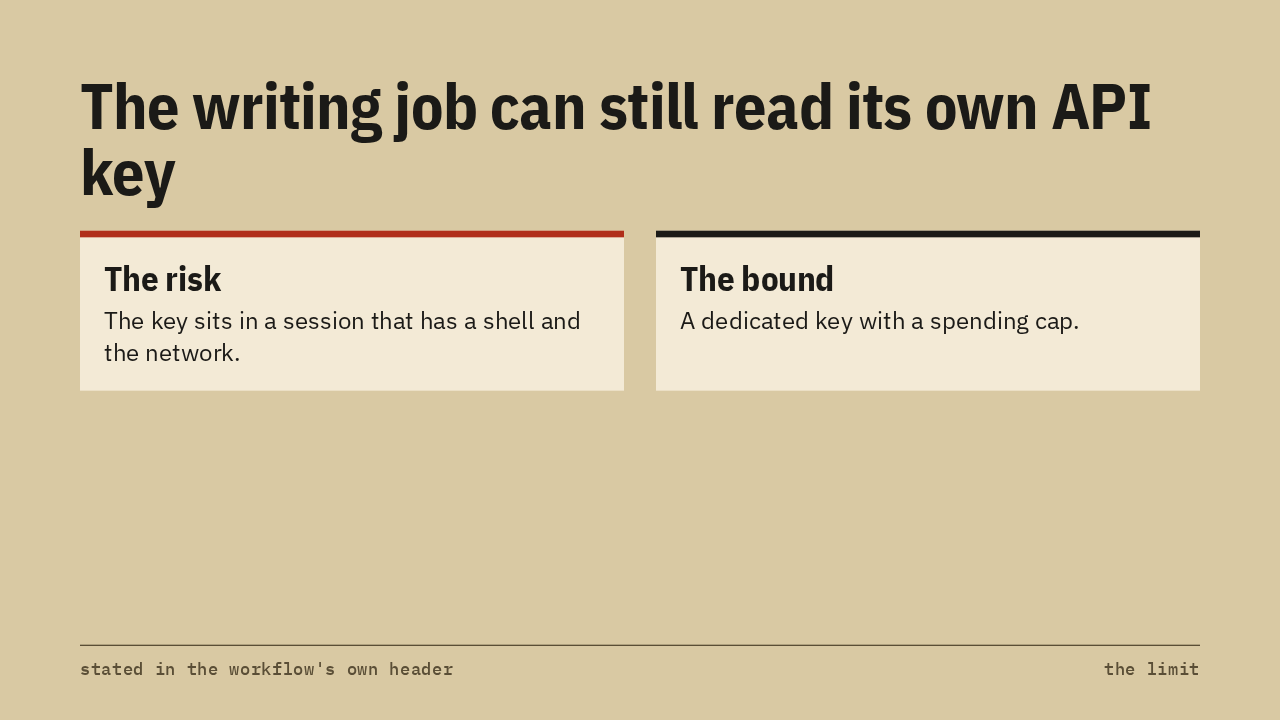
The split has a limit, and the workflow says so. Claude needs a shell and the network to build the video, and the Anthropic key sits in that same environment, so a hijacked run could read it. The answer is a key used only for this, with a spending cap, which bounds what a leak can cost.
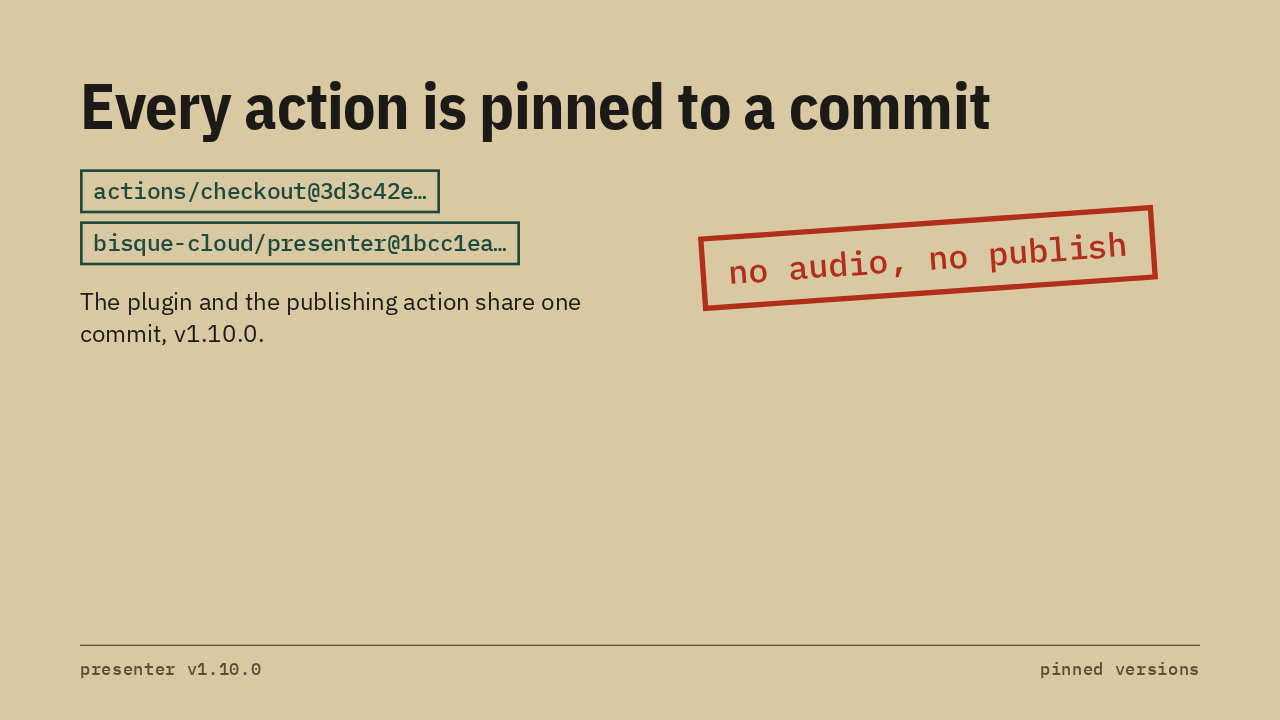
Each action is pinned to a full commit hash instead of a moving tag, and the presenter plugin Claude uses is checked out at the same commit as the action that publishes. They get updated together. At that version, publishing fails when a narrated slide arrives without its audio, instead of narrating it in the publishing job.
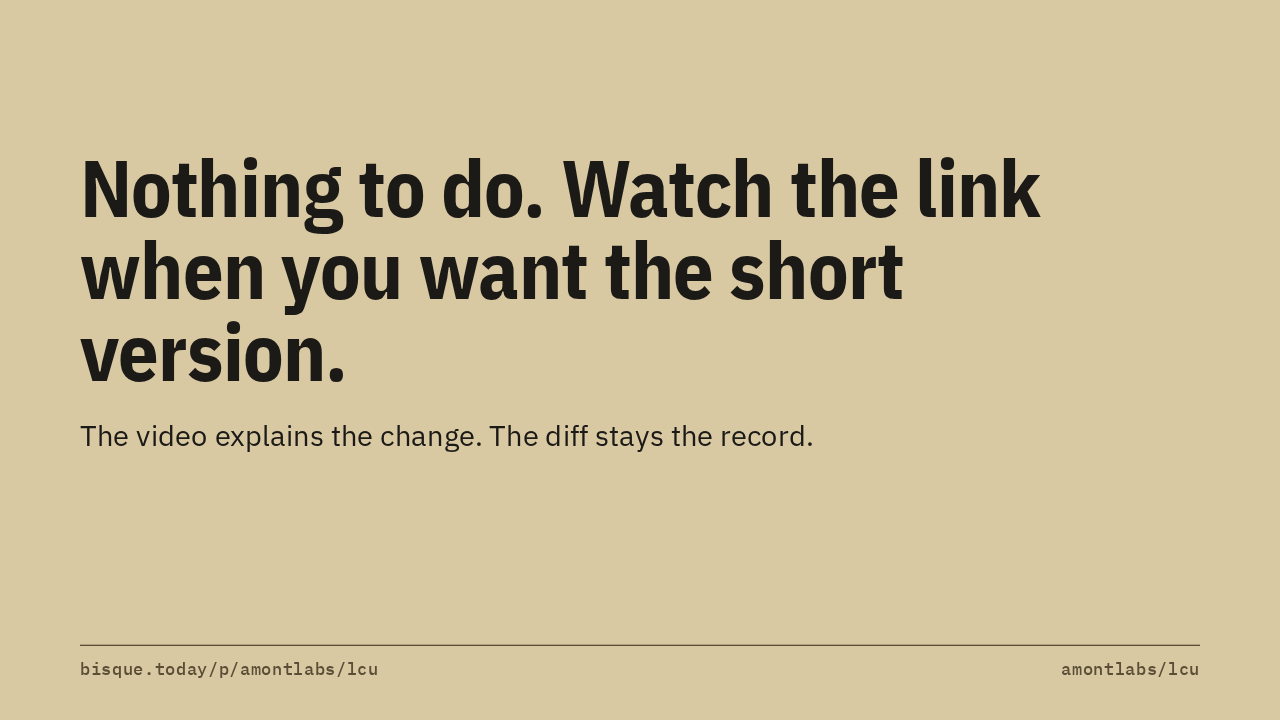
As someone who uses LCU, you don't need to do anything. A video is a quick explanation written from the code, so when the detail matters, read the diff. Every merged pull request, and every minor or major release, now comes with a short video beside it.