Two boxes, two rating systems
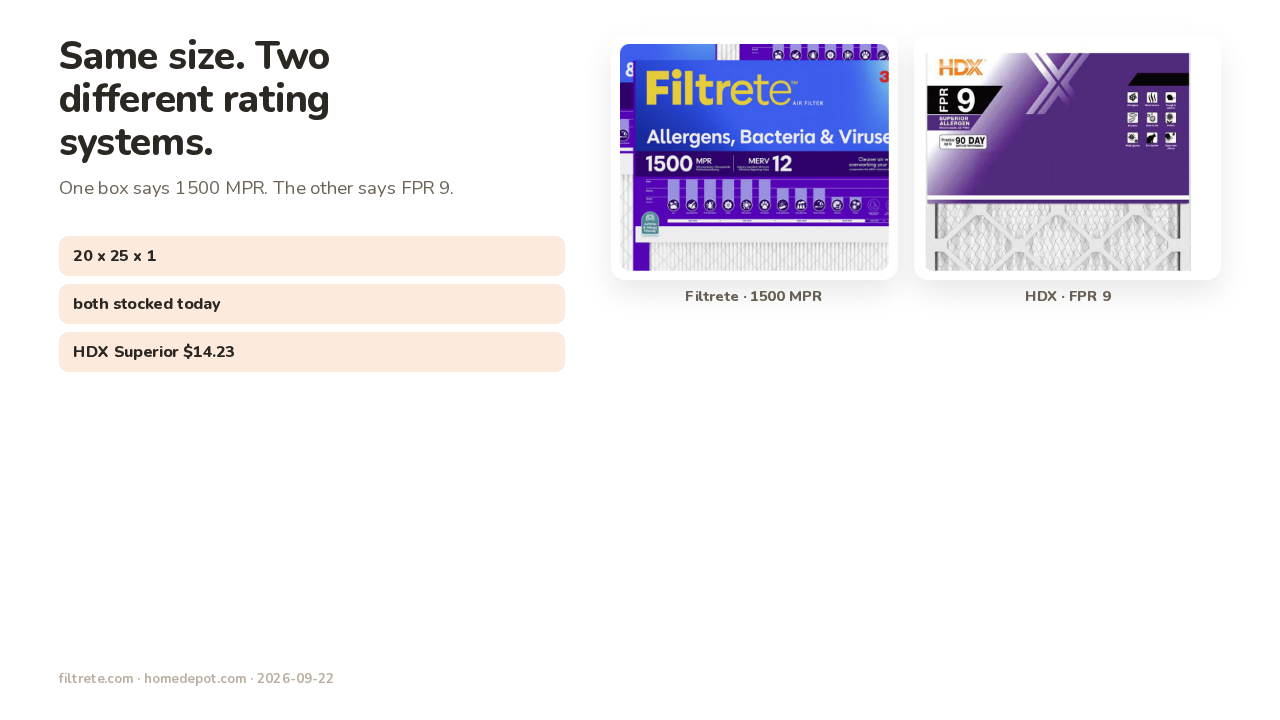
Same size. Two different rating systems.
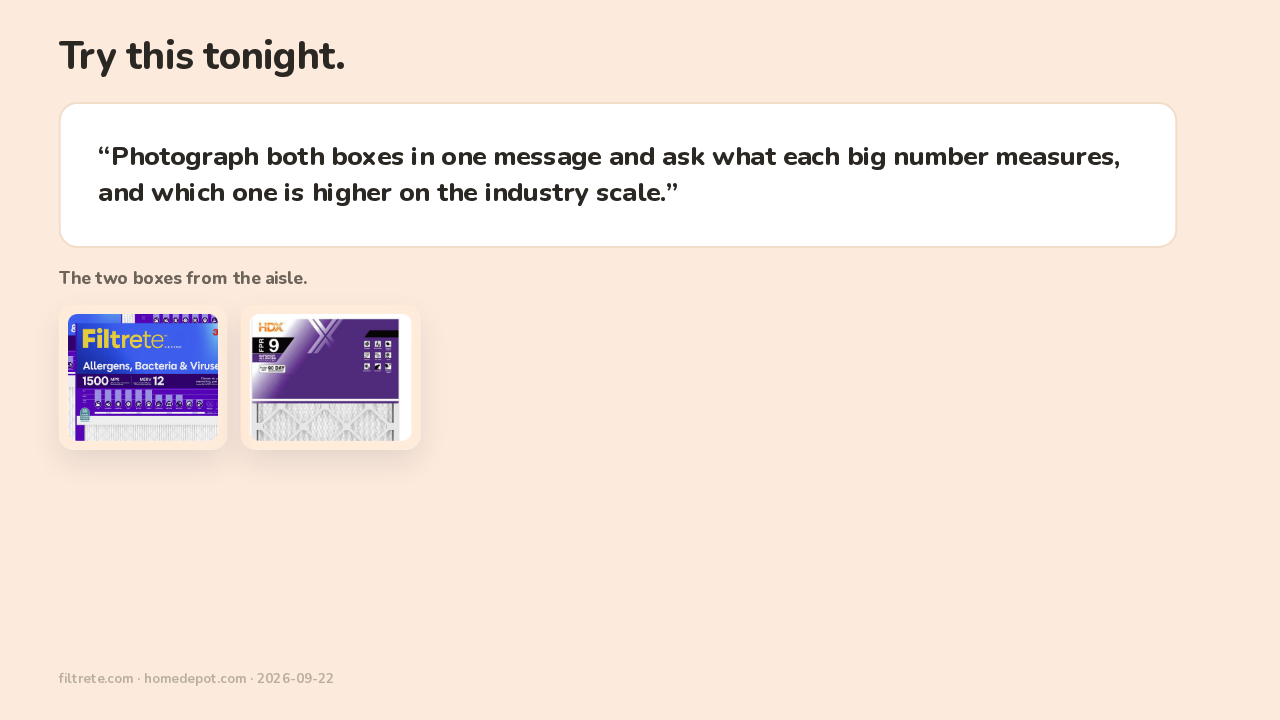
One box says 1500 MPR. The other says FPR 9.


Two furnace filters, both twenty by twenty five by one inch, both on the shelf today. The Filtrete box says fifteen hundred MPR. The HDX box beside it, Home Depot's own store brand, says FPR nine. Fifteen hundred against nine is the comparison you make standing there. Both of those are filtration ratings, a score for how much of the dust, pollen and smoke in the air the filter catches. But fifteen hundred and nine come from two different rating systems, so the two numbers in your hands cannot be compared by size.
MERV, MPR and FPR
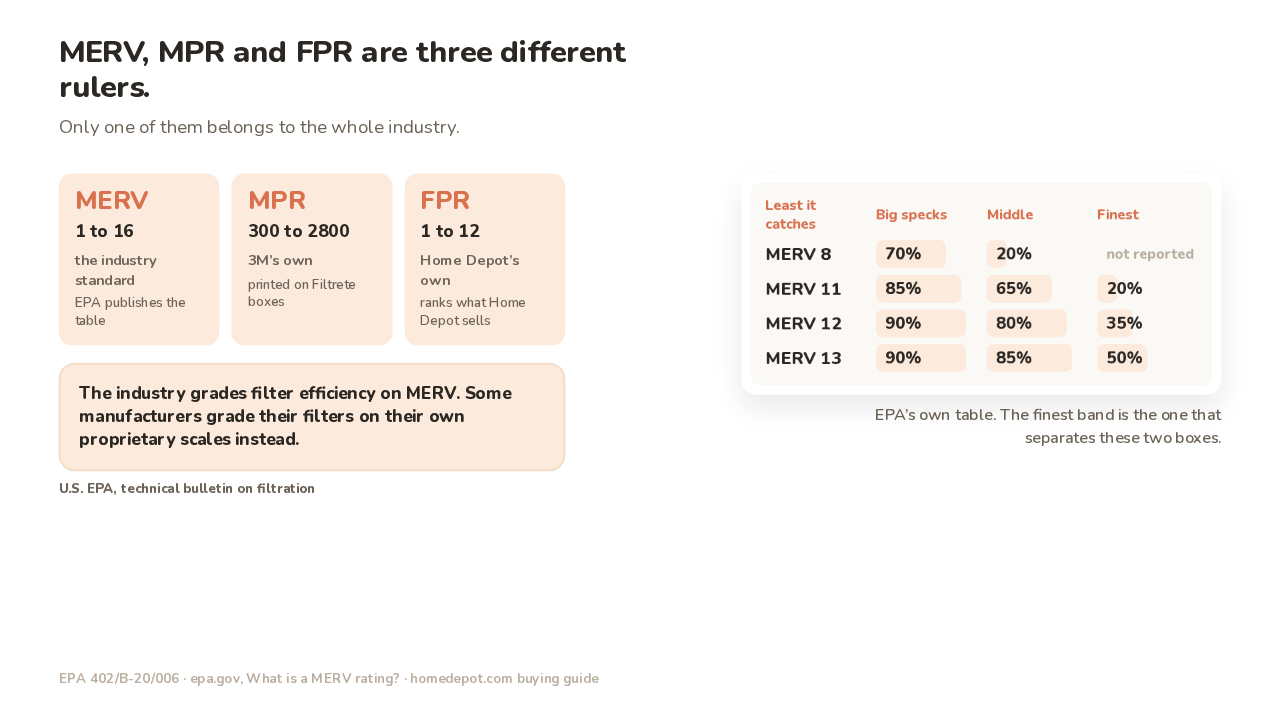
MERV, MPR and FPR are three different rulers.
Only one of them belongs to the whole industry.
EPA’s own table. The finest band is the one that separates these two boxes.
Three ratings live in that one aisle, and each one belongs to a different organization. MERV is the industry's rating, and the EPA publishes the table. It runs from one to sixteen, and the higher the MERV number, the more a filter catches. A MERV eleven filter catches at least twenty percent of the finest specks, the ones far too small to see. A MERV twelve filter catches at least thirty five percent of them. MPR is 3M's own rating, printed on Filtrete boxes, and it runs from three hundred up to twenty eight hundred. FPR is Home Depot's own rating, on a scale of one to twelve. Home Depot weights it sixty percent on the big specks, thirty percent on the fine ones, and ten percent on the weight the filter gains as it fills. The EPA names the problem itself. The EPA writes that the industry grades filter efficiency on MERV, and that some manufacturers grade their filters on their own proprietary scales instead.
Both publish a conversion to MERV
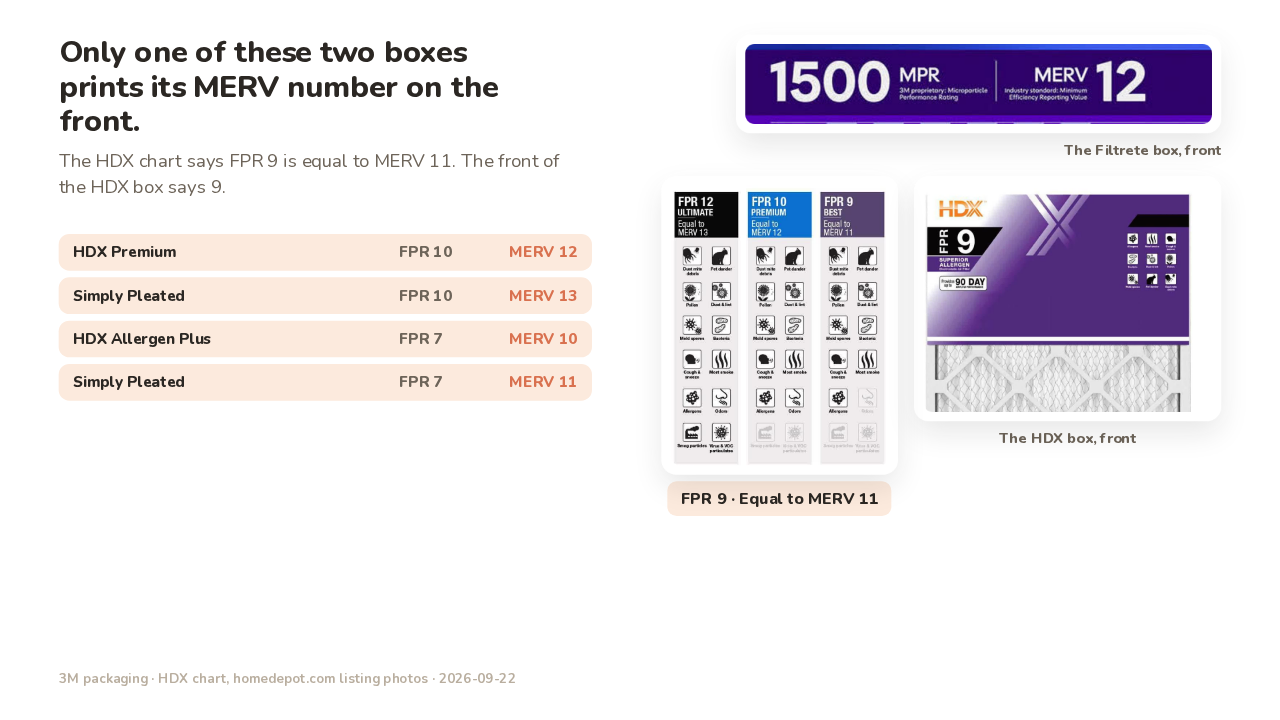
Only one of these two boxes prints its MERV number on the front.
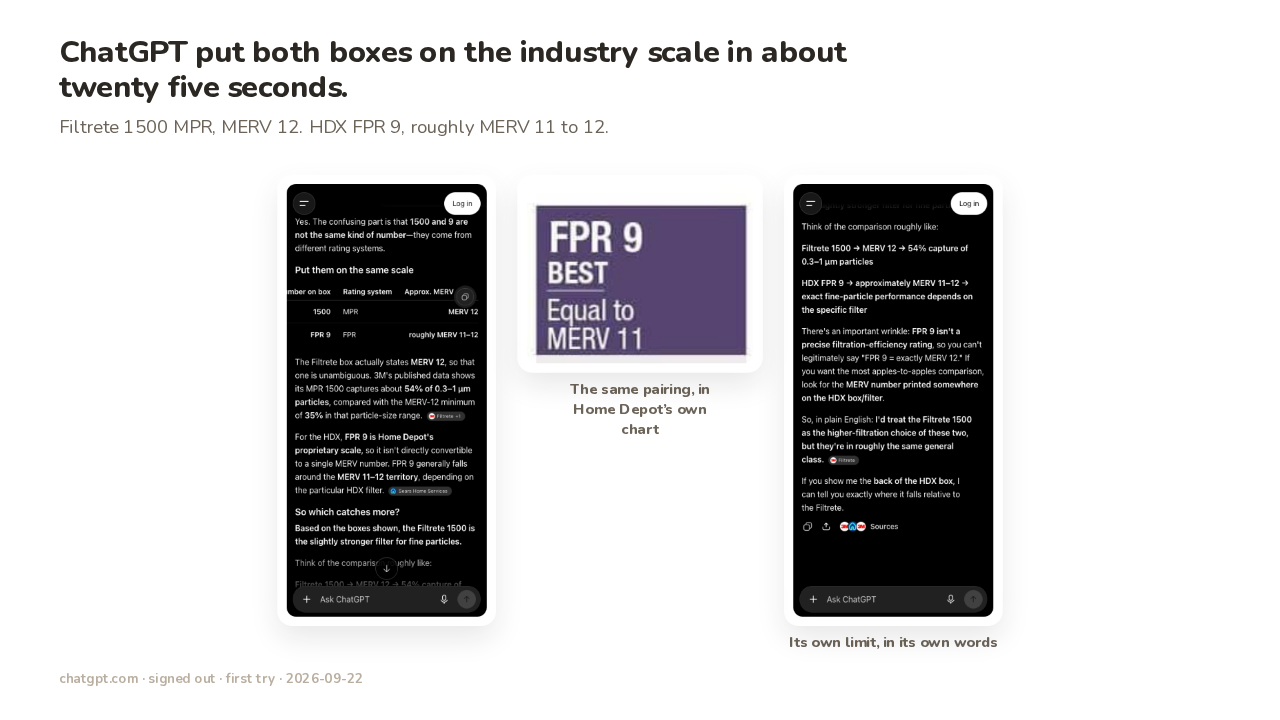
The HDX chart says FPR 9 is equal to MERV 11. The front of the HDX box says 9.


Both brands publish a conversion to MERV, and they publish it in two different places. 3M prints its conversion on the front of the box. Fifteen hundred MPR sits there captioned 3M proprietary, and right beside it is MERV twelve, captioned industry standard. Home Depot publishes a conversion too, on a chart in its own listing photos. The chart says FPR nine is equal to MERV eleven. The front of the HDX box carries the nine and nothing else. And an FPR number does not hold still across brands. Home Depot sells an HDX filter at FPR ten whose own listing says MERV twelve, and a Simply filter at FPR ten whose listing says MERV thirteen. One store number, two industry numbers.
Open it and photograph the first box
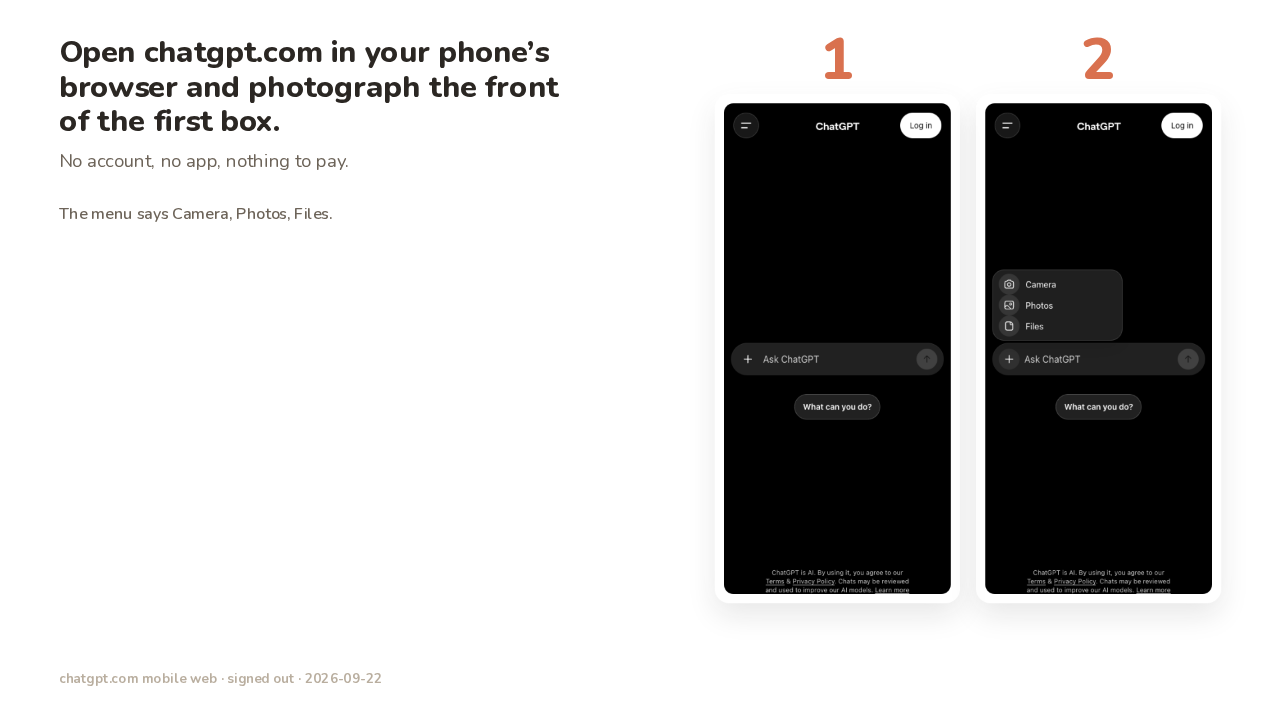
Open chatgpt.com in your phone’s browser and photograph the front of the first box.
No account, no app, nothing to pay.
The menu says Camera, Photos, Files.


Open your phone's browser, right there in the aisle, and go to ChatGPT dot com. No account, no app, nothing to pay. This is the screen you get signed out, with Log in still sitting up in the corner, unpressed. Tap the plus sign in the bar that says Ask ChatGPT. The menu that comes up says Camera, Photos, Files. Tap Camera and take a picture of the front of the first box, close enough that the small print under the big number is readable.
Add the second box
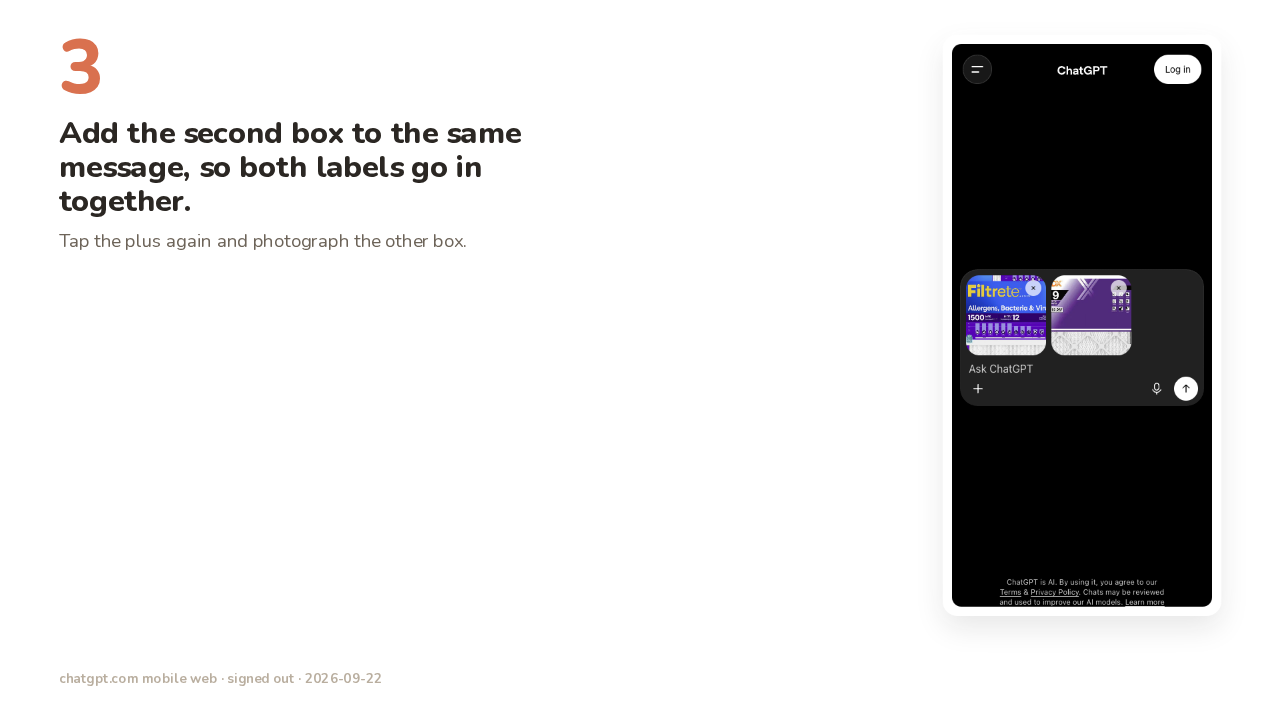
Add the second box to the same message, so both labels go in together.
Tap the plus again and photograph the other box.
Now add the second box to the same message. Tap the plus again and take a picture of the other box. Both photographs sit in one message before you send it. ChatGPT sees both labels at once. Signed out, with no account, both photographs went in.
Type this
Type this with both photographs attached.
The exact words that produced the reply in this episode.
Here are the words to type, and you can screenshot this card. These are two furnace filter boxes, same size. What does the big number on each one mean, and which filter catches more? Put both on the same scale. That last sentence asks for both numbers on the same ruler. Neither box gives you that on its own.
Both boxes on the industry scale
ChatGPT put both boxes on the industry scale in about twenty five seconds.
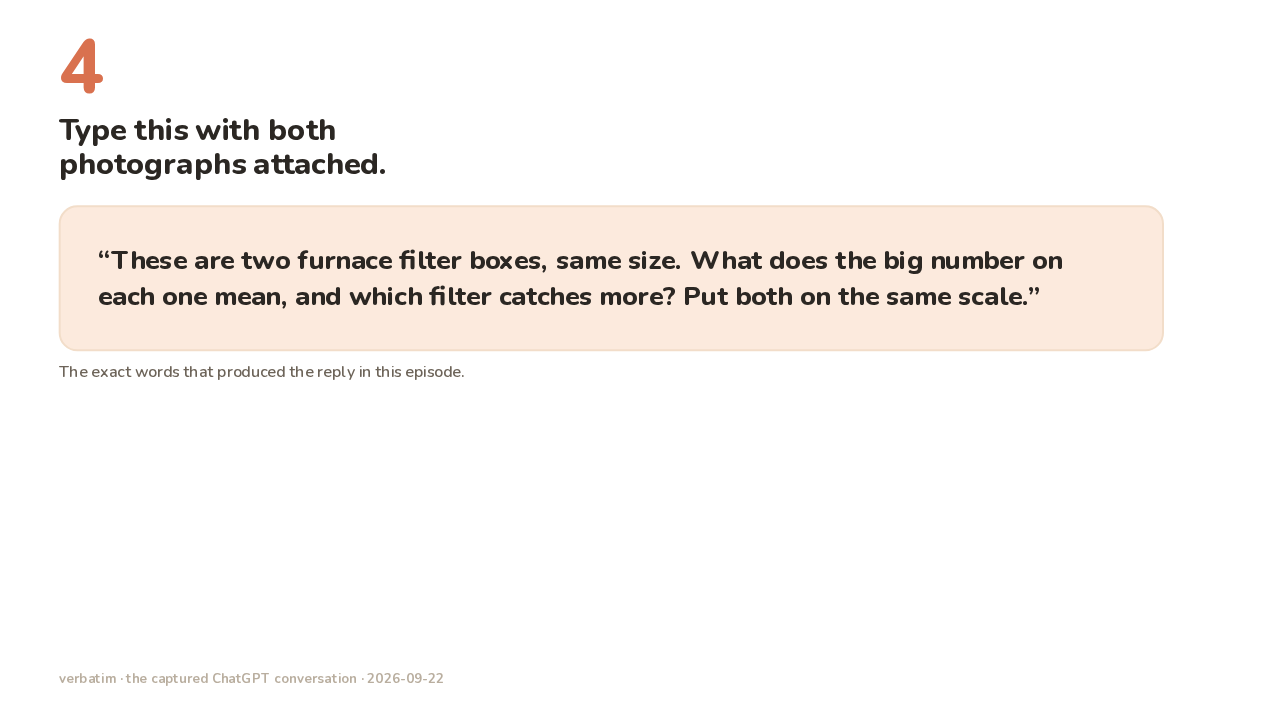
Filtrete 1500 MPR, MERV 12. HDX FPR 9, roughly MERV 11 to 12.


That is the real reply to those two photographs, signed out, first try, in about twenty five seconds. It opens by saying that fifteen hundred and nine are not the same kind of number, and that they come from different rating systems. Then it puts both boxes on one scale. Filtrete, fifteen hundred MPR, MERV twelve. HDX, FPR nine, roughly MERV eleven to twelve. It adds that the Filtrete box states MERV twelve itself, and it calls FPR Home Depot's proprietary scale. Then it says its own limit out loud. FPR nine is not a precise filtration rating, so look for a MERV number printed somewhere on the HDX box. What it cannot see is your furnace. The EPA's advice is a MERV thirteen filter, or as high a rating as your system fan and filter slot can take, and that one is a question for a heating and cooling technician.
Read the size off the frame
Read the size off the frame of the filter you are replacing.
Size is the other half of the decision, and it is not a rating at all.

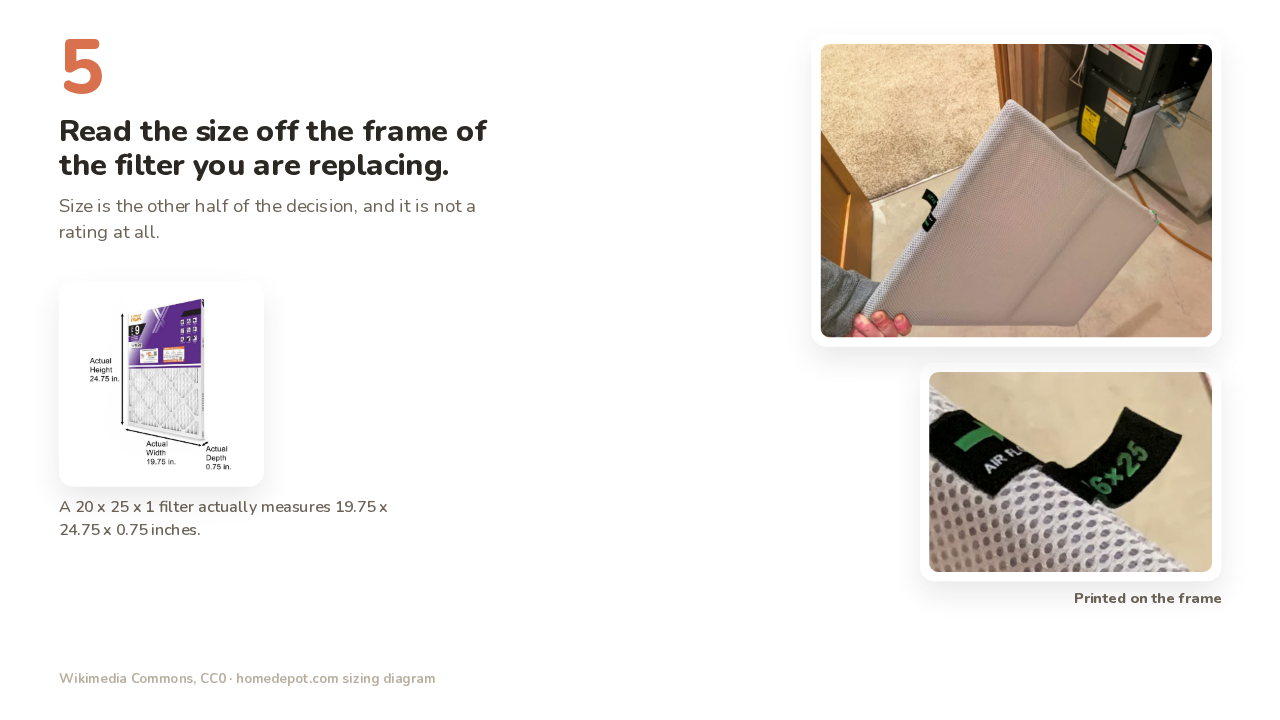
A 20 x 25 x 1 filter actually measures 19.75 x 24.75 x 0.75 inches.


One step left, and it is the one that sends people back to the shop. Pull the old filter out of the furnace and read the size off the tab on its cardboard frame. The size sits next to the arrow that shows which way the air flows. Home Depot's own guide tells you to do exactly this. A twenty by twenty five that should have been a sixteen by twenty five is the wrong filter at every rating.
Try this tonight
Try this tonight.
The move is bigger than filters. Any time two boxes on a shelf both shout a number at you, photograph both of them in one message and ask what each number measures and which one is higher on the industry scale. Tonight that is fifteen hundred MPR against FPR nine. Next month it is paint, or batteries.