The bisque-voice README drops from 602 to 89 lines, with install and internals moved to their own files
1 hour ago

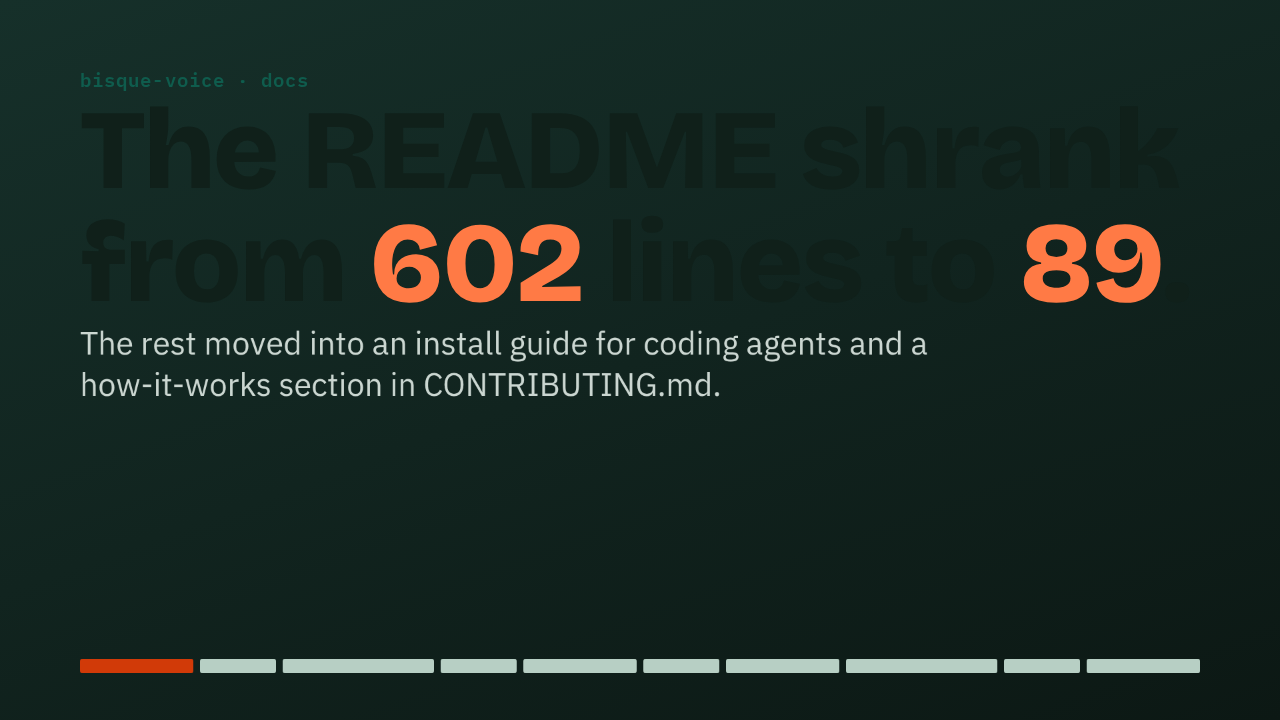
The readme for bisque voice just went from about 600 lines to about 90. The install steps became a new guide written for coding agents, and the internals moved into the contributing file. Here is where each piece went, and what to check when you review it.
Ask about this presentation
Chapters
Show transcriptHide transcript
The readme for bisque voice just went from about 600 lines to about 90. The install steps became a new guide written for coding agents, and the internals moved into the contributing file. Here is where each piece went, and what to check when you review it.
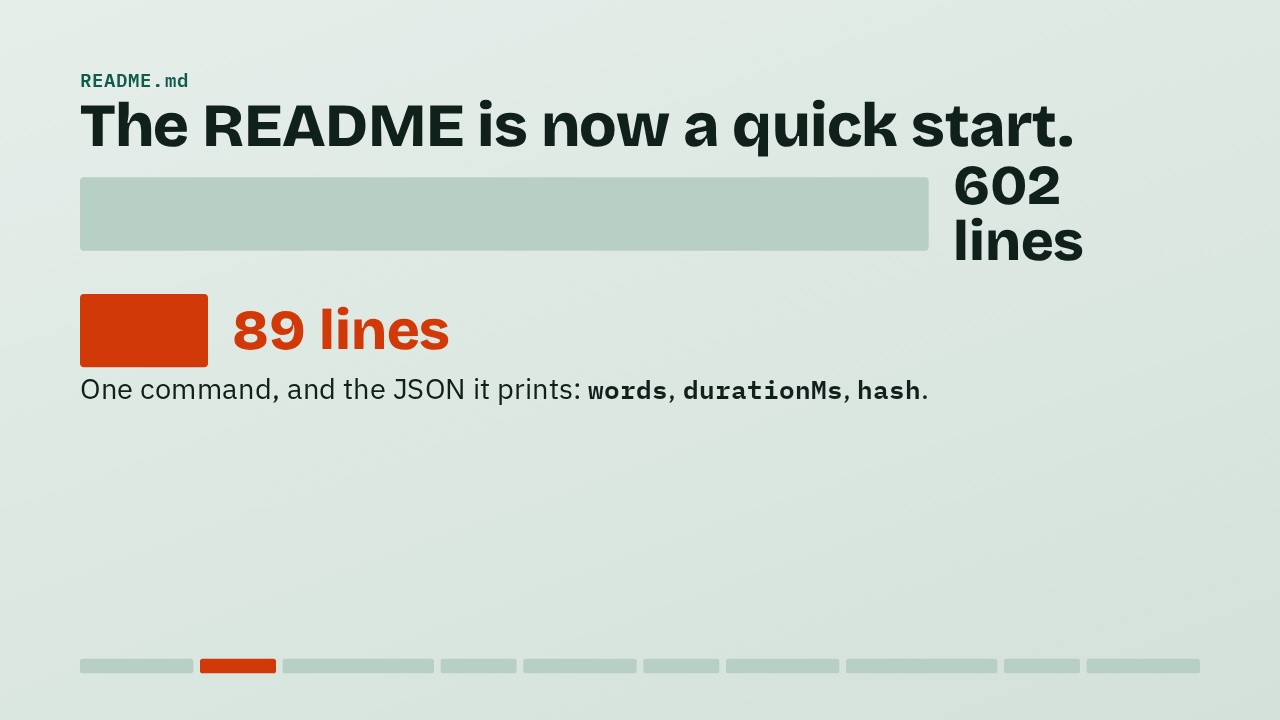
Before, the readme ran about 600 lines. Now it runs about 90. What stays is the pitch, one command that turns text into speech, and the JSON that comes back with a start and end time for every word. Everything longer has a different home.
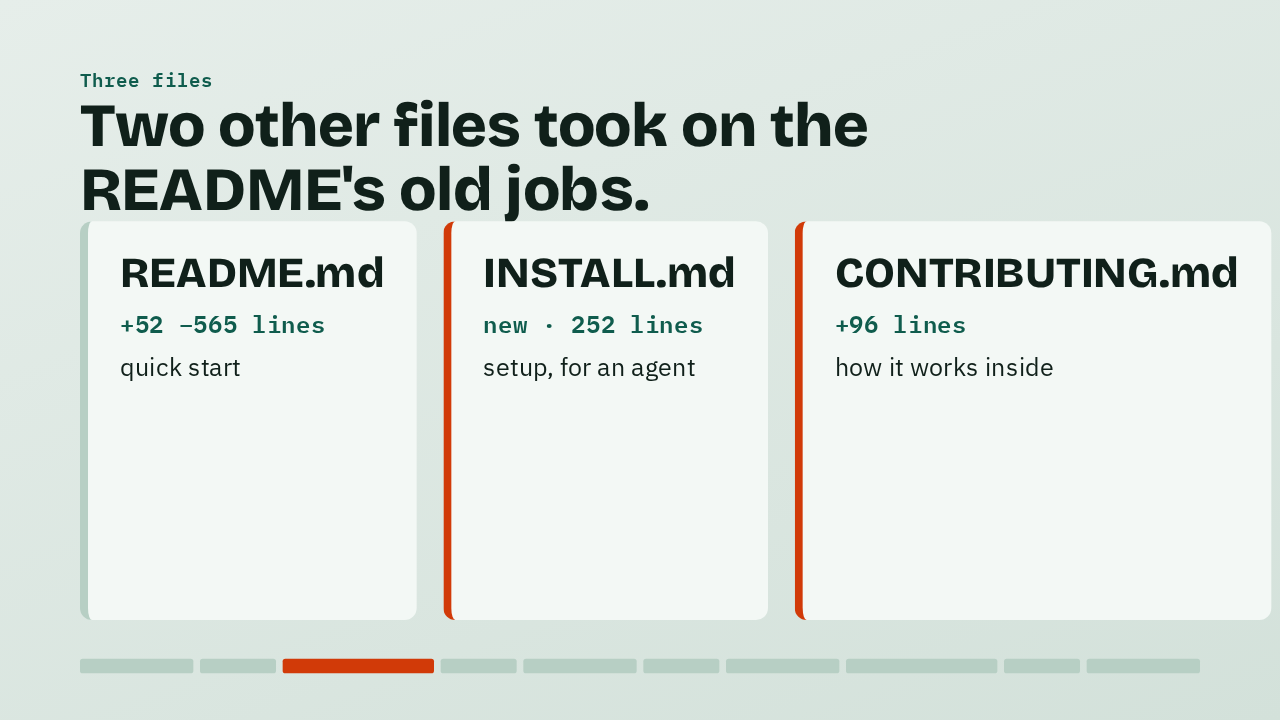
Three files changed. Installing and setting up moved into a new file, about 250 lines. And the explanation of how the engine works moved into the contributing file, which grew by about 100 lines. The readme keeps the quick start.
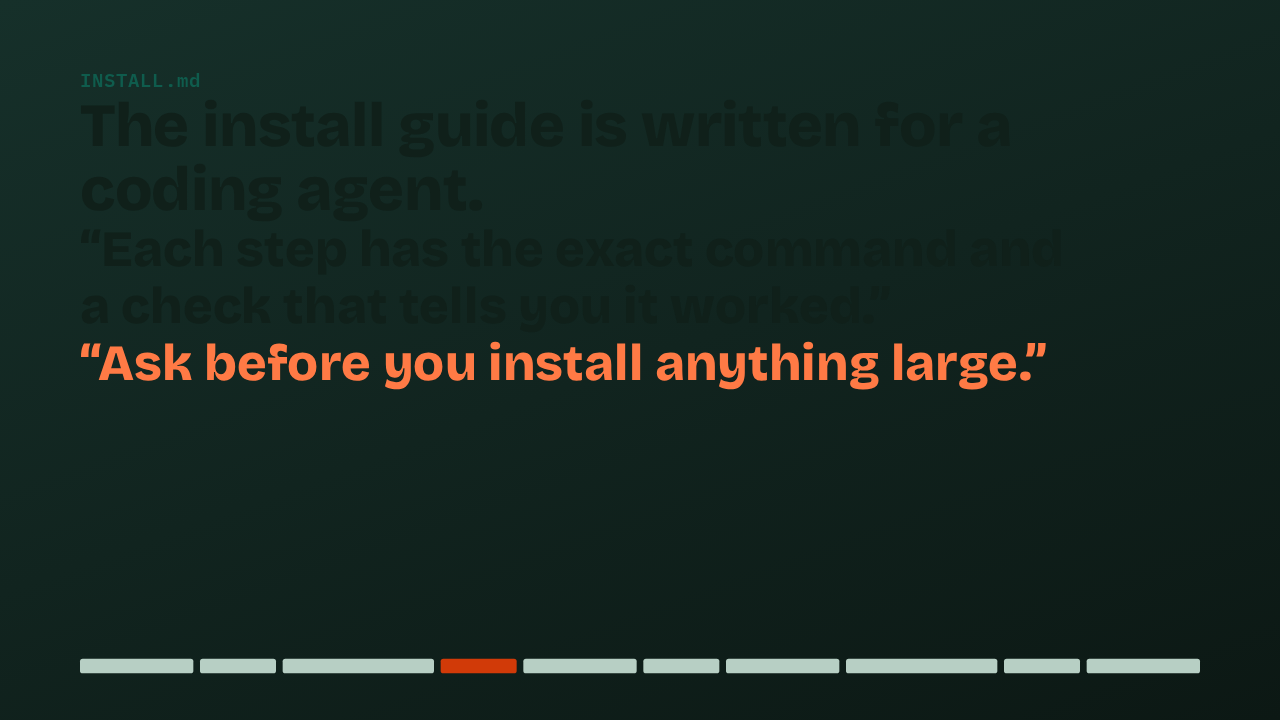
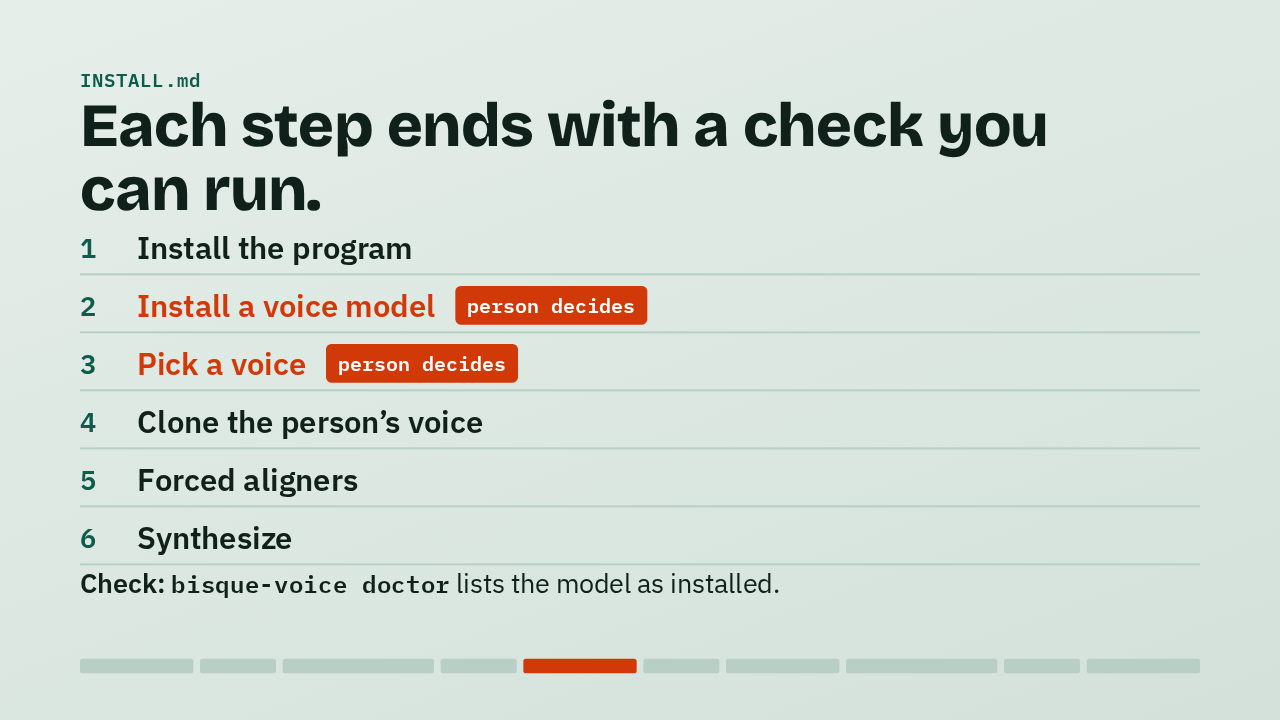
The opening line of the install guide says it is written for a coding agent setting the tool up for a person. Each step gives the exact command and a check that tells the agent it worked. Two steps are decisions for the person, which voice model and which voice. The guide tells the agent to ask before installing anything large.
The guide has six steps, from installing the program to synthesizing a first clip. Steps two and three belong to the person, because they choose the model and the voice. Every step closes with a check. After installing a model, for example, the doctor command should list it as installed.
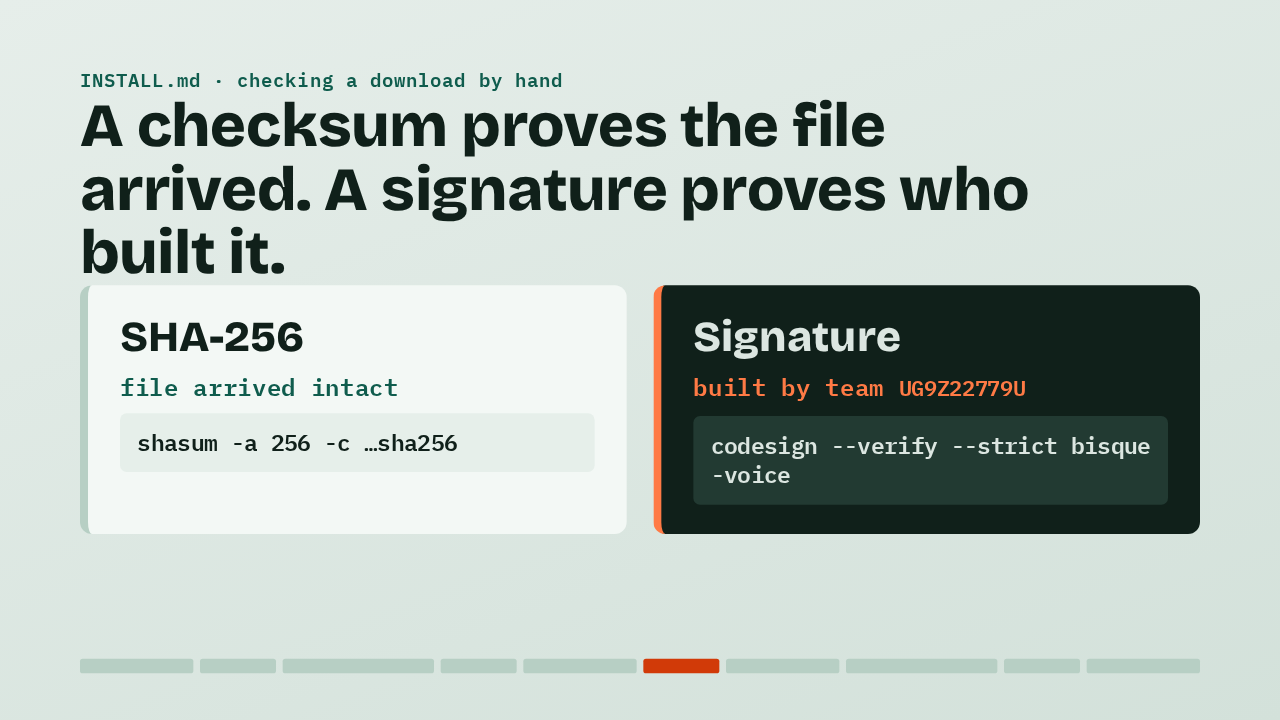
The old readme explained how to verify a download, and that explanation now lives in the install guide. The checksum shows that the file arrived intact. The signature shows who built it. Someone who could replace the archive could replace its checksum too, but they could not sign as the team that owns the binary.
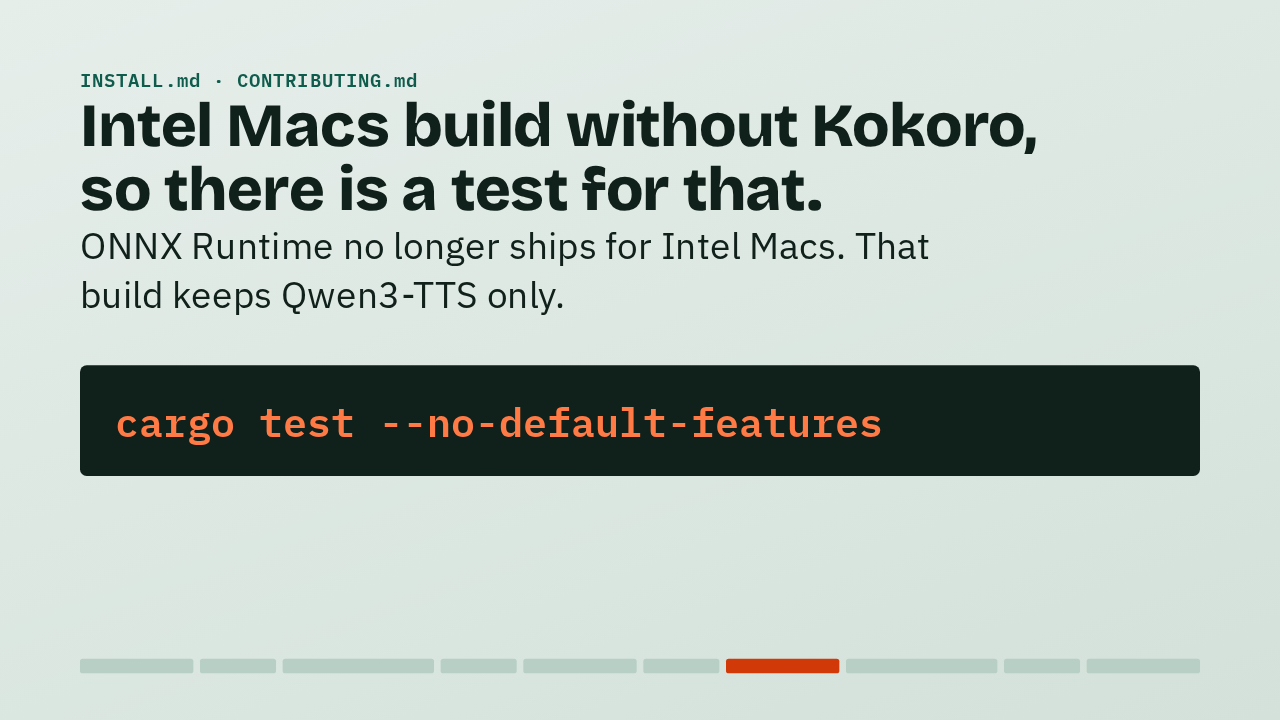
One platform gets special treatment. Kokoro and the forced aligners need ONNX Runtime, which no longer ships for Intel Macs, so that build keeps only the Qwen3 models. The engines command still lists Kokoro, with the reason it is unavailable. The contributing file adds a test command for that configuration, so the reduced build gets exercised.
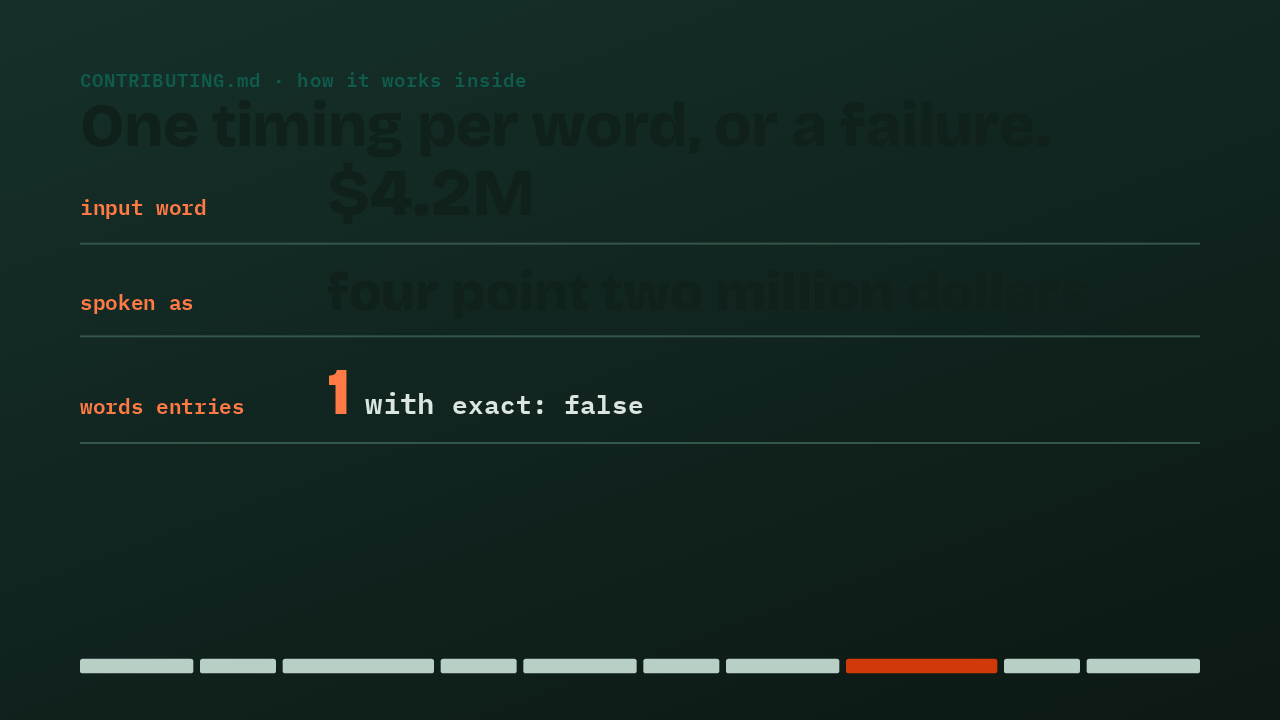
The new internals section opens with a promise. The words array always has one entry per word of the input, because callers index it to place cues. If the text gets expanded, so a dollar figure is spoken as four words, the time is spread across the word it came from, and exact is set to false. If the engine cannot line the words up, it fails instead.
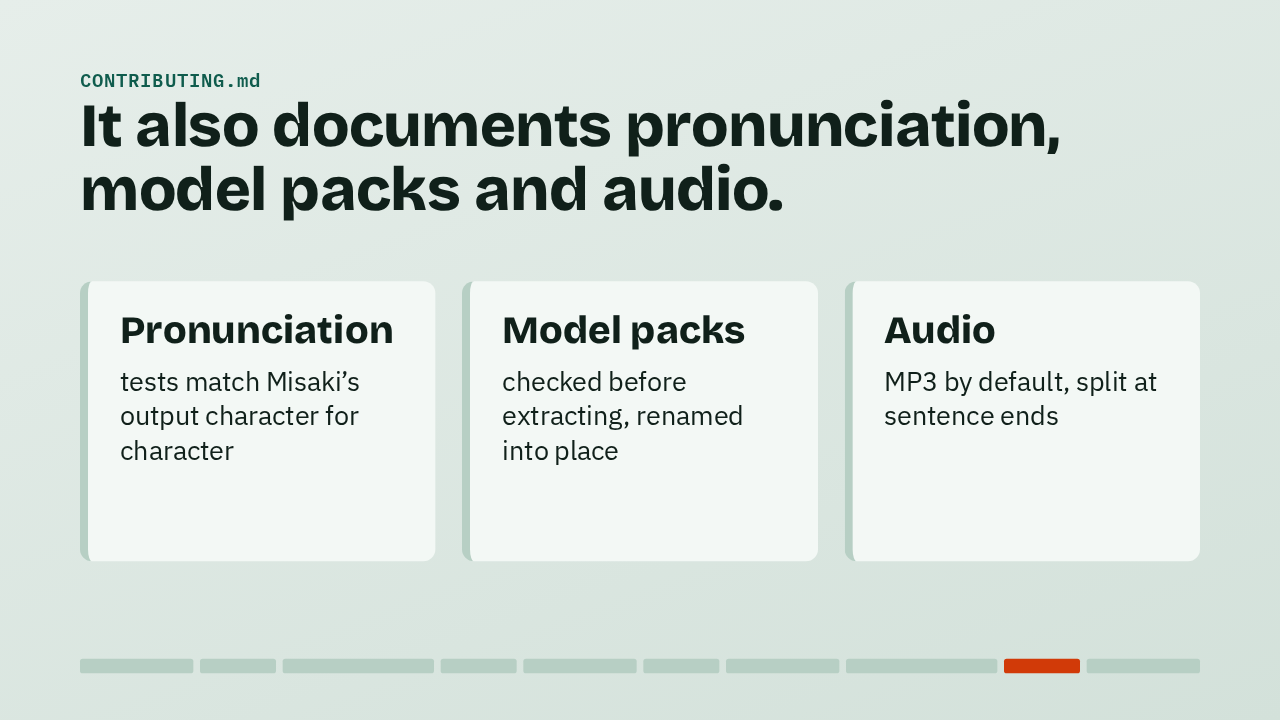
Three more topics follow. For pronunciation, every language is a port of the Misaki pipeline, and the tests compare against its output character for character. Model packs are checked against a checksum before extraction, and extracted into a temporary folder that is renamed into place. And audio defaults to MP3, split at sentence boundaries because Kokoro accepts at most 510 tokens.
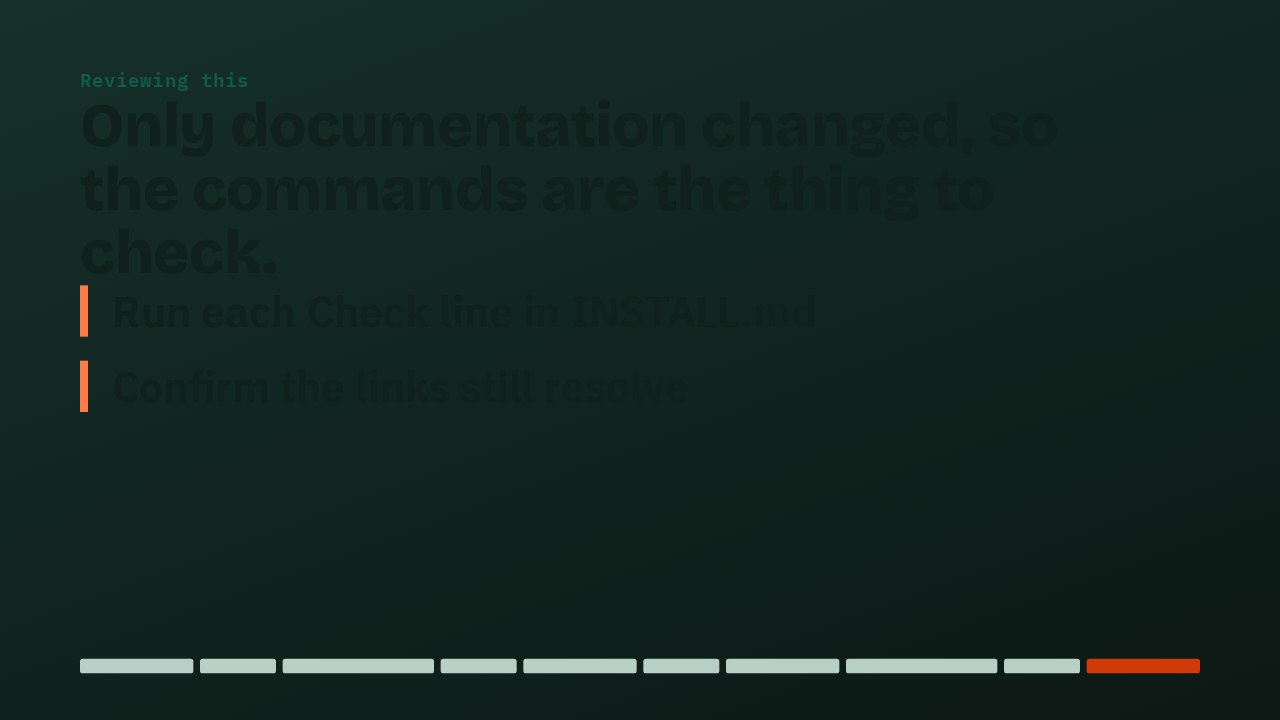
This change touches three markdown files and no code, so the risk is a command or a link that no longer works. Run the check lines in the install guide, since an agent will follow them literally. And confirm the links still resolve, including the one to the voice curation page.