Finance Guru 2.4: lessons become live pages, and your merchants stay private
3 hours ago
Finance Guru 2.4 brings interactive lesson pages from the teaching specialist, and a private file for your local merchants, inside your instance. It also fixes purchases missing from your spending, and adds a stricter check before you push.
Ask about this presentation
Chapters
Show transcriptHide transcript
Finance Guru 2.4 brings interactive lesson pages from the teaching specialist, and a private file for your local merchants, inside your instance. It also fixes purchases missing from your spending, and adds a stricter check before you push.
Slide text
v2.4.0 · Sept 24, 2026
Lessons become live pages, and your merchants stay private
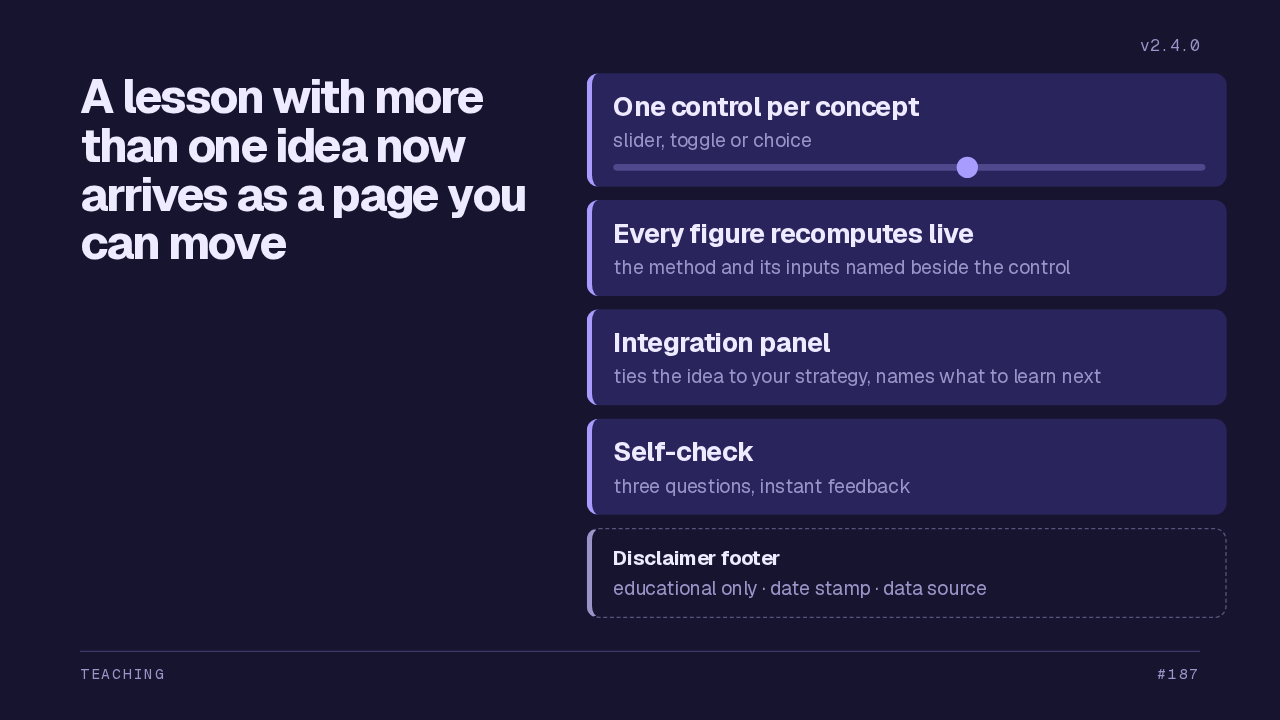
Finance Guru 2.4.0FINANCE GURU RELEASE 2.4.0When a lesson covers more than one idea, the teaching specialist now writes it as one interactive page. Each concept gets a single control, a slider, a toggle or a choice, and every figure recomputes as you move it. It closes by tying the idea to your strategy, then three self-check questions with instant feedback.
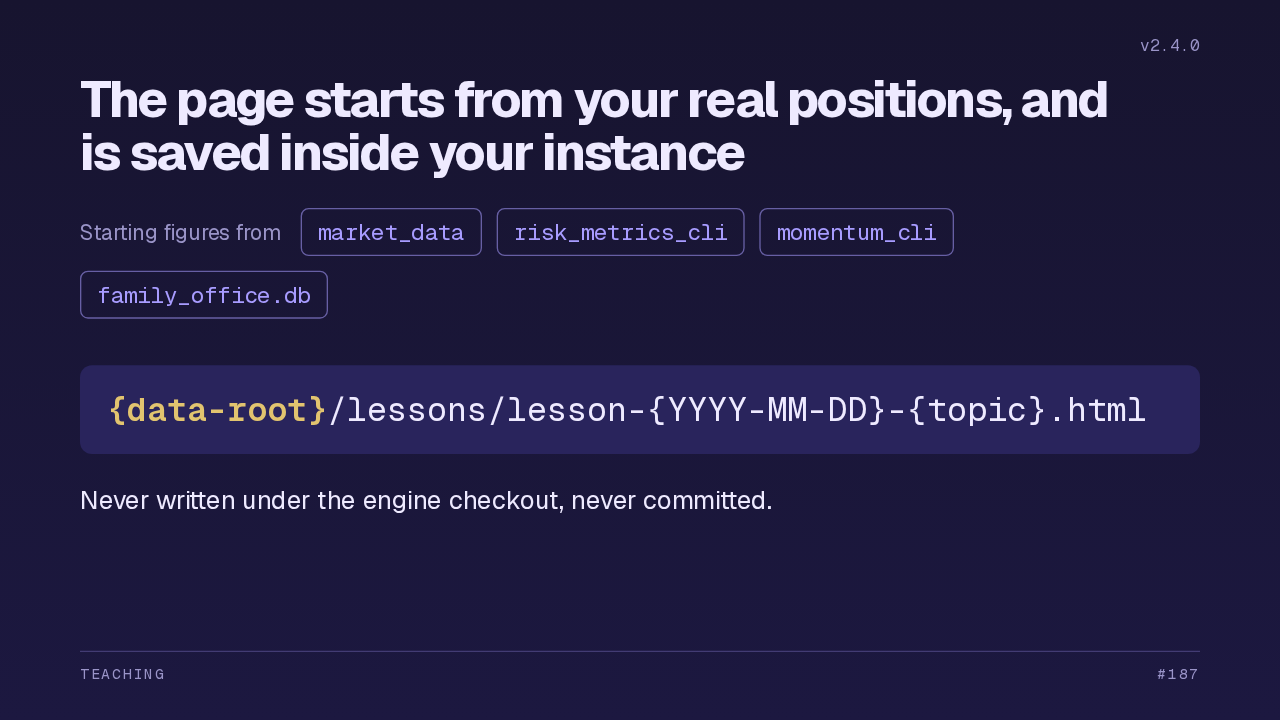
Starting numbers come from Finance Guru's own calculators and your database, and each live formula names its method, such as Black-Scholes delta. Because it carries your real balances, the page is saved in your instance and never committed. Single ideas and recaps still get a chat reply.
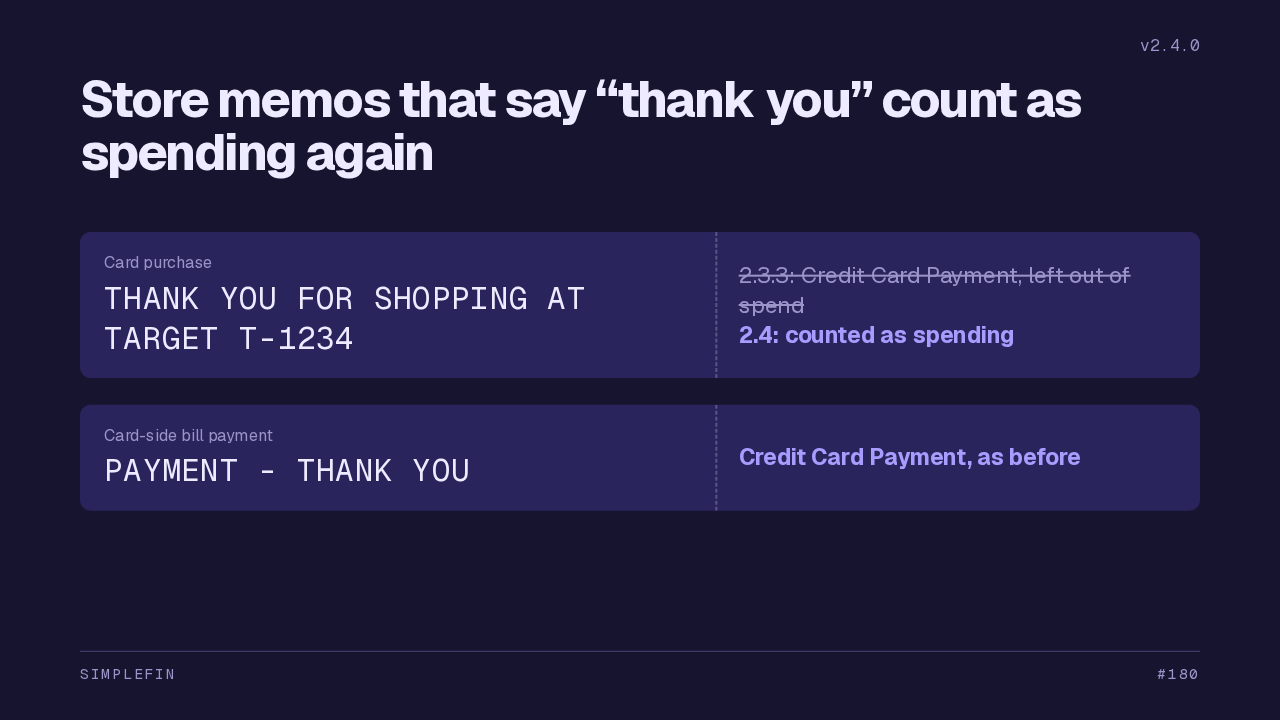
Now a fix you may have hit. Version 2.3.3 read the bare words thank you as a credit card payment, which doesn't count as spending. That also caught store memos like thank you for shopping at Target, so real purchases dropped out of your totals. Now only payment wording matches, and those purchases count again.
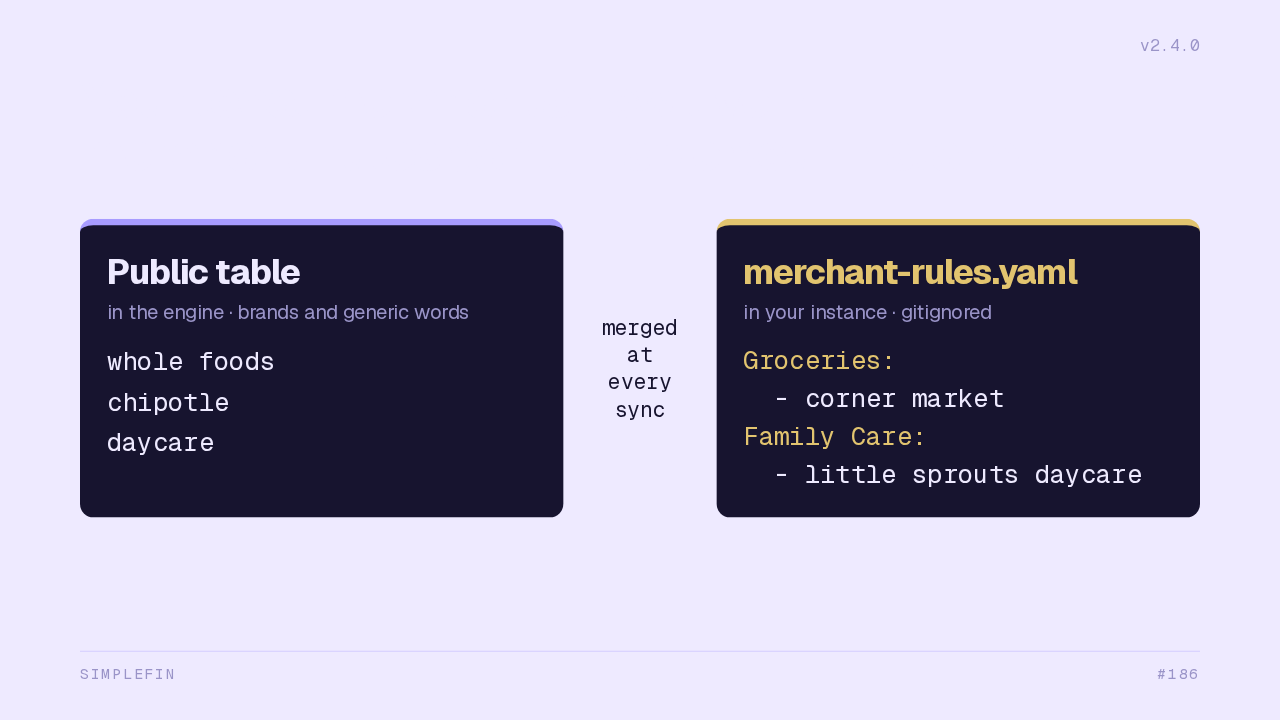
Next, expense categories. The engine's pattern table now holds national brands and generic wording only. Your own merchants, like the local dry cleaner, the daycare or the church, go in merchant-rules.yaml in your instance. Each category lists lowercase snippets of the payee or memo, and every sync merges them in.
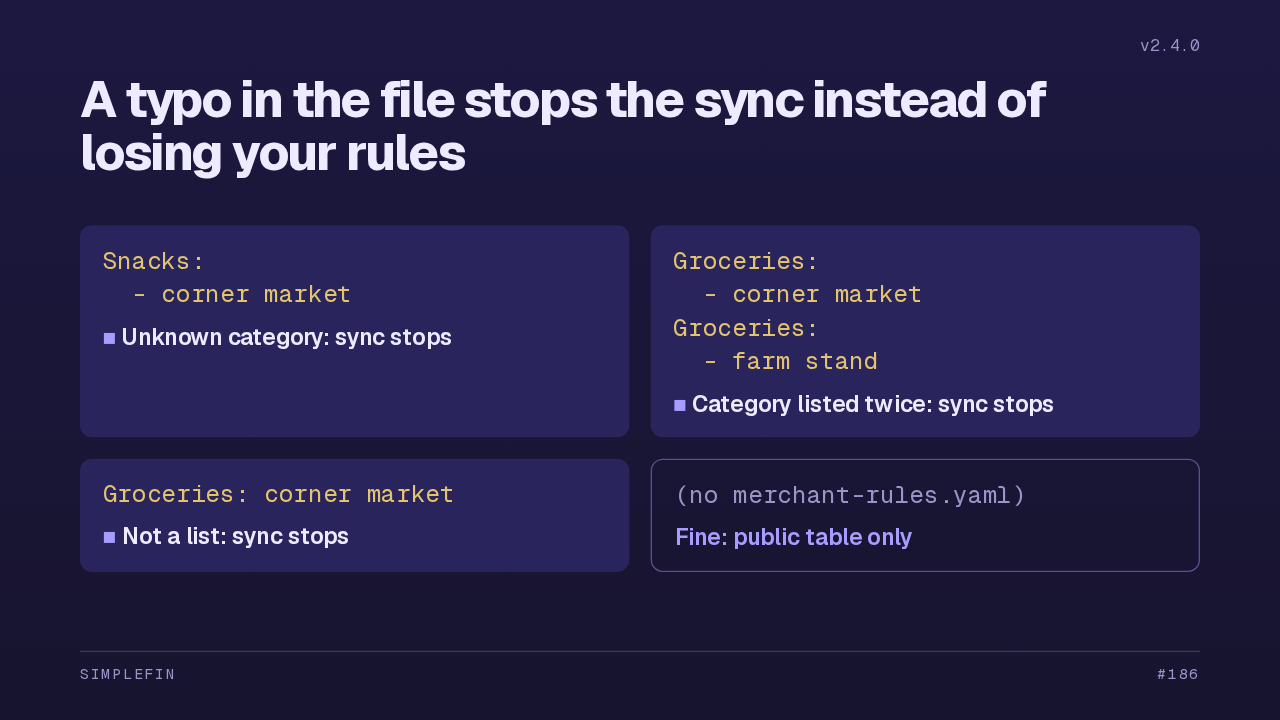
The file is strict on purpose. An unknown category, a category listed twice, or a value that isn't a list stops the sync with an error, so a typo can't quietly drop your rules. A missing file just means no household rules yet, and new instances get a commented template.
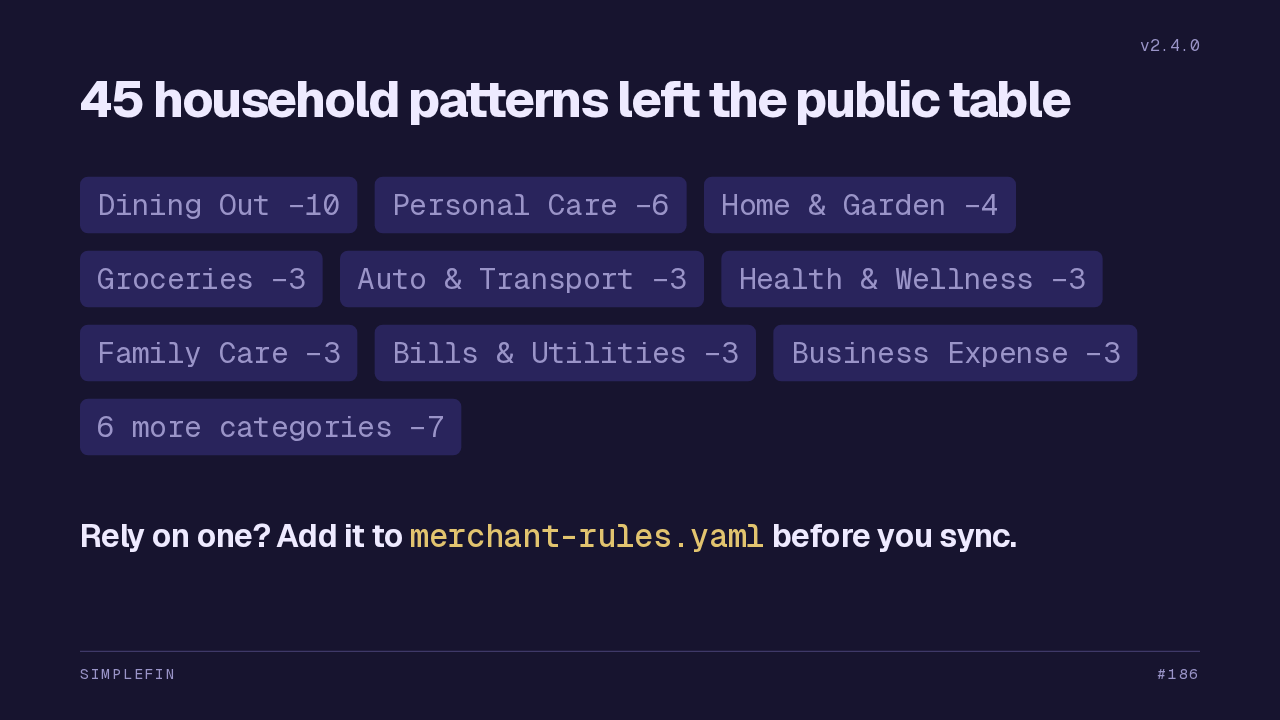
Upgrading can move some transactions. 45 household patterns left the public table, across 15 categories, most of them in Dining Out and Personal Care. Each sync rewrites the category of every row it touches, so those transactions can land in another category or in Uncategorized. If you rely on one, add it to merchant-rules.yaml first.
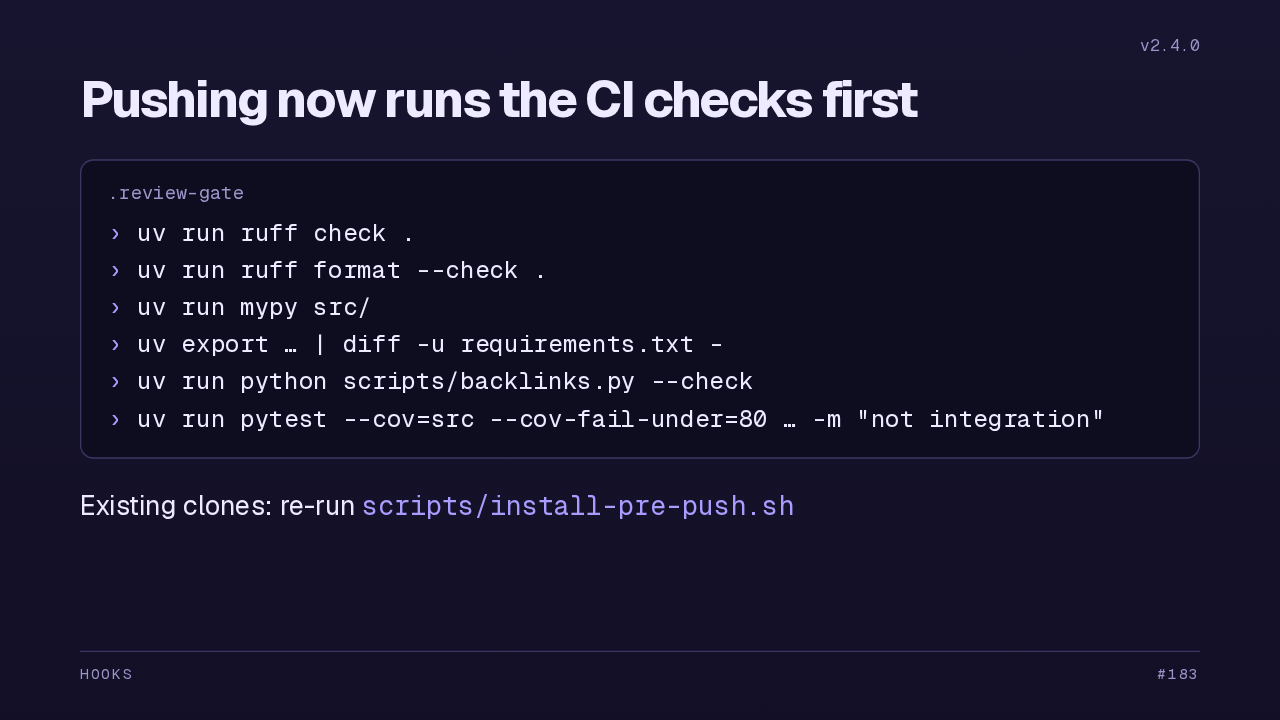
If you push to your clone, the pre-push hook now runs a review gate after its privacy scans. It runs the checks in the new review gate file, including ruff, mypy, and the tests with an 80 percent coverage floor. A missing file skips the gate with a warning. Existing clones get this only after re-running the pre-push installer.
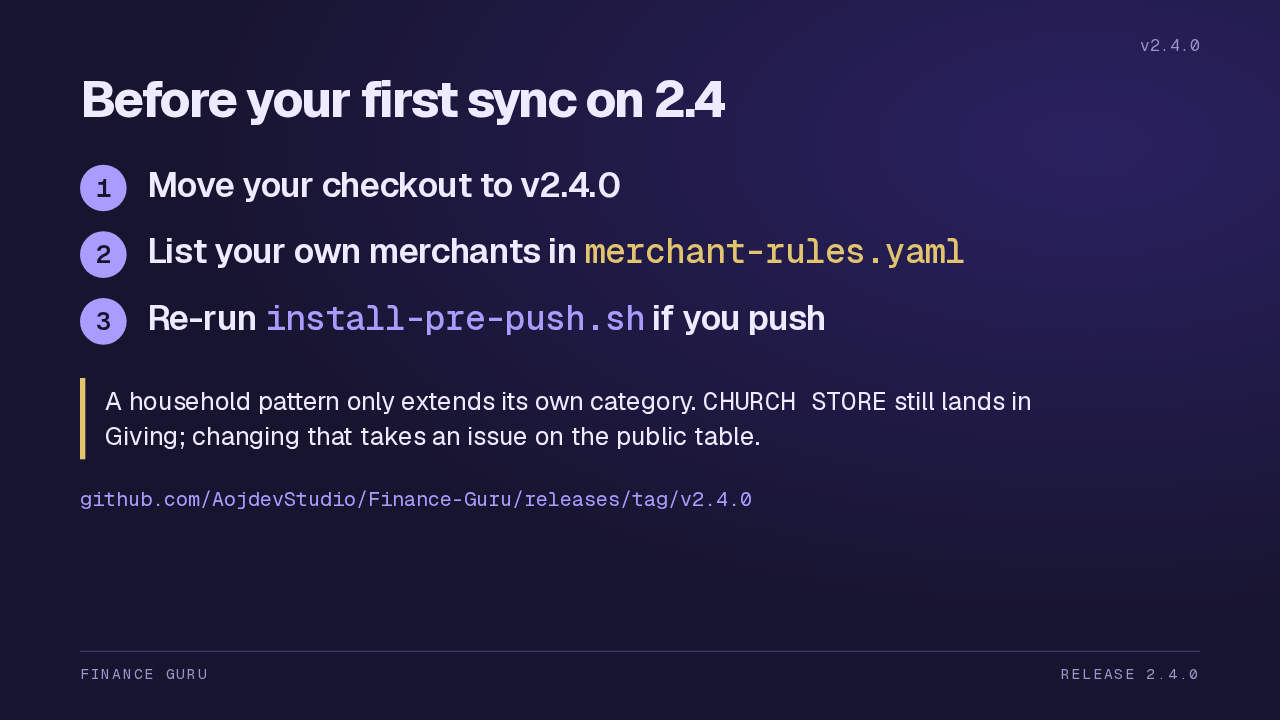
So before your first sync on 2.4, list your merchants in merchant-rules.yaml, and re-run the pre-push installer if you push. One limit: a household pattern only extends its own category, so church store still lands in Giving, and changing that takes an issue. That's Finance Guru 2.4: lessons you can move, and merchants that stay private.