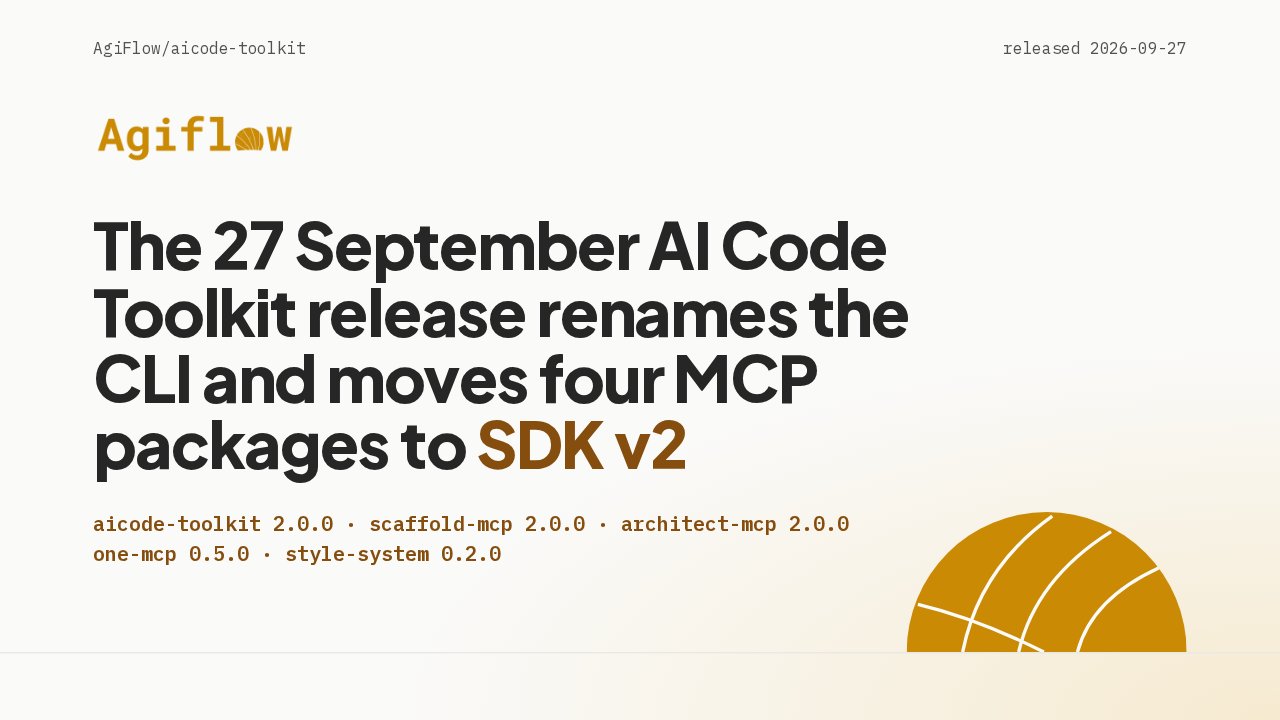
The 27 September AI Code Toolkit release renames the CLI and moves four MCP packages to SDK v2
1 hour ago
On the 27th of September, AI Code Toolkit shipped five packages at once. The command line tool, aicode-toolkit 2.0, renames the command you type and drops its own dependency on the MCP SDK. Alongside it, scaffold-mcp 2.0, architect-mcp 2.0, one-mcp 0.5 and style-system 0.2 moved to version 2 of the TypeScript MCP SDK, and the scaffold and architect servers fixed how they pick a port.
Ask about this presentation
Chapters
Show transcriptHide transcript
On the 27th of September, AI Code Toolkit shipped five packages at once. The command line tool, aicode-toolkit 2.0, renames the command you type and drops its own dependency on the MCP SDK. Alongside it, scaffold-mcp 2.0, architect-mcp 2.0, one-mcp 0.5 and style-system 0.2 moved to version 2 of the TypeScript MCP SDK, and the scaffold and architect servers fixed how they pick a port.
Slide text
AgiFlow/aicode-toolkit released 2026-09-27
The 27 September AI Code Toolkit release renames the CLI and moves four MCP packages to SDK v2
aicode-toolkit 2.0.0 · scaffold-mcp 2.0.0 · architect-mcp 2.0.0
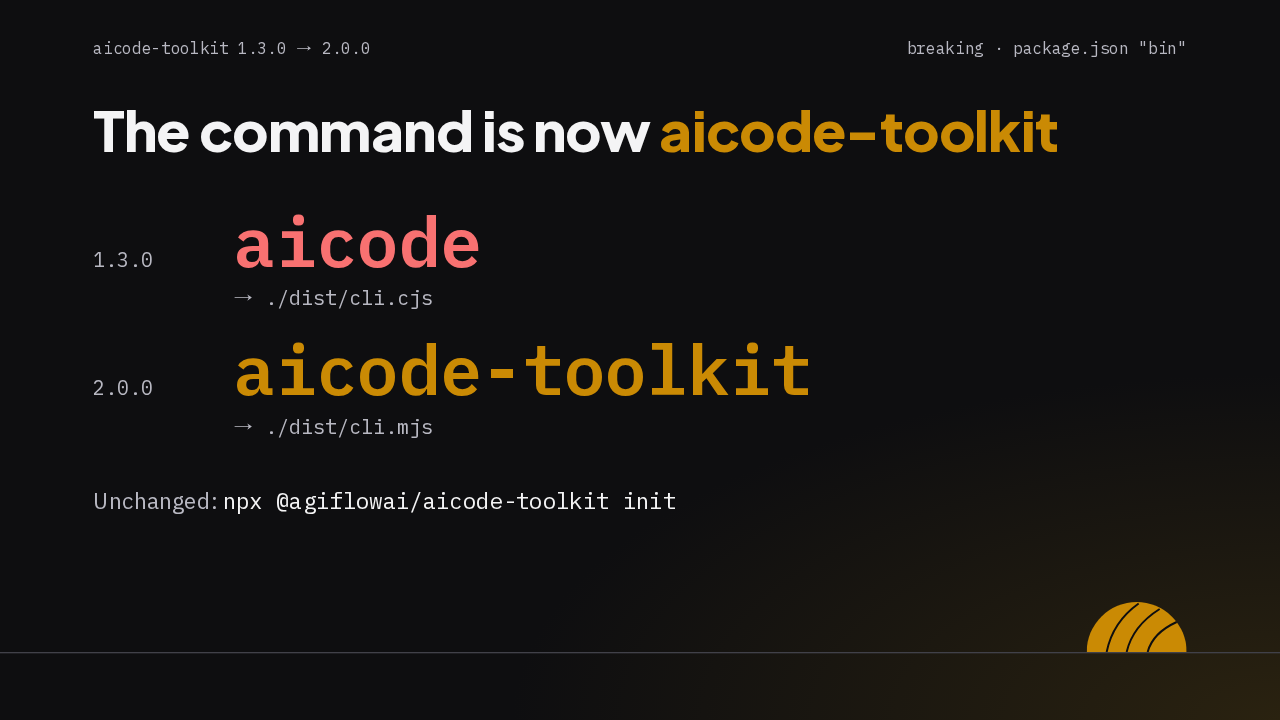
one-mcp 0.5.0 · style-system 0.2.0Start with the command line tool, aicode-toolkit 2.0, and the change that can break a script. In 1.3, installing the package gave you a command called aicode. In 2.0 that command is called aicode-toolkit, and it runs the ES module build. The old name is removed, not kept as an alias, so if a hook or a script calls aicode init or aicode sync, rename it. The npx form from the README keeps working as written.
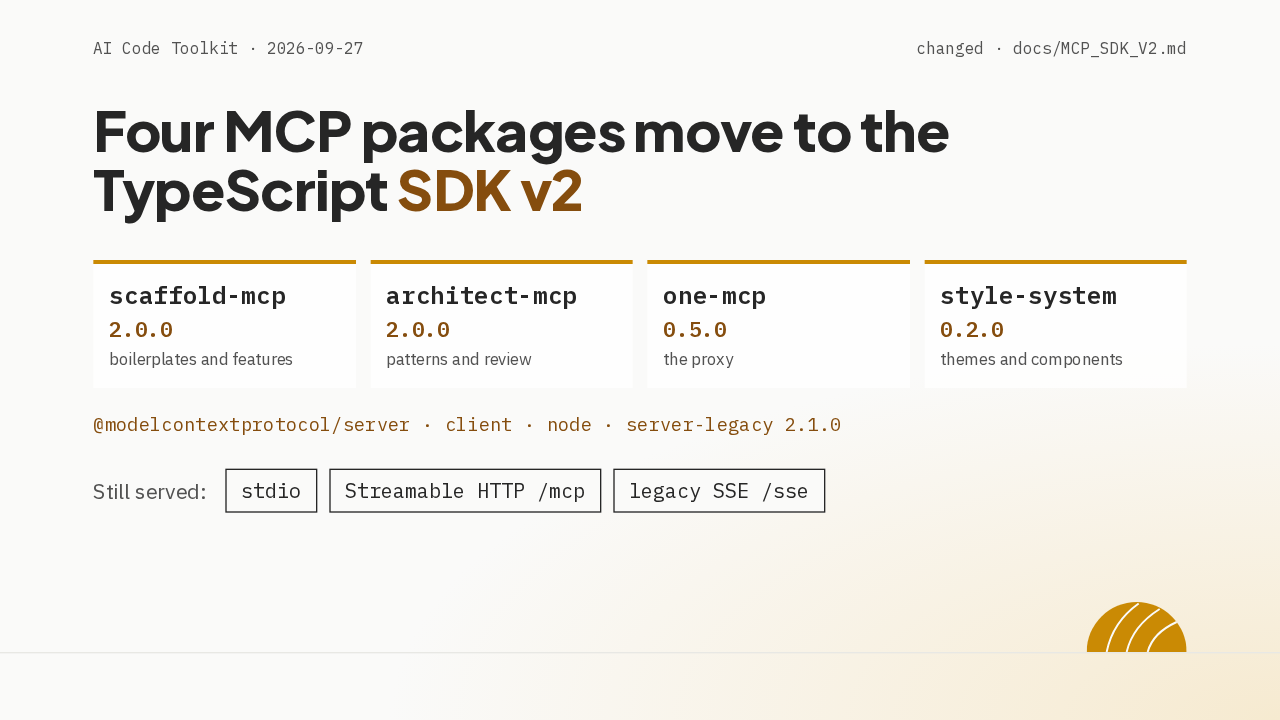
The sibling packages that shipped the same day carry the bigger change. scaffold-mcp 2.0, architect-mcp 2.0, the one-mcp 0.5 proxy and style-system 0.2 all moved to the split packages of the TypeScript MCP SDK, version 2.1. This is an SDK upgrade, not a new protocol. Clients still negotiate the protocol version, and stdio, Streamable HTTP and legacy SSE all stay available.
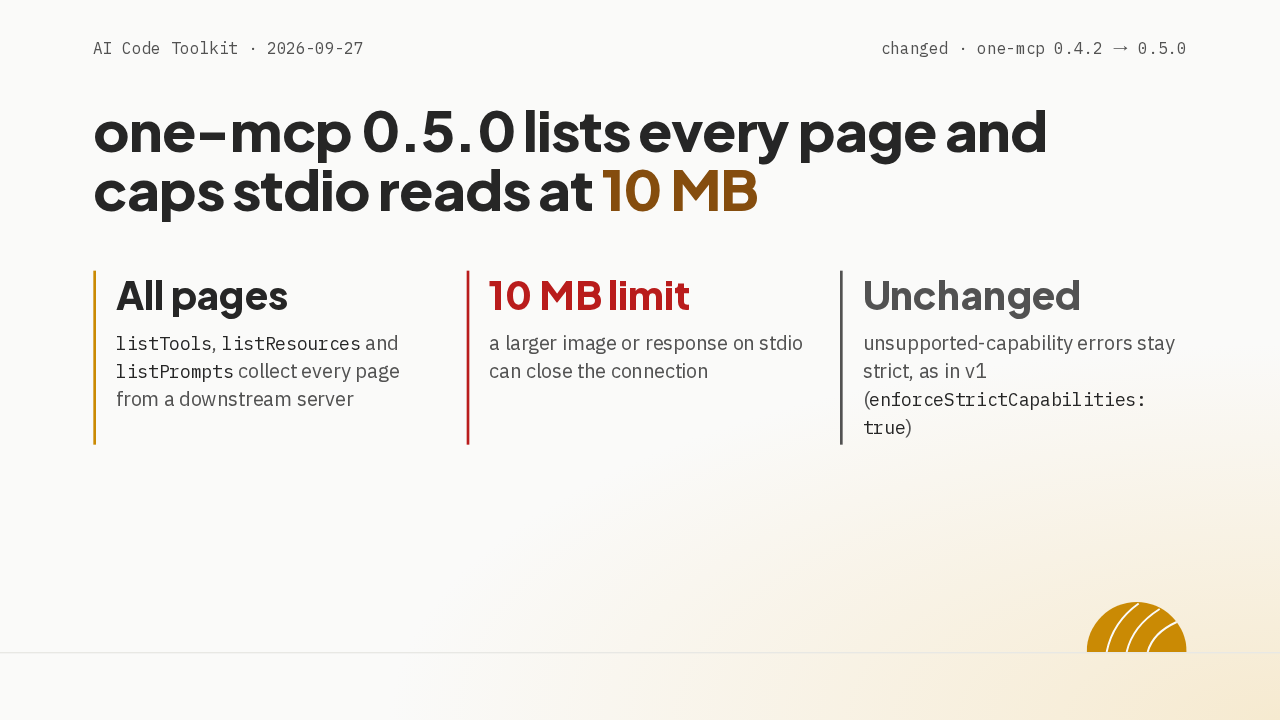
If one-mcp is your proxy, version 0.5 brings two behavior changes, and strict capability errors stay as they were. Listing tools, resources or prompts now collects every page from a downstream server, so you may see definitions past the first page. And stdio clients now cap reads at 10 megabytes, so a very large image or response can close the connection. Unsupported-capability errors still fail the way they did in v1.
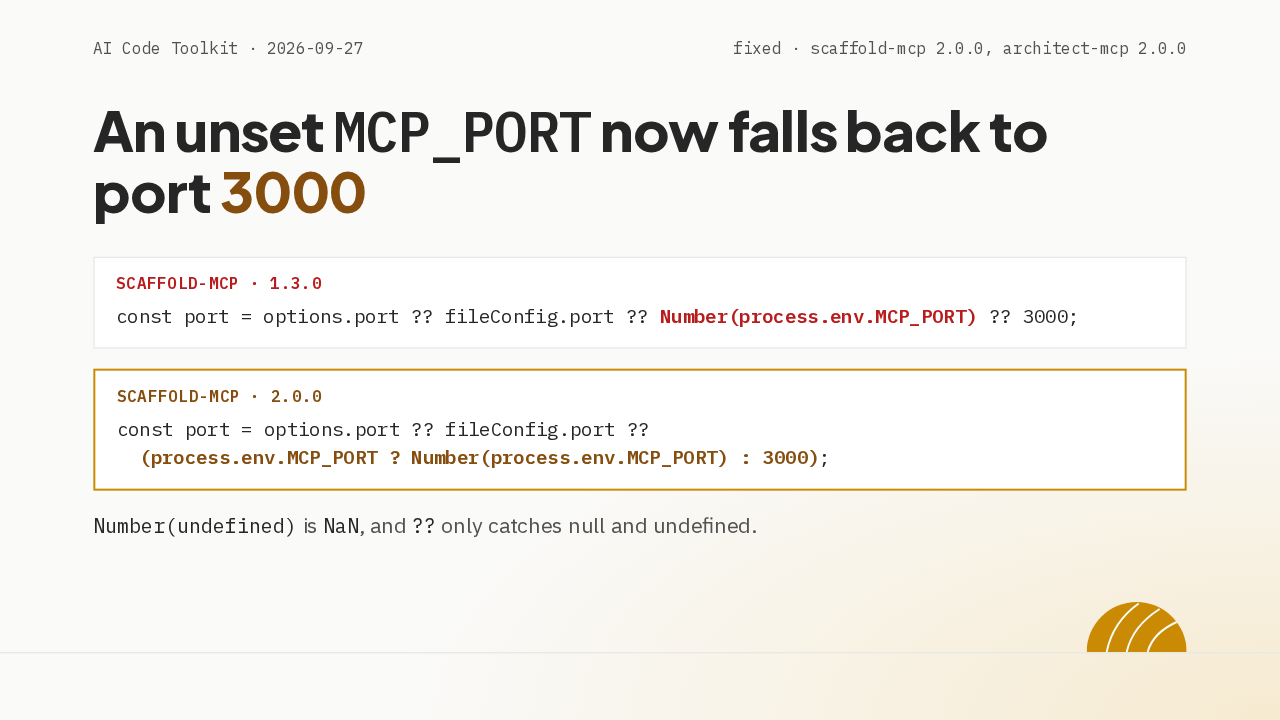
One fix lands in scaffold-mcp 2.0 and architect-mcp 2.0, for HTTP and SSE mode. The old line passed MCP_PORT through Number. With the variable unset, that gave not-a-number, and the fallback operator let it through, because it only catches null and undefined. Now the code checks the variable first, so with no flag, config or variable, the server uses port 3000.
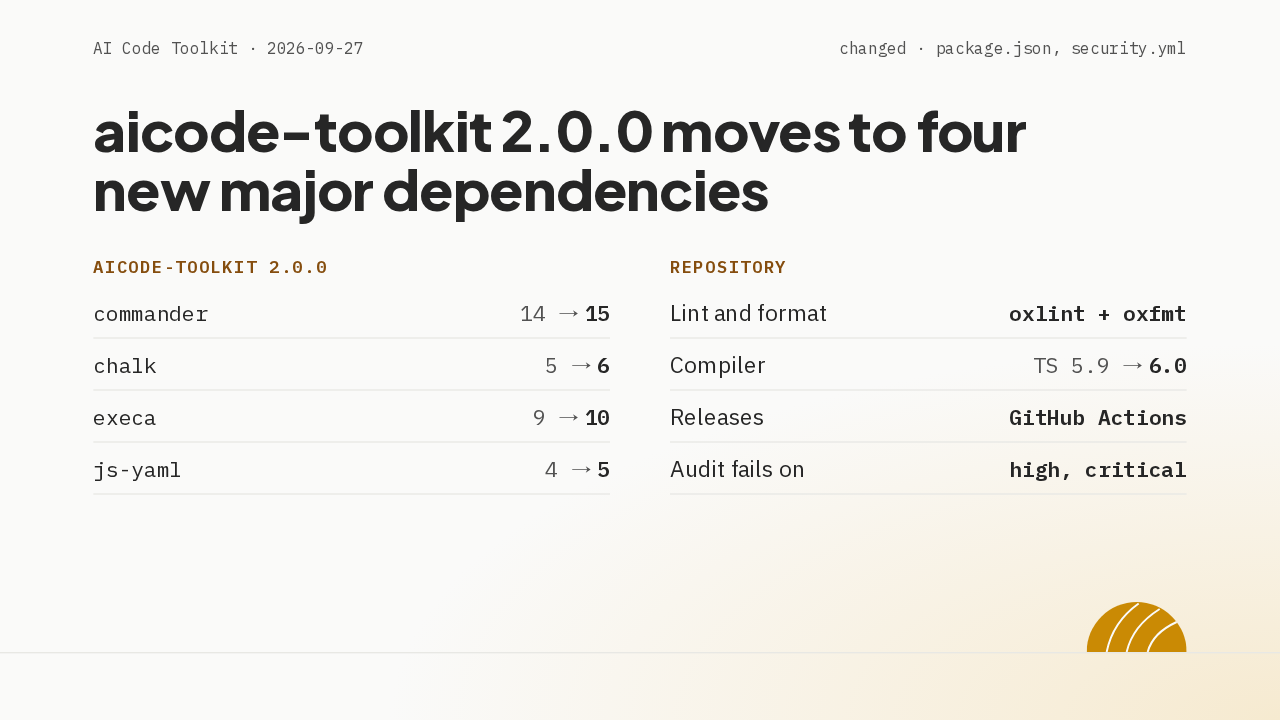
The rest is housekeeping you inherit. aicode-toolkit 2.0 moves to new major versions of commander, chalk, execa and js-yaml. Across the repository, Biome gave way to oxlint and oxfmt, the code compiles with TypeScript 6, releases are cut through GitHub Actions, and the dependency audit now fails on high or critical findings.
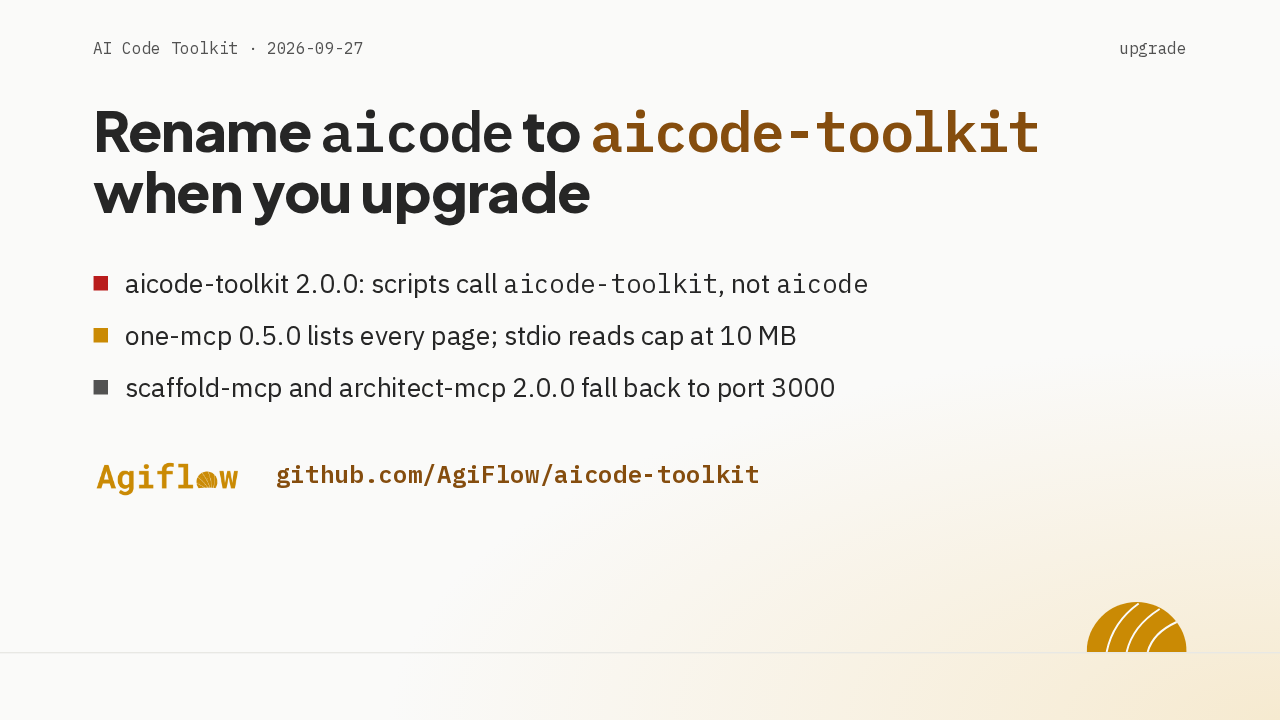
The command name is the change that can break a script. Rename aicode to aicode-toolkit wherever a script calls it, expect one-mcp 0.5 to list every page, and let scaffold-mcp and architect-mcp 2.0 fall back to port 3000. That is the 27 September AI Code Toolkit release: a renamed command line tool, and MCP servers on SDK v2.
Slide text
AI Code Toolkit · 2026-09-27 upgradeRename aicode to aicode-toolkit when you upgrade
aicode-toolkit 2.0.0: scripts call aicode-toolkit, not aicodeone-mcp 0.5.0 lists every page; stdio reads cap at 10 MBscaffold-mcp and architect-mcp 2.0.0 fall back to port 3000
github.com/AgiFlow/aicode-toolkit